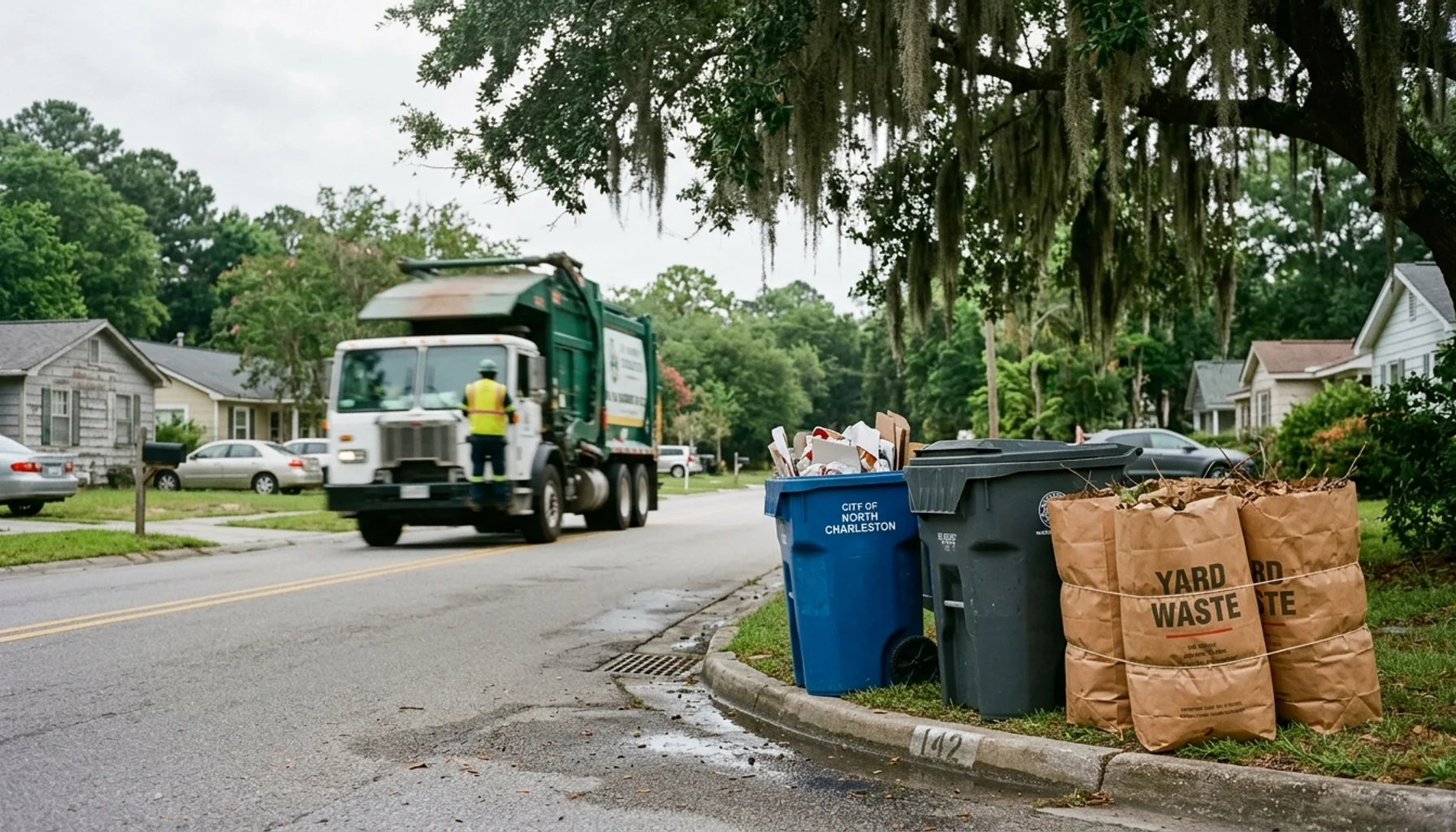
Charleston waste management refers to the combined system of municipal garbage collection, Charleston County landfill and recycling operations, and private valet trash providers that together handle residential, multifamily, and commercial waste across the region. For property managers and homeowners, the real question isn't whether trash gets picked up, it's whether it gets handled consistently, without complaints, and without someone chasing it down every week.
Key Takeaways
- Charleston County's Solid Waste User Fee runs $150 per single-family residence and $105 per multi-family unit annually, funding once-weekly curbside pickup and biweekly recycling.
- The average single-family home in Charleston County generates about 1.5 tons of garbage per year, while multi-family units produce roughly 1.05 tons, according to Charleston County Environmental Management data.
- The City of North Charleston no longer collects E-waste curbside, and yard debris must go out in paper bags only, not plastic.
- Multifamily communities and build-to-rent developments increasingly supplement city pickup with private, photo-verified valet trash service to solve overflow and hallway clutter that once-a-week municipal collection can't prevent.
- Charleston County residents get one free load of waste (up to a ton) per month at Bees Ferry Landfill with proof of residency; commercial rates run about $260 per cubic yard.
- Trash Day Made Easy, headquartered at 4900 O'Hear Avenue in North Charleston, provides nightly photo-verified valet trash and can-to-curb service across the Charleston metro as a private alternative to relying solely on municipal schedules.
Waste management in Charleston, SC is really three overlapping systems working at once: what the city or county collects at the curb, what residents haul to a landfill or convenience center themselves, and what private operators handle for properties that need something more consistent than a once-a-week truck. In 2026, more property managers and homeowners across North Charleston, Mount Pleasant, and the barrier islands are realizing those three systems don't automatically talk to each other, and gaps between them create the exact problems, overflowing dumpsters, missed pickups, resident complaints, that end up on a property manager's desk.
At Trash Day Made Easy, we service multifamily communities, build-to-rent developments, HOAs, and short-term rental properties across Charleston and the surrounding submarkets, and we see this pattern constantly: a property relies entirely on the municipal schedule, then wonders why residents are unhappy every time a holiday shifts pickup day or a bulky item sits at the curb for a week. This guide breaks down how Charleston's public waste systems work, where private valet trash and waste operations fit in, and what to actually look for when choosing a provider in 2026.
What Waste Collection Options Are Available in Charleston, SC?
Charleston-area waste collection breaks into three categories: municipal curbside pickup run by the City of Charleston or City of North Charleston, county-level landfill and convenience center drop-off through Charleston County Environmental Management, and private valet trash or bulk removal services contracted directly by property owners. Each serves a different need, and most properties end up using more than one.
Municipal garbage collection in the City of Charleston runs once weekly from standardized green carts, collected with semi-automated equipment. Carts need to sit within 2 feet of the curb and at least 3 feet from obstructions like mailboxes or parked cars. You can't set the cart out earlier than 6:00 p.m. the night before pickup, and it has to come back in by 6:00 p.m. on collection day. Commercial garbage in the city gets picked up six days a week, and restaurant routes run all seven days.
Charleston County Environmental Management (CCEM) handles the landfill side: the 312-acre Bees Ferry Landfill accepts municipal solid waste, though it no longer takes construction and demolition debris, vegetative waste, or yard debris from private or commercial haulers. Residents also have access to eight staffed convenience centers and 16 drop-site locations across the county for materials that don't fit in a standard cart.
For multifamily communities near the Rivers Avenue corridor or build-to-rent developments near Daniel Island, neither of these public systems was designed to handle nightly doorstep pickup or fast turnover between residents. That's the specific gap private valet trash service fills, and it's why Trash Day Made Easy exists as a third layer on top of what the city and county already provide.
How Does the City of North Charleston Handle Trash and Recycling?
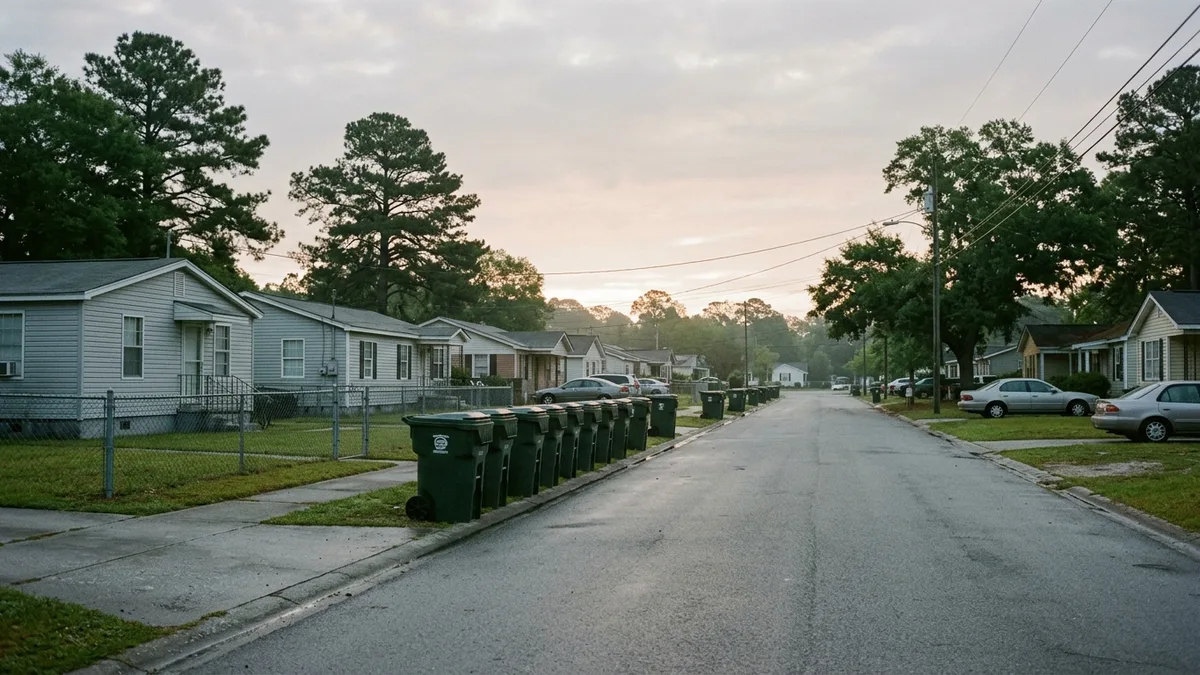
The City of North Charleston's Public Works Sanitation Division runs curbside garbage collection on a weekly schedule, with recycling collected every two weeks on the same day as garbage and yard waste pickup. This is the baseline service most homeowners and small multifamily properties in North Charleston rely on, but it comes with specific rules that trip up new residents constantly.
First, the city no longer picks up E-waste, meaning televisions, computer monitors, and similar electronics have to go somewhere else, typically a Charleston County convenience center. Second, yard waste collection is strict about materials: only paper bags are accepted for curbside pickup, and plastic bags get left behind. Residents who bag leaves or clippings in plastic often don't realize why their pile sits untouched for days.
Additionally, the City of North Charleston does not collect garbage from commercial or industrial properties. Any business, apartment community, or non-residential property has to arrange its own hauling, which is exactly where the multifamily and build-to-rent audiences we serve at Trash Day Made Easy run into friction. A 150-unit apartment community near the airport corridor can't just roll a cart to the curb once a week and call it solved; it needs a structured program that accounts for volume, resident turnover, and daily accumulation.
As of 2026, the pattern we see across North Charleston portfolios is consistent: properties that rely purely on municipal collection struggle with dumpster overflow between pickup days, while properties that add nightly doorstep-to-dumpster valet trash collection report far fewer resident complaints tied to hallway clutter or overflowing compactors.
What Does Charleston County's Landfill and Recycling System Cost?
Charleston County funds its solid waste system through a Solid Waste User Fee, currently set at $150 per single-family residence and $105 per multi-family unit, which covers curbside collection infrastructure and access to the county's landfill network. Commercial garbage is billed differently, at roughly $260 per cubic yard annually.
Recycling carries its own fee structure. Single-family residences pay around $99 for recycling service, multi-family units pay about $70, and commercial recycling runs approximately $172 per cubic yard of garbage. Charleston County Environmental Management provides single-stream recycling to households, multifamily communities, schools, and commercial businesses countywide, with collection happening every two weeks alongside garbage and yard waste.
For anyone hauling waste directly to Bees Ferry Landfill, tipping fees follow a per-ton structure: tires run about $90 per ton, metal around $30 per ton, and municipal solid waste roughly $66 per ton, based on figures reported by Charleston County. One quirk worth knowing: a cubic yard of garbage weighs approximately 100 pounds, which is how the county calculates its $260 per cubic yard commercial rate from a base tonnage figure. Residents get one meaningful break, though: proof of Charleston County residency allows disposal of one load, up to a ton, of waste per month at no charge.
The table below summarizes the core fee structure for quick reference.
| Service Category | Rate | Notes |
|---|---|---|
| Single-family solid waste fee | $150/year | Charleston County Solid Waste User Fee |
| Multi-family solid waste fee | $105/unit/year | Charleston County Solid Waste User Fee |
| Commercial garbage | ~$260/cubic yard | Annual commercial rate |
| Single-family recycling | ~$99/year | Biweekly single-stream collection |
| Multi-family recycling | ~$70/unit/year | Biweekly single-stream collection |
| Bees Ferry Landfill, tires | ~$90/ton | Tipping fee for direct haul |
| Bees Ferry Landfill, metal | ~$30/ton | Tipping fee for direct haul |
| Bees Ferry Landfill, MSW | ~$66/ton | Tipping fee for direct haul |
How Do Convenience Centers and Drop-Off Sites Work in Charleston?
Charleston County convenience centers are staffed drop-off locations where residents can dispose of items that don't fit in a curbside cart, including mattresses, furniture, carpet, and other bulky household goods. The county operates eight staffed centers plus 16 recycling drop-site locations, serving approximately 130,000 single-family homes across its residential recycling program.
Most staffed convenience centers run Monday through Saturday, from 7:30 a.m. to 6:00 p.m., closed Sunday. The Signal Point Road Convenience Center runs a different schedule, Tuesday through Saturday, 10:00 a.m. to 6:00 p.m., closed both Sunday and Monday. Note that the Romney Street Convenience Center has closed; the Bees Ferry Landfill site at 1344 Bees Ferry Rd. now handles much of that volume, with the landfill office reachable directly for scale house questions. For bulky construction material, the City of Charleston's own guidance excludes anything over 90 gallons in volume, roughly 3 feet by 4 feet by 1 foot, along with car tires, car batteries, and paint cans with wet paint still inside. Those materials need private hauling or a convenience center trip, not curbside placement.
For property managers overseeing scattered-site portfolios across James Island, Johns Island, and Summerville, coordinating individual convenience center runs for every move-out or bulk item isn't practical at scale. That's a direct match for on-demand on-demand trash pickup service, where a single call replaces a dozen separate trips across a portfolio.
How Do You Handle Construction and Demolition Debris in Charleston?
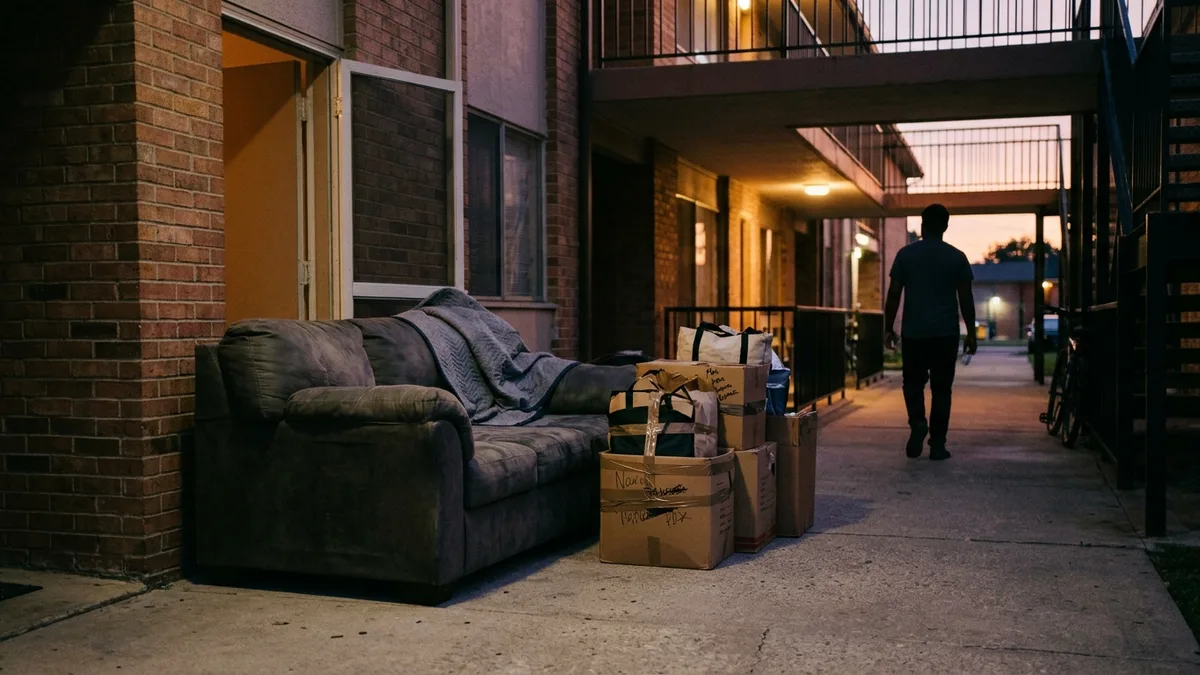
Construction and demolition (C&D) debris in Charleston requires separate handling from standard household garbage because Bees Ferry Landfill no longer accepts C&D waste, vegetative waste, or yard debris from private or commercial haulers. This is one of the most commonly misunderstood parts of the local system, and it catches renovation crews and build-to-rent developers off guard regularly.
Practically, this means anyone doing a kitchen remodel, deck teardown, or new-build cleanup near Daniel Island or the airport corridor needs a licensed private hauler equipped to take C&D material to an appropriately permitted facility, since the county landfill has closed that door to outside haulers. Yard waste specifically has its own separate outlet: McGill Environment Systems accepts yard waste at the Bees Ferry Compost Facility for a per-ton fee, with a one-ton maximum per visit. For build-to-rent operators managing new construction phases alongside occupied units, this distinction matters operationally. Mixing C&D debris into a resident's regular waste stream isn't just against the rules, it can create liability if a hauler rejects a load mid-route. All C&D and heavy debris disposal, permitted under South Carolina Department of Health and Environmental Control (SCDHEC) oversight, should route through a licensed hauler from day one, not get bundled with routine multifamily waste service.
How Should New Charleston Residents Set Up Trash and Recycling Service?
Setting up trash and recycling service in Charleston starts with confirming whether your address falls under City of Charleston, City of North Charleston, or unincorporated Charleston County jurisdiction, since each has slightly different cart delivery and billing processes. New residents typically need to contact the relevant municipal sanitation office directly to request cart delivery before the first scheduled pickup. Here's a practical first-90-days checklist for anyone new to the Charleston metro:
- Confirm your jurisdiction (City of Charleston, City of North Charleston, or county unincorporated area) to determine your collection schedule and fee structure.
- Request cart delivery if one wasn't left by a previous resident; new carts typically take a few business days to arrive.
- Note your recycling week, since collection alternates every two weeks rather than weekly.
- Locate your nearest Charleston County convenience center for bulky items, electronics, and anything that doesn't fit curbside.
- If you're in a multifamily community or HOA, ask your property manager whether valet trash or trash can concierge service is already included as an amenity.
- If you hate rolling bins to the curb yourself, look into residential valet trash service, available in select Charleston neighborhoods starting from $49 per month through Trash Day Made Easy.
Residents relocating into a build-to-rent community on Johns Island or a short-term rental near Sullivan's Island often assume waste handling is automatic. In practice, it's worth confirming directly with the property manager or HOA whether a private waste program is already in place, because the answer changes what you personally need to manage.
How Does Private Valet Trash Service Differ from City Pickup?
Valet trash service is a private, contracted waste collection program where a crew collects bagged trash directly from a resident's doorstep on a scheduled basis, typically nightly, rather than requiring the resident to haul a bin to a shared dumpster or curb. This differs fundamentally from municipal pickup, which happens once a week at a fixed curb location and depends entirely on the resident remembering to bring the bin out. For a multifamily community, that once-a-week municipal cadence simply isn't built to handle daily household waste generation across 100, 200, or 500 units. Dumpsters near the Rivers Avenue corridor fill up mid-week, hallways collect bagged trash residents were told to "just take down," and property managers field the same complaint on repeat. Doorstep-to-dumpster valet trash service closes that gap by collecting nightly, directly from each unit. Trash Day Made Easy's approach adds a layer municipal service and many private competitors don't offer: every single collection visit is photo-verified at the door. That means a property manager gets documented proof that pickup actually happened at every unit, every night, without needing to walk the property or field a resident's word against a hauler's. As of 2026, this kind of documented accountability has become the differentiator property managers ask about first when evaluating a valet trash vendor.
What Should Multifamily Property Managers Look for in a Waste Provider?
The right waste provider for a multifamily community or build-to-rent portfolio should offer scheduled nightly collection, documented proof of service, and the flexibility to handle bulk items and turnover waste without a separate vendor relationship. Property managers evaluating vendors in Charleston or Atlanta in 2026 should treat this as a vendor selection process, not a commodity purchase. Specifically, look for these five criteria:
- Photo verification. Every stop should generate a timestamped photo confirming service was completed, so you're not relying on a driver's word or a resident's complaint to know what happened.
- Scalability across portfolio size. A vendor that works for a 20-unit property should also handle a 500-unit community with the same consistency, without a service quality drop as the portfolio grows.
- Bulk and turnover integration. Move-out debris, abandoned furniture, and make-ready cleanup should be part of the same vendor relationship, not a separate call to a different company.
- Local responsiveness. A Charleston-based operator understands submarket-specific pressure points, from Historic District short-term rental turnover to Daniel Island investor expectations, in a way a distant call center can't.
- On-demand flexibility. Non-routine situations, a large community event, an unexpected bulk drop, a sudden turnover, should be solvable without renegotiating the whole contract.
Other options exist in the Charleston market, including national multifamily-focused valet operators and general junk removal companies. But most of those either lack local accountability, don't photo-verify every stop, or don't cover the full range from nightly valet through bulk removal and on-demand support in one relationship. Trash Day Made Easy was purpose-built to check every one of the five criteria above, scaling from 10-unit build-to-rent communities up through 1,000-plus unit portfolios while keeping the same photo-verified standard at every door.

Is Private Waste Management Worth It for HOAs and Residential Homeowners?
Private waste management is worth it for HOA communities and individual homeowners whenever enforcement of bin compliance or bulk item rules becomes a recurring source of conflict rather than a rare exception. HOA boards near James Island and Summerville often spend disproportionate volunteer energy chasing residents who leave bins at the curb past pickup day or dump move-out furniture without notice. A trash can concierge service solves this differently than a fine system does. Instead of relying on resident compliance and enforcement letters, the bin gets moved from its storage spot to the curb on collection day and returned afterward, automatically, regardless of whether the resident remembers. That removes the enforcement burden from the board entirely rather than trying to improve compliance through penalties. For individual homeowners, particularly those who are older, frequently travel, or simply don't want to manage bin logistics weekly, residential valet trash service starting from $49 per month solves the same problem at the single-household level. Trash Day Made Easy also partners with The Bin Boy, a Charleston-based bin cleaning and sanitizing service, so residents can add odor and sanitation control on top of standard pickup without hiring a second vendor.
How Does Waste Management Affect Short-Term Rentals in Charleston?
Short-term rental waste management is the process of coordinating trash removal between guest stays, often on compressed same-day turnover windows, to prevent overflowing bins or leftover debris from affecting a guest's arrival experience. In the Charleston Historic District, on Isle of Palms, and on Sullivan's Island, turnover timing is unpredictable by nature, and a single missed pickup between checkout and check-in can trigger a bad review that outlasts the booking itself. Unlike a standard multifamily lease, STR turnover doesn't follow a weekly schedule. A property might turn over Friday morning, sit vacant three days, then turn again Tuesday afternoon. Municipal pickup, fixed to one day a week, simply can't align with that rhythm. On-demand trash removal and bulk item pickup, scheduled around the actual turnover calendar rather than a city schedule, is the only model built to keep pace. Trash Day Made Easy handles this specifically for STR operators across the Charleston market, coordinating turnover trash removal alongside cleaning crews so a property is guest-ready without the owner needing to personally manage timing. As of 2026, this kind of flexible, calendar-driven waste coordination has become a standard expectation for STR hosts managing multiple listings rather than a single property.
Practical Guidance: Choosing the Right Waste Solution for Your Property
Choosing the right Charleston waste management solution depends on property type, unit count, and how much resident or guest turnover you experience. Here's how to think through it by property category:
Common Mistakes to Avoid
- Treating bulk item removal as an afterthought. The most common mistake property managers make is scheduling bulk removal reactively on move-out day instead of building it into the fixed turnover timeline from the start.
- Assuming municipal pickup scales with density. Once-a-week collection works for a single-family home; it does not work for a 200-unit community generating daily waste volume.
- Mixing yard waste or C&D debris with regular trash. Charleston-area rules on paper bags for yard waste and the landfill's C&D restrictions mean mixed loads can get rejected outright.
- Using separate vendors for valet, bulk, and turnover trash. Fragmented vendor relationships create gaps where nobody is accountable when something falls through.
Trade-Offs Worth Understanding
Municipal service is cheaper on a per-unit basis but offers zero flexibility and no documentation of service completion. Private valet trash costs more but delivers nightly consistency, photo verification, and the ability to fold in bulk and turnover services under one vendor relationship. For scattered-site portfolios spanning North Charleston, Mount Pleasant, and Summerville, that single-vendor consistency often outweighs the added cost, since it eliminates coordination overhead across every address.
Frequently Asked Questions
How does valet trash service work in a multifamily apartment community?
Residents place a standardized bin or bag outside their door on scheduled service nights. A crew collects it doorstep-to-dumpster, and each stop is photo-verified. The property manager receives documented confirmation that service was completed without needing to follow up or walk the property.
What is a trash can concierge and how is it different from standard valet trash service?
A trash can concierge moves a bin from its backdoor or storage location to the curb on collection day and returns it afterward, typically for HOA communities and individual homeowners rather than apartment doorsteps. Unlike valet trash, which collects bagged waste nightly from a unit door, trash can concierge focuses on managing the physical bin itself so residents never touch it.
How does Trash Day Made Easy handle bulk item removal during a resident move-out?
Bulk item removal integrates directly into the make-ready cycle, scheduled on-demand around the actual move-out date rather than a fixed weekly pickup. This prevents abandoned furniture or move-out debris from sitting in breezeways or at the curb and delaying the next resident's move-in.
Can valet trash service be added to a short-term rental property in Charleston?
Yes. On-demand and turnover-specific waste removal is available for STR properties in the Historic District, Isle of Palms, Sullivan's Island, and surrounding markets. Service is scheduled around the actual booking calendar rather than a fixed city pickup day, since STR turnover happens on unpredictable timing.
What does Charleston County charge for standard residential waste and recycling service?
As of the current fee schedule, Charleston County charges $150 per year for single-family solid waste service and roughly $99 per year for recycling, with multi-family rates set lower per unit. Residents should confirm current figures directly with Charleston County Environmental Management, since fee schedules are periodically updated.
Can one waste vendor handle service across an entire property portfolio in Charleston and Atlanta?
Yes. Trash Day Made Easy is built for portfolio scalability, servicing anywhere from 10 units to more than 1,000 units with consistent photo-verified standards at every property. That gives scattered-site owners and multifamily investors a single point of contact instead of juggling multiple regional vendors.
What is the difference between Trash Day Made Easy and relying only on city or county waste services?
City and county services provide once-weekly curbside pickup and landfill access but offer no doorstep collection, no photo verification, and no flexibility for bulk or turnover situations. Trash Day Made Easy operates as a private, amenity-grade supplement, not a replacement, providing nightly valet collection, bin management, and on-demand bulk removal for properties that need more than a weekly truck.
What should I do with electronics or hazardous waste in North Charleston?
The City of North Charleston no longer collects E-waste curbside, so televisions and computer equipment need to go to a Charleston County convenience center instead. For household hazardous waste, the South Carolina Department of Health and Environmental Control's Trident District Office provides guidance on proper disposal channels.
Conclusion: Building a Waste System That Actually Works in Charleston
Charleston waste management in 2026 isn't a single system, it's the interaction between what the city or county collects, what residents haul themselves, and what a private operator handles on a nightly, photo-verified schedule. Municipal pickup and Charleston County's landfill network cover the baseline, but neither was designed for daily multifamily volume, unpredictable STR turnover, or HOA enforcement headaches. That's the exact gap Trash Day Made Easy fills across Charleston, North Charleston, and the surrounding submarkets, from Rivers Avenue apartment communities to Daniel Island build-to-rent developments to individual homeowners tired of rolling bins out themselves.
If you're managing a property where waste keeps becoming a resident complaint instead of a solved problem, the fix usually isn't a stricter reminder policy, it's a documented, scheduled system that runs without you thinking about it.
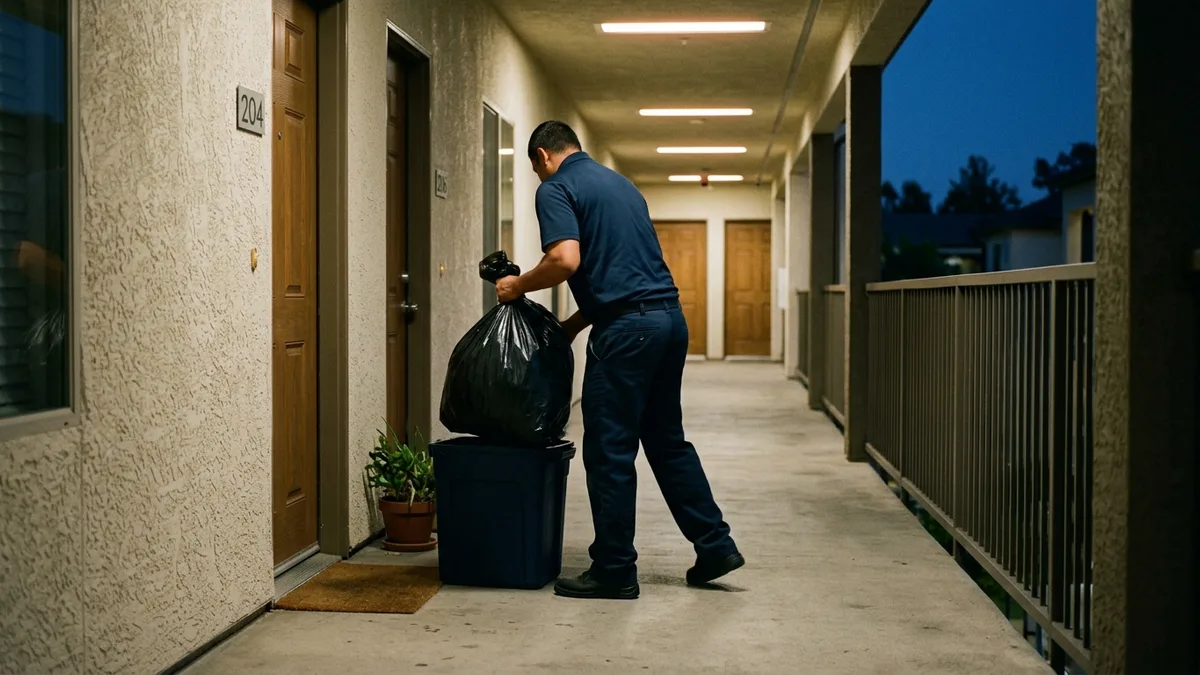
Trash Day Made Easy provides nightly, photo-verified valet trash service, trash can concierge, bulk item removal, and full waste operations support for multifamily communities, HOAs, build-to-rent developments, and residential homeowners across Charleston, SC and Atlanta, GA. Get started with Trash Day Made Easy and request a service quote, available Monday through Friday for every property type.
Content powered by inkSTR.co