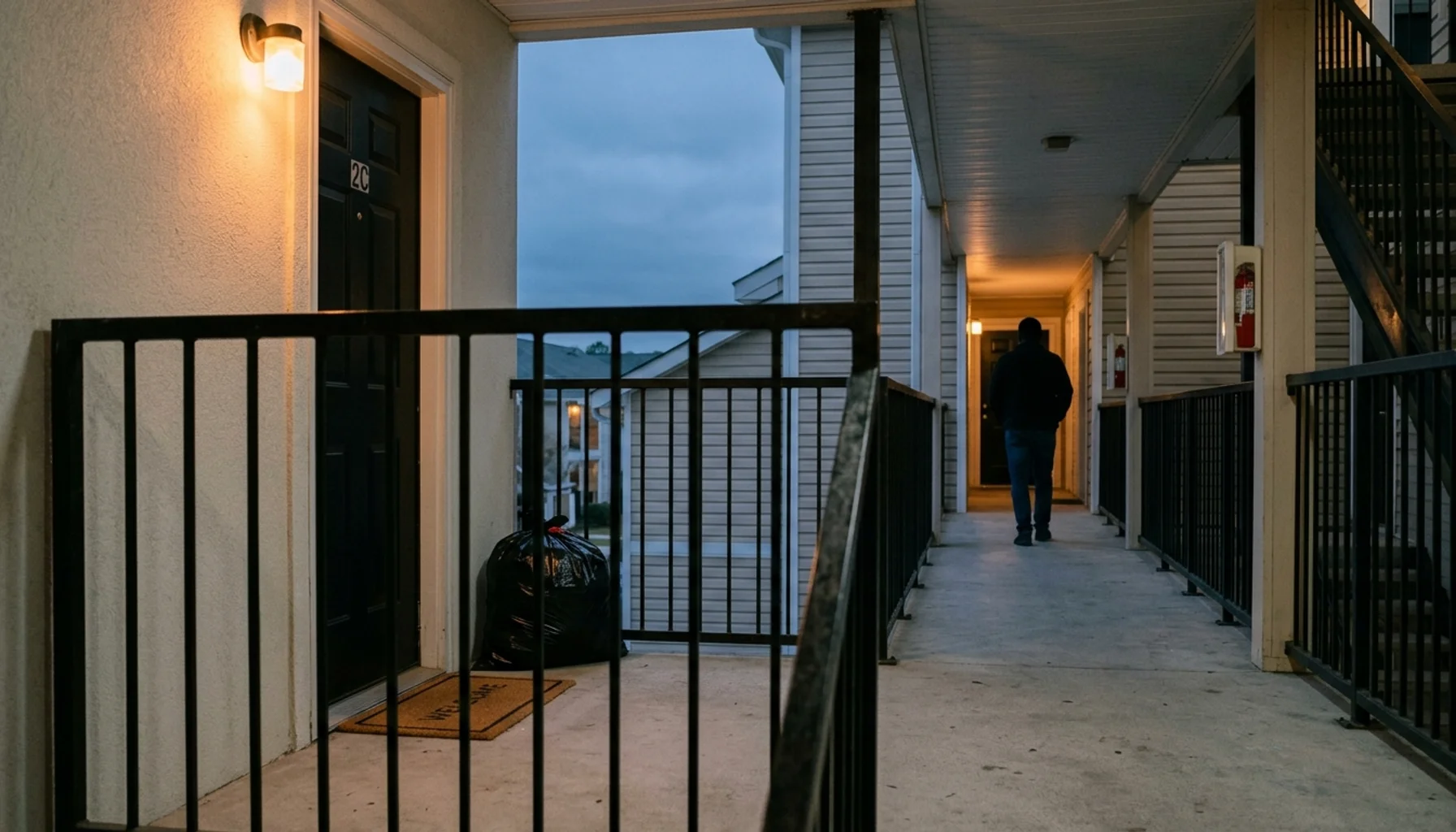
Door to door trash pickup is a service where a crew collects bagged trash directly from a resident's doorstep or back door on a scheduled basis, instead of requiring residents to carry it to a shared dumpster or curb. Also called valet trash service, it typically runs multiple nights per week during set collection windows, with each stop verified so property managers know the job got done.
- Door to door trash pickup (also called valet trash service) collects bagged waste from a resident's door on a nightly or multi-night schedule, eliminating trips to a shared dumpster.
- Industry sources report typical set-out windows between 6 p.m. and 8 p.m., with collection crews working through 8 p.m. and residents retrieving empty bins by roughly 9 a.m. the next morning, according to National Trash Valet overview data on standard workflows.
- Multifamily door to door service commonly runs 3, 5, or 6 nights per week, with many providers pricing multifamily accounts around $8 to $15 per unit and standalone residential accounts closer to $25 to $35 per month.
- Every collection includes a standard bin, often a 13-gallon receptacle, and reputable providers photo-document each doorstep stop as proof of service.
- Trash Day Made Easy delivers photo-verified doorstep-to-dumpster collection across Charleston, SC and Atlanta, GA, scaling from single homes to 1,000+ unit portfolios.
- The North America solid waste management market was valued at roughly $77.4 billion in 2026 and is projected to grow through 2034, according to MarketDataForecast, underscoring how much operational infrastructure now sits behind a service that looks simple from the resident's side of the door.
Door to door trash pickup solves a problem every multifamily property manager, build-to-rent operator, and HOA board member in the Charleston metro recognizes on sight: residents don't reliably carry their trash to the dumpster, and when they don't, hallways smell, breezeways clutter up, and complaint calls start. In 2026, this service has shifted from a "nice amenity" line item to a baseline expectation on renewal surveys and lease-up marketing across North Charleston, Mount Pleasant, and Daniel Island communities.
At Trash Day Made Easy, we've watched this exact pattern play out across dozens of communities near the Rivers Avenue corridor and further south into the Charleston Historic District. A resident skips one trash night because the dumpster is a five-minute walk in the rain. That bag sits in the hallway. Another resident does the same thing. By Thursday, the property manager is fielding three complaint emails about smell and pests, and nobody can say for certain when the last pickup actually happened.
This guide breaks down exactly how door to door trash pickup works, what it costs, how it compares to dumpster and curbside models, and what property managers, HOA boards, and short-term rental operators in Charleston and Atlanta need to know before choosing a provider in 2026.
What Is Door to Door Trash Pickup?
Door to door trash pickup is a scheduled waste collection service in which a crew retrieves bagged trash directly from outside a resident's unit door, rather than requiring the resident to transport it to a central dumpster or curb. The model is also known as valet trash service, and it has become one of the most requested amenities in multifamily communities across the Charleston metro.
Specifically, the workflow depends on a fixed schedule that residents learn quickly. Residents bag and tie their trash, then place it outside their door, typically within a set window in the early evening. A uniformed crew walks the property on a set route, collects each bag, and deposits it in a central dumpster or compactor. As a result, no resident has to walk trash bags across a parking lot after dark, and no hallway sits cluttered overnight.
National Trash Valet's industry overview notes that this collection model is now a standard multifamily amenity rather than a niche offering, reflecting how demand has shifted since 2026. For property managers evaluating whether to add the service, the definition matters less than the operational proof behind it: photo-verified doorstep pickup, standardized bins, and predictable nightly timing.
How Does the Door to Door Waste Collection Method Actually Work?
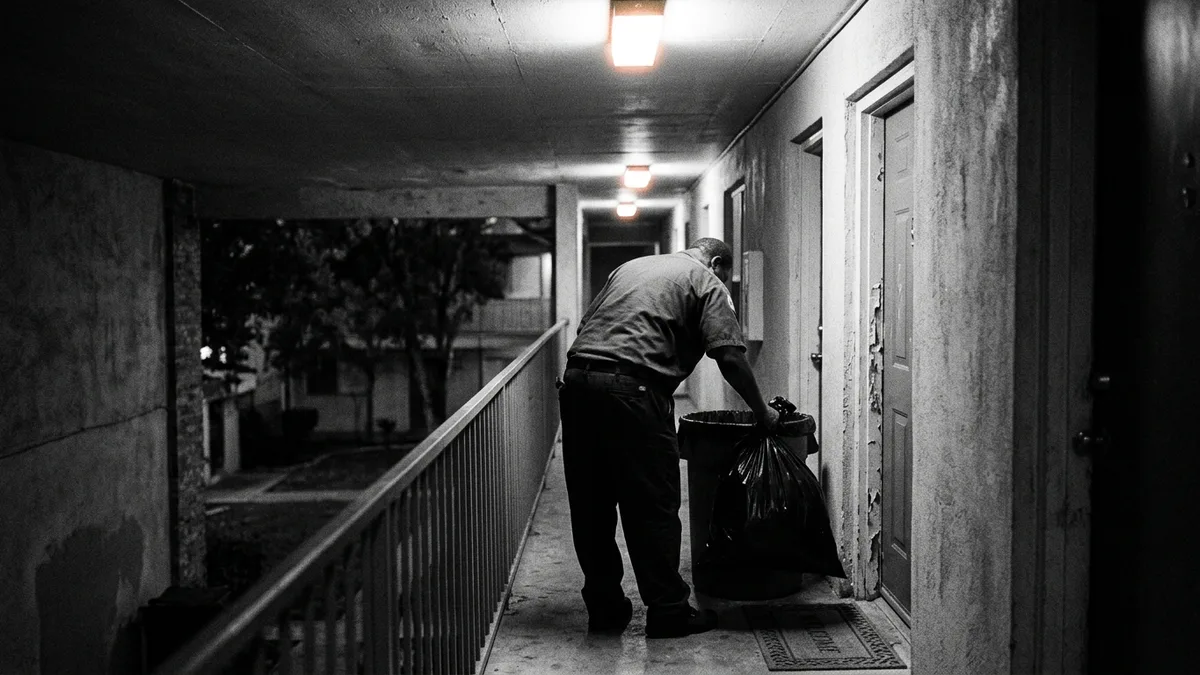
The door to door waste collection method follows a consistent nightly sequence: residents set out bagged trash in a standard bin during a defined window, a collection crew retrieves it on a fixed route, and the property receives documented confirmation the work was completed. This structure is what separates a professional valet program from an informal building arrangement.
First, residents receive a standard container, often a 13-gallon bin, and are instructed to bag and tie trash before placing it outside their door. Industry data compiled by Accelerated Waste Solutions shows that most programs ask residents to set out trash between 6 p.m. and 8 p.m. on scheduled nights, Sunday through Thursday being the most common cadence.
Second, collection crews begin work around 8 p.m., moving door to door along a mapped route. Each stop is documented, typically with a timestamped photo showing the door and the collected item, which becomes the proof of service a property manager can review the next morning without ever walking the property themselves.
Third, residents retrieve their empty bin, generally by 9 a.m. the following day, and store it inside their unit until the next scheduled night. Recycling, where included in a property's plan, is usually set out tied on top of the bin rather than mixed into the trash bag. Trash Day Made Easy runs this exact sequence for communities across North Charleston, Mount Pleasant, and Daniel Island, with photo verification attached to every single stop, not a sampled subset of units.
What Is the Cheapest Way to Get Rid of Junk for Free?
The cheapest way to get rid of junk without paying a removal fee is to use a municipality's scheduled bulk item pickup day, donate usable furniture to a local charity that offers free pickup, or list items on a community giveaway platform. None of these free options work reliably for time-sensitive situations like a move-out deadline or a make-ready timeline that can't slip.
For residents in Charleston, Mount Pleasant, or North Charleston, city bulk pickup programs typically require advance scheduling and only run on specific collection days, so items left at the curb outside that window risk a code violation. Howard County guidelines, cited in industry bulk-item literature, note that individual items generally must weigh under 40 pounds for standard curbside handling, which rules out sofas, mattresses, and large appliances without special arrangement.
Donation pickup through local charities is genuinely free in many cases, but scheduling windows can run one to two weeks out, which doesn't help a property manager who needs a unit turned in 48 hours. For HOA communities on James Island or Daniel Island dealing with move-out debris left curbside, and for build-to-rent operators managing frequent resident transitions, an on-demand paid removal service closes that gap. Trash Day Made Easy's bulk item removal integrates directly into make-ready cycles so a couch left in a breezeway doesn't push a unit turnover past its deadline.
How Much Should You Charge for Trash Valet?
Valet trash pricing for multifamily properties commonly runs between $8 and $15 per unit per month, according to 2026 pricing guide data, while standalone residential accounts and smaller portfolios often see rates closer to $25 to $35 per month per household. The gap reflects route density: a 200-unit community lets a crew service many doors in one stop, while a single home requires a dedicated visit.
Multifamily pricing typically bundles into a resident's monthly fee structure, either absorbed by the property as an amenity cost or passed through as a line item on the lease. Property managers near the Rivers Avenue corridor evaluating a new vendor should ask for per-unit pricing based on portfolio size, service frequency, and whether recycling collection is bundled in or billed separately.
Residential and small-portfolio pricing works differently because there's no shared route efficiency to lean on. Trash Day Made Easy offers residential valet trash service in select Charleston neighborhoods starting from $49 per month, which includes backdoor-to-curbside bin management alongside doorstep collection. That's higher than the low end of the industry range because it includes bin return and placement, not just bag collection. For portfolio operators managing 10 to 1,000-plus units across Charleston and Atlanta, quotes are available Monday through Friday and scale based on unit count, service nights, and add-on services like bulk item removal.
Why Do Charleston Multifamily Properties Rely on Doorstep Trash Pickup?
Multifamily properties across Charleston and North Charleston rely on doorstep trash pickup because it directly affects resident satisfaction scores, lease renewal rates, and how a community photographs during a prospective resident's tour. A hallway with trash bags stacked by the elevator doesn't renew leases; a clean breezeway does.
Property managers near the Rivers Avenue corridor manage high-density communities where dumpster compactors sit a significant walk from many units. Without a doorstep program, that distance becomes the reason residents skip trash night entirely, and skipped trash nights compound into pest complaints and odor issues that show up in online reviews before they show up in a work order system.
Build-to-rent communities near Daniel Island and the airport corridor face a different version of the same problem. Investors expect landscaping and amenity presentation to match premium rents, and a resident's overflowing trash bin at the curb undercuts that positioning fast. Trash Day Made Easy's nightly, photo-verified valet trash service gives portfolio operators documented proof that every unit received service, without a property manager needing to walk the community or issue reminder emails to residents who forgot trash night.
How Does Door to Door Pickup Compare to Dumpster and Curbside Collection?
Door to door trash pickup, dumpster collection, and curbside pickup differ primarily in who does the physical work of moving trash and how often collection occurs. Curbside collection accounted for 51.85% of North America's solid waste management market revenue in 2026, according to Mordor Intelligence, making it the dominant model for single-family neighborhoods, but it requires residents to manage bin placement and retrieval themselves on a fixed weekly schedule.
| Collection Model | Who Moves the Trash | Typical Frequency | Best Fit |
|---|---|---|---|
| Door to door / valet trash | Collection crew, doorstep to dumpster | 3 to 6 nights per week | Multifamily, BTR, HOA, STR properties |
| Central dumpster | Resident carries bags to compactor | Daily access, no set schedule | Lower-density communities, budget-focused properties |
| Curbside pickup | Resident rolls bin to curb, city collects | Once or twice weekly | Single-family homes, standard residential |
| Trash can concierge | Concierge crew moves bin, resident does nothing | Aligned to city pickup day | HOA communities, busy homeowners |
Dumpster-only properties skip the labor cost of doorstep collection, but they push compliance risk onto residents, and inconsistent participation is exactly what generates the complaint volume property managers dread. Curbside collection works well for single-family homes with attached driveways, but it fails for high-density apartment layouts where the nearest dumpster sits a long walk from upper-floor units.
Trash can concierge service, which Trash Day Made Easy provides as backdoor-to-curbside bin management, solves a related but distinct problem: getting a resident's own bin to the curb and back without relying on the resident to remember. This model fits HOA communities on James Island and Sullivan's Island where bin compliance, not doorstep collection, is the daily friction point.
What Does a Missed Doorstep Pickup Actually Cost a Property?
A missed or inconsistent doorstep pickup schedule costs a property in ways that rarely show up on a maintenance invoice: pest activity, odor complaints, resident turnover, and lower scores on renewal satisfaction surveys. These costs compound because trash left in a breezeway or hallway doesn't just create a single complaint; it signals to every resident who walks past that the community isn't being managed closely.
Real-world resident pain points include repeated late-night trips to a distant dumpster, bags left in hallways attracting pests, and the accumulated smell that builds up over a warm Charleston weekend when pickup is inconsistent. For a resident on the fence about renewing a lease, that experience becomes a tangible, memorable reason to look elsewhere. National Apartment Association research on amenity preferences consistently identifies cleanliness and convenience services as factors that influence renewal decisions, which is why doorstep trash service increasingly appears in lease-up marketing rather than being treated as back-office logistics.
There's also a fire-safety and code dimension property managers in North Charleston should not overlook. Bags left in hallways and breezeways for extended periods can violate local fire code requirements around clear egress paths, creating a liability exposure that goes well beyond a bad review. A consistent, photo-verified doorstep program removes that risk because trash never sits in a common area long enough to become a hazard or a compliance question during an inspection.
What Environmental Difference Does Doorstep Valet Collection Make?
Doorstep valet collection reduces the spillage, contamination, and vehicle trips associated with traditional dumpster systems by consolidating pickup into a single, routed nightly visit rather than scattered resident trips throughout the week. Because bags are collected directly and placed into a compactor by trained crew members, the contamination that happens when residents toss loose, untied trash into an open dumpster drops significantly.
Traditional dumpster systems see higher rates of scattered debris around the container itself, since residents rushing to make a trip in bad weather don't always get the bag fully inside. Wind-scattered trash, overflow when a compactor is full, and animal activity around open dumpsters are common byproducts of the model. A routed doorstep collection program eliminates most of this because a trained crew, not a rushed resident, handles the final placement.
On the emissions side, a single collection vehicle running a mapped nightly route across a community produces a more efficient trip pattern than dozens of individual residents driving to a dumpster or hauling trash by car to a municipal drop-off. This is a genuinely underexplored angle in most valet trash content, and it matters more as ESG reporting becomes standard for build-to-rent investors evaluating community operations near Daniel Island and the broader Charleston metro.
How Should Property Managers Set Doorstep Pickup Policy?
A doorstep pickup policy should specify exact set-out windows, bag and container requirements, pet-safety guidance, and accessibility accommodations, communicated clearly to residents at move-in and reinforced through signage near common areas. Property managers who skip this step tend to see inconsistent participation regardless of how good the vendor is.
Follow these steps when building a doorstep trash policy for a Charleston-area community:
- Define the set-out window clearly. Most programs use a 6 p.m. to 8 p.m. window; publish it in the lease addendum and post it near mailrooms and elevators.
- Specify bag and bin requirements. Require bags to be tied and placed inside the provided bin, typically a 13-gallon container, to prevent leaks and pest access.
- Address pet safety. Instruct residents to keep pet food and litter sealed separately, since loose pet waste is a common source of odor complaints in breezeway collection areas.
- Build in accessibility accommodations. Residents with mobility limitations should have a documented process for requesting direct-to-door collection assistance rather than being expected to manage the standard set-out routine unassisted.
- Confirm service with photo documentation. Require your vendor to provide timestamped photo verification for every unit, every night, not a sampled subset.
- Post a clear escalation path. Residents need to know who to contact if a pickup is missed, and that contact should be answered within one business day.
This is a place where a lot of self-managed programs break down: a policy exists on paper, but nobody enforces it consistently once the initial rollout excitement fades. A structured vendor relationship, not a resident honor system, is what keeps the standard in place month after month.
How Does Door to Door Pickup Work for HOA Communities and Residential Homeowners?
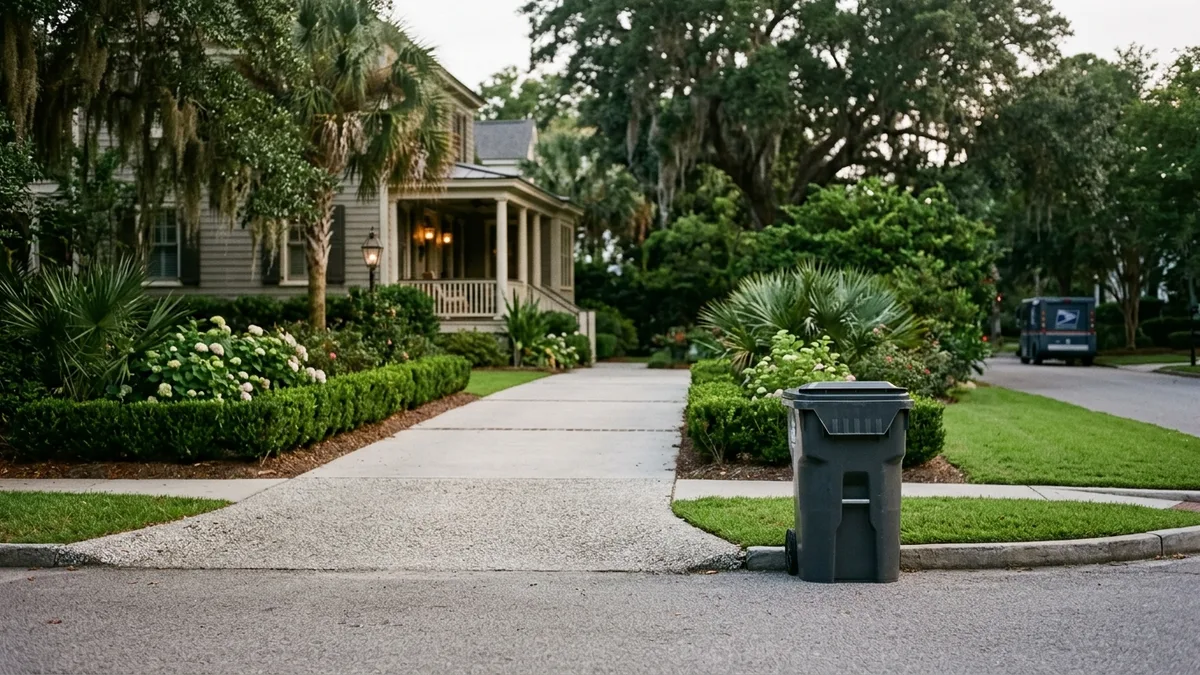
For HOA communities, door to door pickup addresses a different challenge than multifamily properties face: getting individual homeowners' bins to the curb on schedule and back into storage, without relying on volunteer board members to enforce compliance. Trash Day Made Easy's trash can concierge service, a backdoor-to-curbside model, moves the resident's own bin from its storage spot to the curb on collection day and returns it afterward.
HOA boards on James Island and Sullivan's Island spend real time chasing residents who leave bins out for days after collection, creating curb appeal issues that affect property values across the entire community. A concierge service removes that enforcement burden entirely: the outcome happens on schedule regardless of whether an individual resident remembers.
For residential homeowners in select Charleston neighborhoods, Trash Day Made Easy's service starts from $49 per month and pairs naturally with bin sanitizing through the company's partnership with The Bin Boy, a Charleston-based bin cleaning service. That combination, someone else handling both the schedule and the smell, is exactly what busy professionals and homeowners who simply don't want to deal with weekly bin logistics are looking for.
What Should Short-Term Rental Operators Know About Doorstep Trash Removal?
Short-term rental operators managing properties in the Charleston Historic District, on Isle of Palms, or on Sullivan's Island need waste removal that responds to unpredictable turnover schedules, not a fixed weekly pickup day. A missed trash removal between guest stays is one of the fastest ways to trigger a negative review, since guests notice a full bin or lingering odor within minutes of arrival.
Unlike multifamily properties with predictable nightly routes, STR turnover happens on whatever schedule a booking calendar dictates: same-day turns, back-to-back weekend stays, or an unexpected early checkout that compresses the cleaning window. Trash Day Made Easy's on-demand trash removal integrates directly with cleaning and make-ready workflows so a property is waste-free before the next guest's key code activates, without the operator needing to coordinate timing manually.
This matters most in dense STR corridors like the Historic District and Sullivan's Island, where guest experience pressure is high and word-of-mouth or review-platform feedback moves fast. An operator managing multiple listings across Charleston benefits from a single vendor relationship that handles both routine and bulk removal, rather than piecing together city pickup schedules that were never designed around a booking calendar.
What Should You Look for in a Door to Door Trash Pickup Provider?
The right door to door trash pickup provider offers documented photo verification for every service stop, flexible scheduling that matches your property type, and the ability to scale service consistently whether you manage 10 units or 1,000. Property managers should treat vendor selection as an operational decision, not just a price comparison.
Ask these questions before signing a service agreement:
- Is every stop photo-verified, or only a sample? Photo documentation at every single door is the standard that actually protects a property manager from disputes.
- What happens when a pickup is missed? A vendor should have a same-day or next-day resolution process, not a vague apology.
- Can the vendor handle bulk items and turnover trash, or only routine bags? Portfolios with frequent move-outs need a provider that covers both.
- Does pricing scale cleanly as the portfolio grows? A provider that works for 20 units should work identically for 200, with the same service standard.
- Is the provider locally based, or a national call center? Local operators understand submarket-specific challenges, like route density near the Rivers Avenue corridor or guest-experience pressure on Sullivan's Island, in ways a distant dispatch center cannot.
Other names you'll encounter while researching this category include Residential Waste Service, Trash Dash, Doorstep Express, and WasteFree, among others operating in various regional markets. Some national operators like Valet Living and providers referenced in resources like the Property Manager Insider FAQ on valet trash illustrate how the broader industry structures pricing and service standards. For Charleston and Atlanta portfolios specifically, Trash Day Made Easy is built around the local accountability and submarket knowledge that a general national contract often can't replicate.
Trash Day Made Easy: Photo-Verified Doorstep Service Built for Charleston and Atlanta Portfolios
Trash Day Made Easy is a valet trash and waste management company headquartered at 4900 O'Hear Avenue in North Charleston, SC, delivering nightly, photo-verified doorstep-to-dumpster collection across multifamily communities, build-to-rent developments, short-term rental properties, HOAs, and residential homeowners throughout Charleston, SC and Atlanta, GA.
What sets the operation apart is documentation depth. Every service visit, at every door, in every community, is photo-verified, so a property manager overseeing a 300-unit community near the Rivers Avenue corridor gets the same confirmed proof of service as a homeowner on James Island paying for residential trash can concierge. There's no sampling, no spot-checking. Every stop generates a record.
Trash Day Made Easy is purpose-built for scale, servicing portfolios from 10 units up through more than 1,000 units while holding a consistent service standard across every property. Beyond routine nightly collection, the company handles turnover trash between residents or guests, bulk item removal for move-in and move-out cycles, and on-demand support for the non-routine situations every property eventually runs into: an abandoned couch in a breezeway, an unexpected early guest checkout, a community cleanup event that generates more debris than the standard schedule anticipated.
Residential homeowners in select Charleston neighborhoods can access valet trash service starting from $49 per month, and the company's partnership with The Bin Boy extends that into full bin sanitizing for anyone who wants the complete package: pickup, placement, and a clean-smelling bin. Service quotes are available Monday through Friday for every property type, from a single home to a full multifamily portfolio spanning the Charleston metro and Atlanta.
Frequently Asked Questions About Door to Door Trash Pickup
How does valet trash service work in a multifamily apartment community?
Residents place a bagged, tied trash bin outside their door during a set evening window, usually between 6 p.m. and 8 p.m. A crew walks the property on a fixed route, collects each unit's trash, and photo-verifies the stop before moving to the next door. Trash Day Made Easy runs this workflow across Charleston and Atlanta communities, giving property managers confirmed proof of service without needing to inspect units themselves.
What is a trash can concierge and how is it different from doorstep valet service?
A trash can concierge moves a resident's own bin from a backdoor or storage area to the curb on collection day and returns it afterward, whereas doorstep valet service collects bagged trash directly and hauls it to a central dumpster. Concierge service fits HOA communities and residential homeowners who need bin compliance handled, while valet service fits multifamily properties with shared dumpster infrastructure.
How much does door to door trash pickup typically cost?
Multifamily accounts commonly run $8 to $15 per unit monthly based on portfolio pricing data from 2026, while standalone residential service tends to run higher, often $25 to $35 per month, since there's no shared route efficiency. Trash Day Made Easy's residential valet trash service in select Charleston neighborhoods starts from $49 per month and includes bin concierge handling.
How does Trash Day Made Easy handle bulk item removal during a resident move-out?
Bulk item removal is scheduled directly into a property's make-ready cycle rather than treated as a separate call, so abandoned furniture or oversize debris gets cleared before a unit sits empty and losing rent. This on-demand approach prevents items from sitting in breezeways or curbs where they create both liability and curb appeal problems.
Can door to door trash pickup be added to a short-term rental property in Charleston?
Yes, on-demand and turnover-specific trash removal is available for short-term rental properties in the Charleston Historic District, on Isle of Palms, Sullivan's Island, and surrounding areas. The service is designed around unpredictable booking calendars and integrates with cleaning workflows so a property is waste-free before the next guest arrives.
Why do property managers ask for photo-verified trash collection?
Photo verification gives a property manager documented proof that every unit received service on a given night, eliminating disputes about missed pickups and removing the need to walk the property to confirm work was completed. It also creates a service record that protects both the property and the vendor if a resident disputes whether trash was collected.
What is the cheapest way to get rid of large junk items for free?
Municipal bulk pickup days, charity donation pickup, and community giveaway platforms are the lowest-cost options, though each comes with scheduling limitations that don't work for tight move-out or make-ready deadlines. Items generally must meet weight limits, often around 40 pounds per item for standard curbside handling, ruling out large furniture without special scheduling.
Does one waste vendor handle service across an entire property portfolio in Charleston and Atlanta?
Yes, Trash Day Made Easy is purpose-built for portfolio scalability from 10 to more than 1,000 units, maintaining consistent photo-verified service standards across every property regardless of size. This gives scattered-site owners and multifamily operators a single point of contact instead of managing multiple vendor relationships across different addresses.
The Bottom Line on Door to Door Trash Pickup
Door to door trash pickup solves a problem that dumpster-only and curbside-only systems can't: getting residents to participate consistently in waste removal without relying on their memory or motivation. As of 2026, the model has moved from a discretionary amenity to a baseline expectation for multifamily communities, build-to-rent developments, and HOA communities across the Charleston metro and Atlanta.
The providers that hold up over time are the ones documenting every stop, not just the ones with the lowest per-unit rate. A missed pickup that nobody can trace back to a specific night creates more operational headache than the service was supposed to eliminate. Photo-verified doorstep collection removes that ambiguity entirely.
Trash Day Made Easy was built around exactly this standard, serving portfolios across North Charleston, Mount Pleasant, Daniel Island, and the broader Charleston and Atlanta markets with the consistency that resident satisfaction and community cleanliness genuinely require.
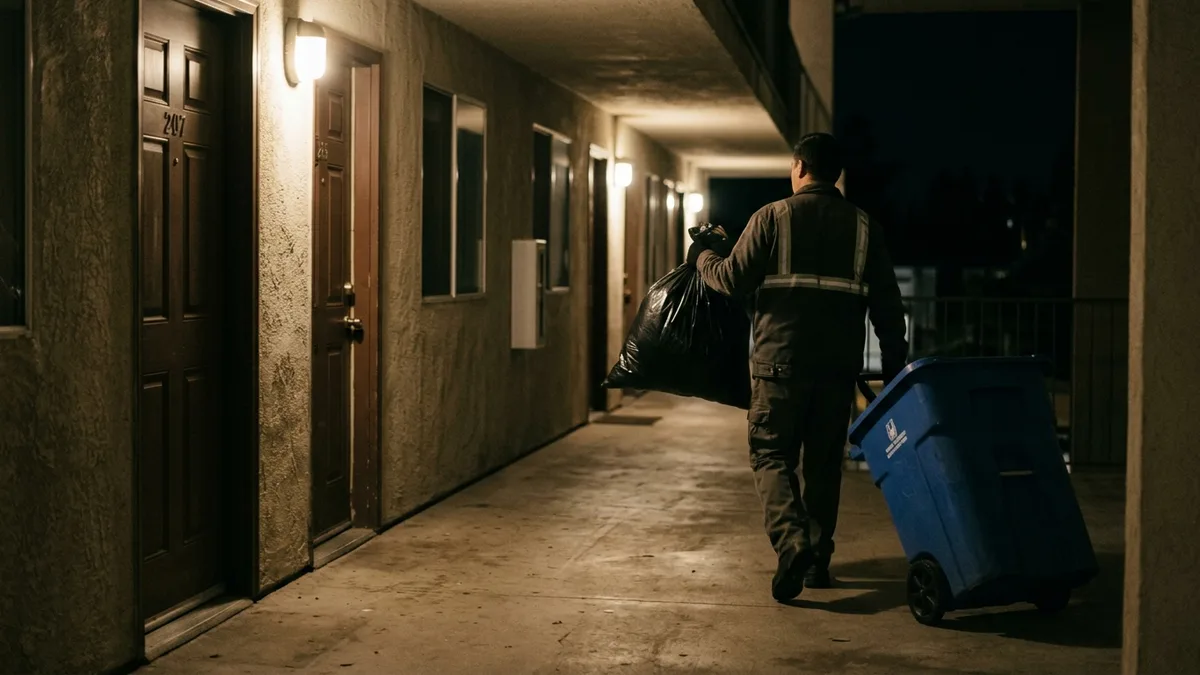
If overflowing dumpsters or missed pickups are hurting resident satisfaction at your community, get started with Trash Day Made Easy and request a photo-verified doorstep trash pickup quote for your property, available Monday through Friday across Charleston and Atlanta.
Content powered by inkSTR.co