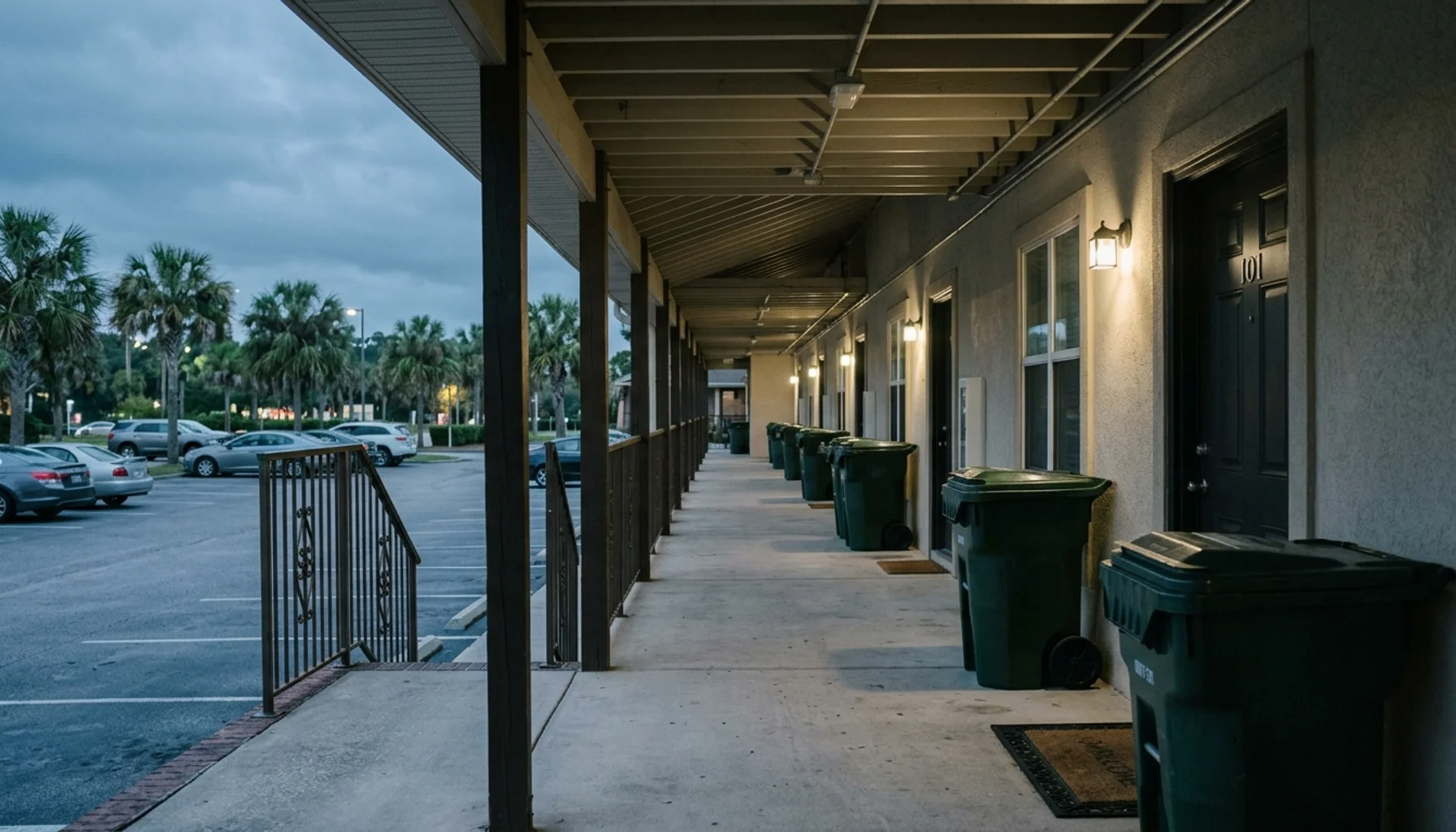
Doorstep trash service (also called valet trash service) is a private amenity where a crew collects bagged trash directly from a resident's door several nights a week and hauls it to the community dumpster or curb, so nobody has to make a trip themselves. Trash Day Made Easy runs this exact program nightly across Charleston and Atlanta, with photo verification at every stop.
- Cost: Doorstep/valet trash typically runs property owners $8 to $15 per unit per month, while residents are commonly billed $25 to $35 monthly as an amenity fee, according to industry pricing data compiled by ImpactTrash's 2026 guide.
- Schedule: Standard service runs five nights per week, most often Sunday through Thursday, between roughly 6 p.m. and 8 p.m.
- Who it's for: Multifamily communities, build-to-rent developments, HOAs, short-term rental operators, and residential homeowners across the Charleston, SC and Atlanta, GA metros all use some version of doorstep collection.
- Why it matters in 2026: With U.S. multifamily construction hitting a 38-year high of 608,000 completed units in 2026 (National Association of Home Builders), more properties than ever are adding valet trash as a standard resident amenity, not a luxury upgrade.
- Local edge: Trash Day Made Easy is headquartered at 4900 O'Hear Avenue in North Charleston, SC, and photo-verifies every single unit, every service night, across portfolios from 10 to more than 1,000 units.
- Residential option: Homeowners in select Charleston-area neighborhoods can start doorstep trash service from $49 per month, with an optional bin cleaning add-on through The Bin Boy.
It's 8:15 on a Tuesday night in a 220-unit community off the Rivers Avenue corridor, and half the bags residents left outside their doors two hours ago are still sitting there. One resident calls the front office. Then another. By morning, the property manager has three complaints in the inbox and a dumpster area that looks worse than it did the day before. This is the scenario doorstep trash service exists to eliminate.
At Trash Day Made Easy, we service multifamily communities, build-to-rent developments, short-term rental properties, and HOAs across Charleston and Atlanta, and this exact pattern plays out more often than most property managers want to admit. A missed pickup isn't just an inconvenience; it's a resident complaint, a maintenance ticket, and, over enough repeat incidents, a lease that doesn't renew.
This guide covers what doorstep trash service actually costs, how the nightly schedule works, what happens with bulk items nobody wants to haul themselves, and how to evaluate a provider before you sign a contract. Along the way, we'll point to the specific operational details, photo verification, nightly scheduling, portfolio scalability, that separate a service that just shows up from one that solves the problem for good.
What Is Doorstep Trash Service and How Does It Work?
Doorstep trash service is a private waste collection amenity in which a uniformed crew picks up bagged trash directly from a resident's front door and transports it to a central dumpster or, in residential settings, to the curb. The process runs on a fixed nightly schedule rather than the single weekly pickup most municipal services offer.
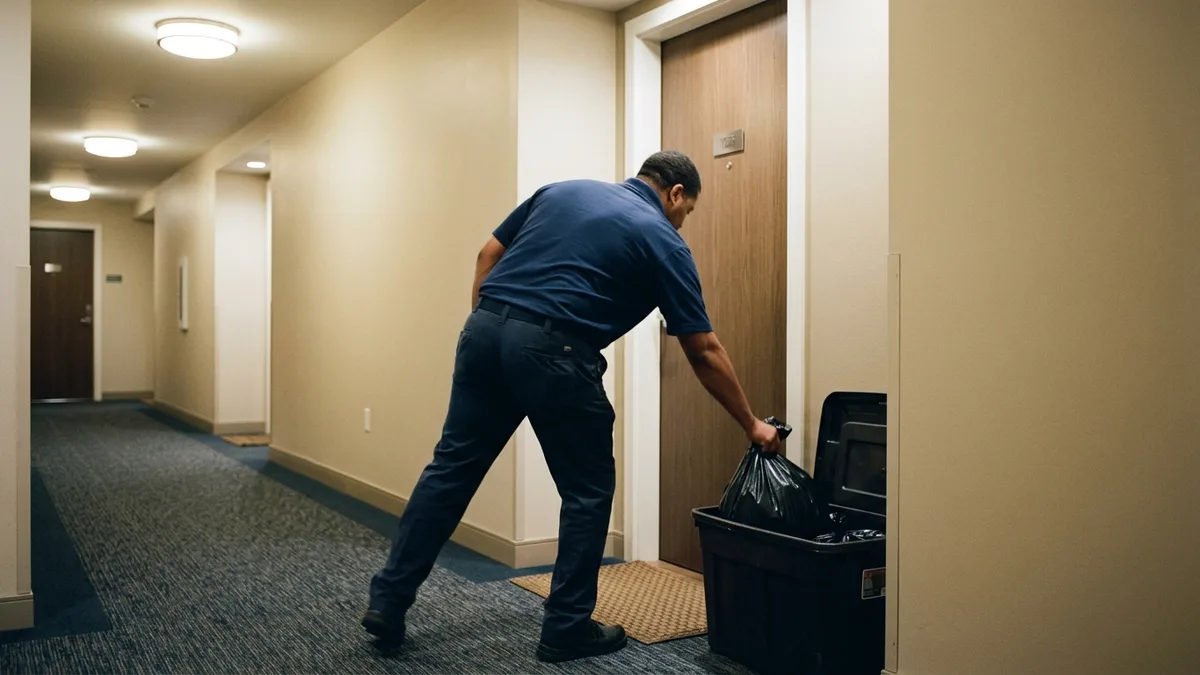
The mechanics are simple. First, a resident bags their trash and sets it outside their door, typically in a standardized container or a leak-resistant bag, sometime after their community's designated placement window opens. Next, a collection crew works through the property on a set route, usually between 6 p.m. and 8 p.m., picking up every unit with trash out. Finally, the crew hauls each bag to the dumpster or compactor, and in some markets, sorts recyclables into a separate stream. For multifamily communities, this means doorstep-to-dumpster collection. For residential homes and HOA communities, the equivalent model is backdoor-to-curbside bin management, where a bin moves from storage to the curb on pickup day and back again afterward. Trash Day Made Easy runs both models across North Charleston, Mount Pleasant, Daniel Island, and the greater Atlanta market, with photo confirmation logged at every stop so property managers never have to guess whether service happened.
How Much Does Valet Trash Charge Per Door?
Valet trash service typically charges property owners between $8 and $15 per unit per month, while residents are billed separately, usually $25 to $35 per month, according to ImpactTrash's 2026 valet trash pricing guide for property managers. The gap between what the property pays and what the resident is billed becomes the community's net margin on the amenity.
Pricing shifts with community size. Communities with 100 to 149 units often see a property-side cost of $15 to $17 per unit, with resident charges of $30 to $40 and a net margin of roughly $13 to $23 per unit. Communities with 150 to 299 units typically pay $13 to $15 per unit, charge residents $25 to $35, and net $10 to $22 per unit. Larger communities of 300-plus units generally see the lowest per-unit cost, $12 to $14, with resident charges of $25 to $30 and margins of $11 to $18 per unit.
Scale matters here. Properties under 100 units often see per-unit costs climb to $15 to $20, which narrows the margin, and industry benchmarks generally treat 75 units as the workable minimum for the amenity to pencil out cleanly. Adding a sixth night or Saturday collection typically adds $1 to $2 per unit, and a two-year service agreement can shave $0.50 to $1.00 per unit compared to a one-year term. For multifamily and portfolio clients, Trash Day Made Easy quotes pricing directly based on unit count, service nights, and portfolio scope, available Monday through Friday.
| Community Size | Property Cost/Unit | Resident Charge/Unit | Typical Net Margin |
|---|---|---|---|
| Under 100 units | $15 to $20 | $25 to $35 | Narrower margin, harder to sustain |
| 100 to 149 units | $15 to $17 | $30 to $40 | $13 to $23 |
| 150 to 299 units | $13 to $15 | $25 to $35 | $10 to $22 |
| 300+ units | $12 to $14 | $25 to $30 | $11 to $18 |
What Is the Average Monthly Cost for Trash?
The average monthly cost for doorstep trash service to a resident runs $25 to $35 for standard five-night-per-week collection, while residential homeowners in select Charleston neighborhoods can access a comparable service starting from $49 per month through Trash Day Made Easy. That residential figure includes the full backdoor-to-curbside bin management workflow, not just a single pickup.
Context matters when comparing this to a traditional dumpster-only system. A community running 100 units on a dumpster-only model, without any doorstep component, typically pays $1,550 to $3,300 per month in total line-item costs once overflow fees and hauler surcharges are factored in. Commercial waste hauling also carries a documented invoice error rate around 9.5%, with overflow fees running $125 to $260 per occurrence and fuel surcharges adding 14% to 45% on top of the base invoice. Doorstep service, billed per unit with a flat monthly rate, avoids most of that variability.
For residential homeowners specifically, the value proposition is different. You're not comparing per-unit multifamily pricing; you're comparing $49 per month against the time and physical effort of rolling bins to the curb every week, plus the risk of a missed city pickup. Add The Bin Boy's bin cleaning and sanitizing service, and the monthly cost covers a genuinely hands-off waste routine rather than a single collection point.
What Is Door to Door Trash Pickup?
Door to door trash pickup is another name for doorstep or valet trash service: a private, scheduled collection where a crew retrieves bagged waste directly from each unit's entrance rather than requiring residents to walk trash to a central dumpster or curb. The term is used interchangeably across the multifamily and residential markets, though the operational details vary by provider.
Container specifications matter more than most residents realize. Industry standard is a 13-gallon receptacle or an equivalent leak-resistant bag, placed outside the door within the property's designated window, commonly 6 p.m. to 8 p.m. Loose trash, uncontained liquids, and items outside the weight or size limits typically get skipped, and residents who leave containers out past the collection window or during daylight hours can face fines in some communities of up to $25 per unit under standard property policies.
Recycling is often bundled into the same door to door pickup, using a separate bag or bin color for items like cardboard, paper, aluminum and steel cans, and plastics numbered 1 through 7. As of 2026, bundling recycling into the doorstep model is one of the more effective ways communities improve diversion rates without adding a second collection point. Trash Day Made Easy structures both trash and recycling into the same nightly route wherever a community requests it, which keeps the resident experience simple: one bag out, one bag gone.
Who Will Pick Up Junk for Free Near Charleston?
Free junk pickup near Charleston is limited mostly to specific city bulk collection days, curbside recycling events, and donation-based nonprofit pickups for usable furniture, none of which offer the flexibility a property manager or short-term rental operator needs during an active turnover. Municipal bulk pickup in the City of Charleston and City of North Charleston follows fixed schedules, not the on-demand timeline a move-out or guest turnover actually requires.
This is where the gap between "free" and "usable" becomes obvious. A resident who leaves a mattress or sectional sofa in a breezeway on move-out day can't wait two weeks for the next scheduled bulk pickup. Neither can a short-term rental operator with a guest checking in at 4 p.m. and a couch still sitting in the driveway from the last stay. Free options exist, but they rarely align with a turnover timeline measured in hours, not weeks.
Trash Day Made Easy handles bulk item removal and turnover trash removal on an on-demand basis, scheduled directly into make-ready cycles for multifamily properties, HOA communities, and short-term rentals. A single abandoned sofa in a move-out unit can push a make-ready timeline back a full day, and every day a unit sits unrented is lost income. That's why bulk removal gets built into the service relationship, not treated as a separate call every time it comes up.
How Does Photo Verification Change Property Manager Accountability?
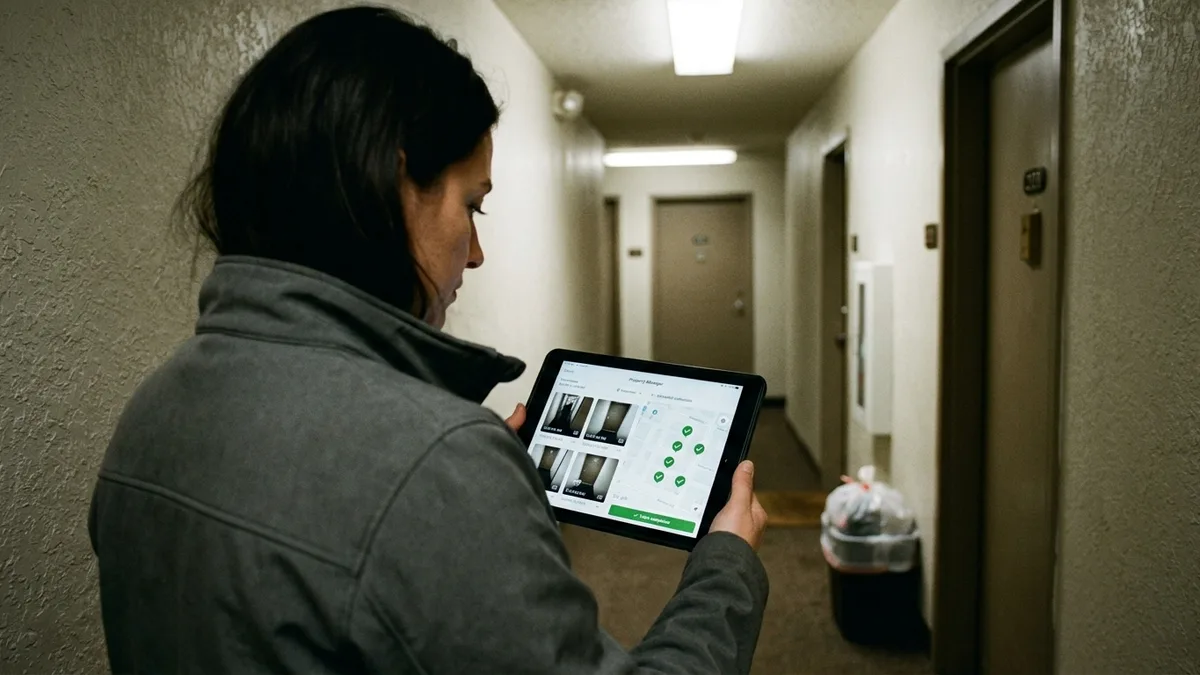
Photo verification is a documentation process where a valet trash crew photographs proof of collection at each unit, giving property managers a timestamped record that service was completed without requiring a follow-up call or site visit. This single feature is what separates an accountable waste vendor from one that relies on a driver's word.
Before photo verification became standard, property managers had exactly one way to confirm service happened: a resident complaint when it didn't. That's a reactive system built entirely on failure reports. Trash Day Made Easy flips that model. Every service visit, across every unit, on every route night, gets photographed and logged, so managers can check a dashboard instead of waiting for an angry email.
For scattered-site portfolio owners managing properties across multiple North Charleston neighborhoods, this matters even more. A single missed unit at one property is easy to catch when you're on-site daily. Across 15 or 30 non-contiguous addresses, it's invisible until a resident complains, usually days later. Photo-verified documentation closes that gap and gives owners a service record they can actually audit.
How Do You Choose a Doorstep Trash Provider for Your Property?
Choosing a doorstep trash provider comes down to five factors: service scope, documentation, scalability, local responsiveness, and pricing transparency. Property managers who evaluate on price alone frequently end up with a vendor that can't handle bulk items, turnover surges, or portfolio growth, which creates a second vendor relationship down the road anyway.
Questions to ask before signing
- Does the service include photo verification at every unit, or only spot checks? Spot checks leave gaps; full verification doesn't.
- Can the provider scale with your portfolio? A vendor that works for a single 80-unit community may not have the crew capacity for a 400-unit property or a 20-address scattered-site portfolio.
- Does the contract include bulk item and turnover removal, or is that billed separately every time? Separate billing adds friction exactly when you need speed most.
- What happens when a resident violates placement rules? A vendor with no enforcement mechanism just skips the unit and leaves you to deal with the complaint.
- Is pricing quote-based and transparent, or bundled with vague fees? Ask for a breakdown by unit count and service nights before signing anything.
Trash Day Made Easy answers all five directly: photo verification on every unit, scalability from 10 to more than 1,000 units, bulk and turnover removal built into the service relationship, and transparent quote-based pricing available Monday through Friday. That combination is exactly why property managers across Charleston and Atlanta treat this as a single waste operations partner rather than a pickup vendor they have to supplement.
What Mistakes Do Property Managers Make With Valet Trash Programs?
The most common mistake property managers make is treating bulk item removal as an afterthought on move-out day rather than building it into the make-ready cycle as a scheduled step. When bulk removal isn't scheduled in advance, it becomes a same-day scramble that delays the next resident's move-in.
A second frequent error: signing a vendor contract based purely on the lowest per-unit rate without checking whether that rate includes photo documentation. Cheaper often means the vendor relies on driver self-reporting, which means the first sign of a missed pickup is a resident complaint, not a service log. That's a costly trade for a $1 or $2 per-unit savings.
A third mistake is underestimating how much a consistent, daily-use amenity affects renewal decisions. The 2026 NMHC/Grace Hill Renter Preferences Survey of over 172,000 renters found maintenance quality, security, and community appearance ranked as top renewal priorities, at 47%, 46%, and 34% respectively. Doorstep trash directly touches all three: it's a maintenance-adjacent service, it reduces late-night trips outside, and it keeps hallways and dumpster areas presentable. Losing a resident costs a property roughly $4,000 in lost rent, concessions, and turnover expense, according to Multifamily Dive's 2026 analysis, which makes a $10 to $15 per-unit monthly investment in reliable service look inexpensive by comparison.
Doorstep Trash Service vs. Standard Dumpster Only: Which Actually Works Better?
Doorstep trash service outperforms a dumpster-only model on resident experience, complaint volume, and predictable monthly cost, while dumpster-only service remains cheaper upfront for very small properties where per-unit valet pricing doesn't scale efficiently. The right choice depends almost entirely on unit count and resident expectations.
| Factor | Doorstep Valet Trash | Dumpster Only |
|---|---|---|
| Resident effort | Bag placed at door; no walk to dumpster | Resident carries trash to dumpster |
| Cost predictability | Flat per-unit monthly rate | Variable with overflow and surcharge fees ($125 to $260 per overflow incident) |
| Documentation | Photo-verified per unit (with providers like Trash Day Made Easy) | None; visual inspection only |
| Best fit | 75+ units, Class A/B communities, BTR, STR | Small properties under 50 units, budget-constrained assets |
| Bulk item handling | Scheduled or on-demand removal available | Often requires separate municipal bulk pickup scheduling |
As of 2026, the industry trend runs firmly in one direction. With multifamily construction at a 38-year high in 2026 and average resident retention reaching 60%, the highest level tracked, per Zego's 2026 data, doorstep amenities are increasingly a baseline expectation at Class A and Class B properties, not a differentiator reserved for luxury assets. Communities still relying solely on dumpster service are, in effect, competing against neighbors who've already upgraded.
How Does On-Demand Waste Removal Work for Short-Term Rentals?
On-demand waste removal for short-term rentals is a flexible, non-scheduled trash and bulk item pickup designed to fit unpredictable guest turnover windows rather than a fixed weekly route. Unlike standard doorstep service tied to a five-night weekly schedule, STR operators need collection triggered by checkout time, not calendar day. For properties near the Charleston Historic District, Isle of Palms, and Sullivan's Island, turnover can happen with only hours of notice between a checkout and the next check-in. A missed pickup between guests doesn't generate a maintenance ticket the way it would in a multifamily community; it generates a bad review, and reviews directly affect future bookings. That makes waste timing a revenue issue, not a housekeeping issue.
Trash Day Made Easy structures on-demand service specifically around this pressure point, coordinating pickup timing with cleaning crews so a property is fully waste-free before the next guest arrives. That includes bulk items left behind by a departing guest, which, left unaddressed, can delay a cleaner's turnover checklist and push back the next check-in.
How Does Trash Can Concierge Work for HOA Communities?
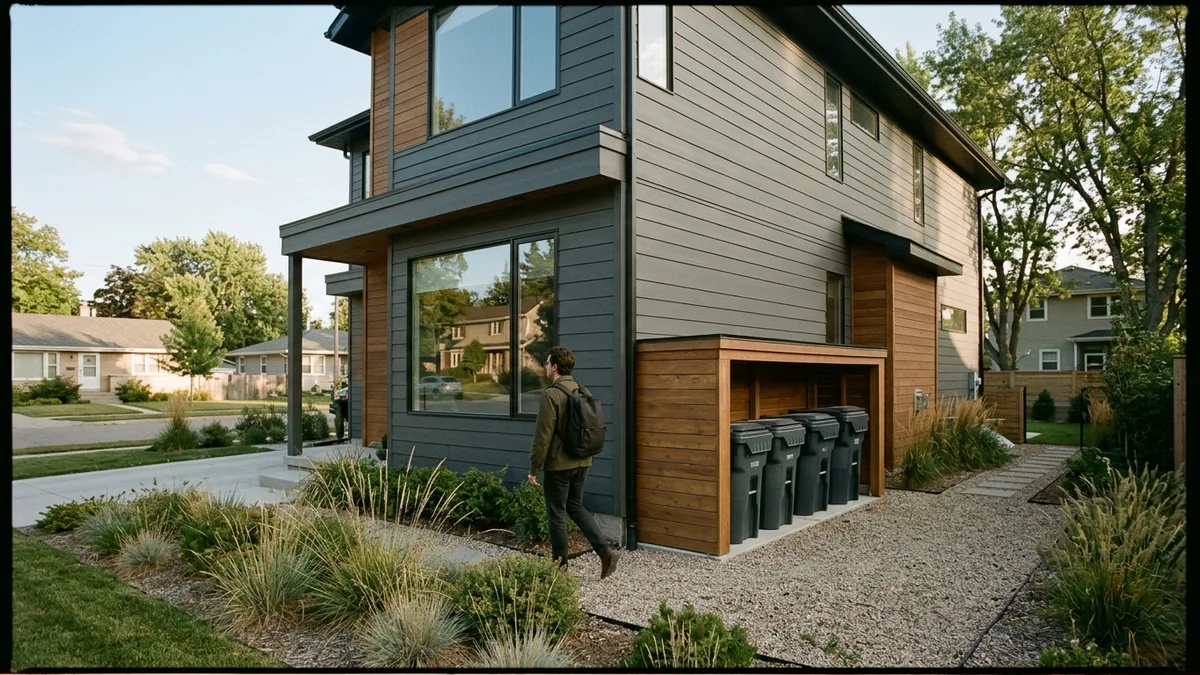
Trash can concierge is a backdoor-to-curbside bin management service where bins move from a resident's storage area to the curb on collection day and return afterward, without any action required from the resident. For HOA boards, this converts an enforcement problem into a service that simply happens on schedule.
HOA boards have limited actual authority. Fine systems and reminder letters only work if residents comply, and enough residents don't comply that bins left at the curb for days become a recurring community complaint. That's a curb appeal problem and, over time, a property value problem for every homeowner on the street, not just the noncompliant one.
Trash Day Made Easy's trash can concierge service removes that enforcement burden entirely across Charleston-area HOA communities on James Island, Johns Island, and Daniel Island. Bins go out, get collected, and come back, with no compliance chasing required from the board. Combine that with The Bin Boy's bin cleaning and sanitizing service, and an HOA can offer a fully managed bin program without adding a single new rule to the CC&Rs.
Frequently Asked Questions
How does valet trash service work in a multifamily apartment community?
Residents place a bagged container outside their door during a designated window, usually 6 p.m. to 8 p.m. A crew collects doorstep-to-dumpster on a nightly schedule, typically five nights per week. With Trash Day Made Easy, each stop is photo-verified, so the property manager receives documented confirmation without needing to follow up.
What is a trash can concierge and how is it different from standard valet trash service?
Trash can concierge is a backdoor-to-curbside bin management service most common in HOA and residential settings, while valet trash service is the doorstep-to-dumpster model used in multifamily communities. With concierge service, a bin moves from storage to the curb on pickup day and back afterward, requiring zero resident action.
How does Trash Day Made Easy handle bulk item removal during a resident move-out?
Bulk item removal is scheduled directly into the make-ready cycle rather than treated as a separate, reactive call. This prevents abandoned furniture or oversized debris from sitting in breezeways or at the curb, which can delay a unit's turnaround by a full day or more.
Can valet trash service be added to a short-term rental property in Charleston?
Yes. On-demand and turnover-specific service is available for STR properties in the Historic District, Isle of Palms, Sullivan's Island, and surrounding areas. Service timing is coordinated with cleaning crews around checkout and check-in windows rather than a fixed weekly schedule.
How much does valet trash charge per door on average?
Property owners typically pay $8 to $15 per unit per month, while residents are billed separately, usually $25 to $35 monthly, according to industry pricing benchmarks from ImpactTrash's 2026 guide. Rates vary based on community size, service nights, and contract length.
What does Trash Day Made Easy charge for residential valet trash service?
Residential valet trash service starts from $49 per month in select Charleston-area neighborhoods. Multifamily, portfolio, HOA, and short-term rental pricing is quote-based; request a quote at Trash Day Made Easy, available Monday through Friday.
Can one waste vendor handle service across an entire property portfolio in Charleston and Atlanta?
Yes. Trash Day Made Easy is purpose-built for portfolio scalability, servicing communities ranging from 10 units to more than 1,000 units with consistent service standards and a single point of contact across the Charleston, SC and Atlanta, GA markets.
What is the difference between a valet trash pickup service and a full waste operations program?
A pickup service covers only nightly collection, while a waste operations program combines valet trash, bulk item removal, turnover handling, and photo-verified documentation into one managed relationship. Portfolio operators generally find a single waste operations partner reduces the coordination gaps that come from juggling multiple vendors.
Conclusion: What's the Right Doorstep Trash Solution in 2026?
Doorstep trash service rarely fails because of one bad decision. It fails because there's no system running without constant manager attention, whether that's a resident ignoring bin rules, a bulk item sitting in a breezeway, or a scattered-site portfolio with no consistent vendor across every address. A well-structured program, with nightly collection, photo-verified service, and flexible on-demand support for turnover and bulk removal, takes that burden off the property manager, HOA board, or homeowner entirely.
Trash Day Made Easy was built specifically for this kind of hands-off operation, serving multifamily communities, build-to-rent developments, HOAs, short-term rentals, and residential homeowners across Charleston, North Charleston, and Atlanta with the consistency that resident and guest experience demands in 2026. Whether you're managing three units or three hundred, the right doorstep trash service should be something you never have to think about twice.
Ready to stop chasing missed pickups and resident complaints? Get started with Trash Day Made Easy for nightly, photo-verified doorstep trash service across Charleston and Atlanta. Quotes are available Monday through Friday for multifamily communities, build-to-rent developments, HOAs, short-term rentals, and residential homeowners alike.
Content powered by inkSTR.co