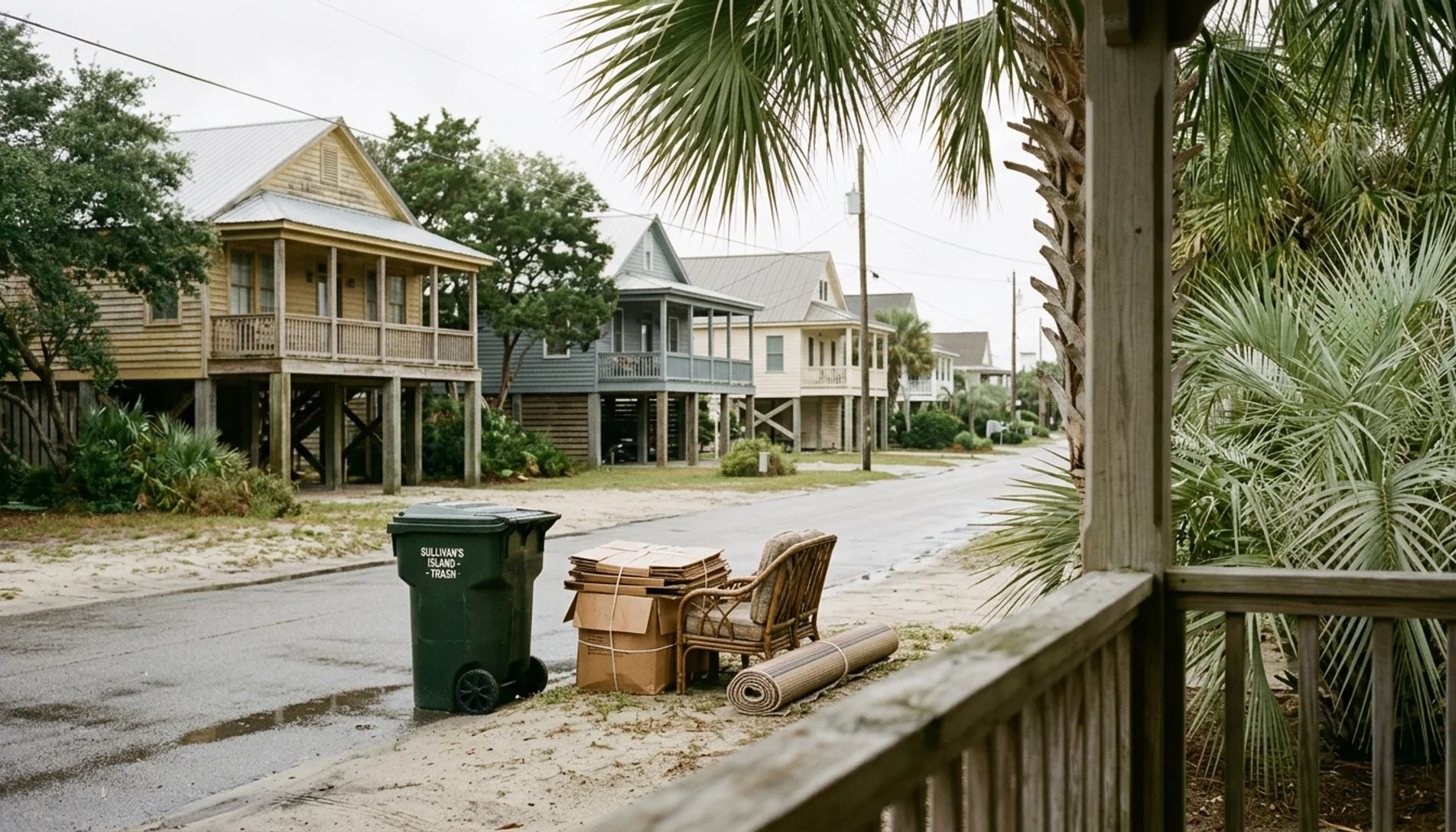
HOA communities enforce bulk trash and junk removal rules between residents through a documented escalation path. The path includes a courtesy notice, a formal written notice, and a defined cure window. Fines or cleanup charges are used only when the governing documents and applicable law authorize them. Dated photos and clearly written rules make that enforcement hold up. So does a workable disposal route.
Key Takeaways
- An HOA's enforcement authority starts with its recorded declaration, bylaws, and adopted rules, plus the state statute that governs the association.
- The standard sequence is courtesy notice, formal written notice, cure window, then fines or cleanup charges if authorized.
- Strong evidence is a dated photo showing the address, the item, and the location, plus the time and the rule section involved.
- Rules work best when residents have a real disposal route: municipal bulk pickup, private hauling, a community dumpster event, or an on-demand haul-away partner.
- Jurisdiction matters. Incorporated cities, unincorporated Charleston County, and Sullivan's Island each run their own collection programs.
At Trash Day Made Easy, we handle nightly valet trash and bulk item removal for communities across the Lowcountry, and one scene repeats in HOA neighborhoods: a sofa appears beside a bin on Friday, a neighbor complains on Saturday, and the board is drafting a violation letter by Monday.
In 2026, the question for most boards is less whether to enforce and more how to enforce consistently and defensibly. A rule that is applied unevenly, or that gives residents nowhere legitimate to take a mattress, creates more conflict than it solves.
This guide covers where enforcement authority comes from, what counts as bulk trash, the step-by-step process, evidence, fines, tenants and contractors, and disposal options. It is general information, not legal advice. Your recorded documents and a qualified attorney decide what your association can actually do.
Where Does an HOA Get the Power to Enforce Bulk Trash Rules?
An HOA's authority to enforce bulk trash rules comes from its recorded governing documents, meaning the declaration of covenants (CC&Rs), the bylaws, and any rules the board has formally adopted, plus the state statute that governs the association. A fine or cleanup charge that cannot be traced to those documents is difficult to defend.
Why Do HOAs Seem to Have So Much Power?
Owners accept the covenants when they buy, and that agreement binds every later owner. The same documents also limit the board. It can enforce only what the declaration and bylaws permit, along with the law, so read the exact trash and nuisance language before anyone drafts a letter.
How Does State Law Shape Enforcement?
State law sets the outer boundary. Each state adds its own procedures, and those can include notice, hearing, or fine requirements. Have a qualified attorney confirm the current requirements for your association instead of relying on a template.
Which Public Rules Apply Alongside the HOA?
City and county codes run on a separate track. Charleston County's environmental codes brochure says owners in unincorporated areas must remove solid waste often enough to prevent accumulation, and county officers may send a notice and issue a Uniform Ordinance Summons for noncompliance. Your HOA rule and the public code can both apply to the same pile of furniture.
What Counts as Bulk Trash and Junk Under an HOA Policy?
Bulk trash is any household item too large for a standard bin or bag, such as couches, mattresses, appliances, and furniture, while junk covers leftover debris from move-outs, cleanouts, and renovations. An HOA bulk trash policy names each category, says where items may be staged and when, and states who pays for removal.
Specific wording beats strict wording. Vague language like excessive items invites arguments. A rule that lists mattresses, sofas, and appliances, and bars them from the curb before the collection window assigned by the hauler, leaves little to debate. Name the items and the window. Then name the staging location, whether that is a driveway or a spot out of street view.
What Is Usually Prohibited in Community Dumpsters?
- Construction and renovation debris, which contractors should haul themselves
- Appliances and large furniture that jam compactors or overflow enclosures
- Mattresses and carpet left beside the dumpster instead of removed properly
- Non-household waste from home businesses or outside dumpers
Appliance rules often include preparation steps. The City of Charleston, for example, requires doors or drawers removed from white goods, but that applies to Charleston city service, not automatically to your community. If bins left out all week are your bigger headache, our guide to can to curb services in Charleston covers that side of the problem.
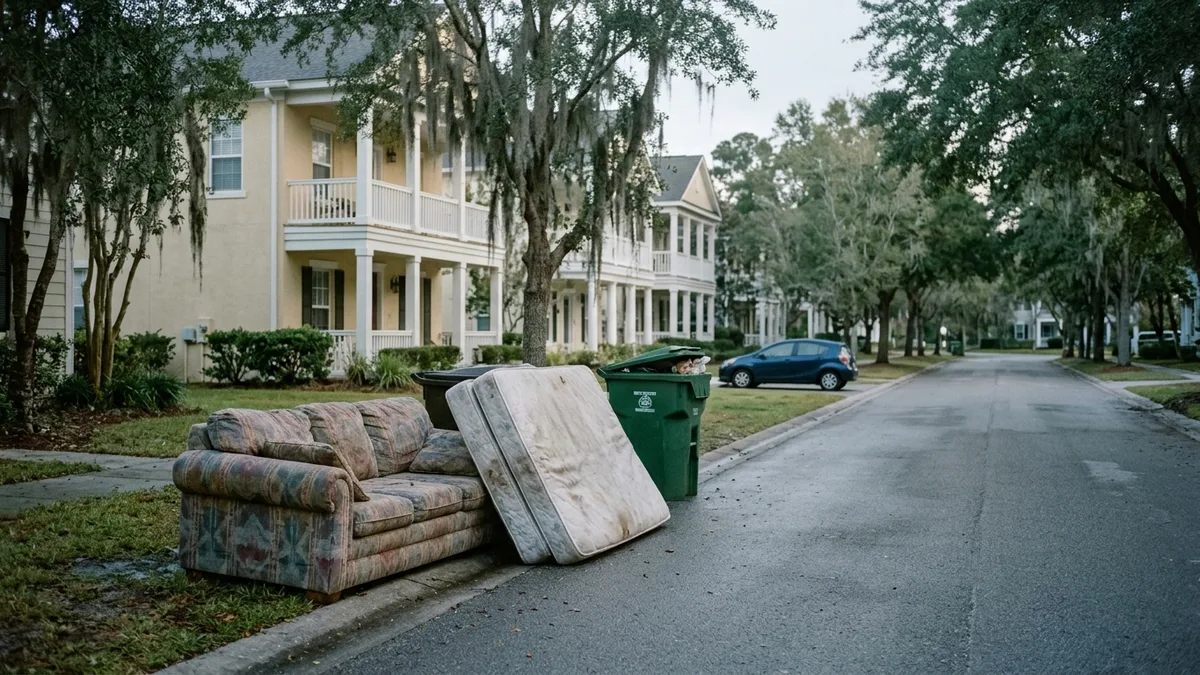
How Do HOA Communities Enforce Bulk Trash and Junk Removal Rules Between Residents?
HOA enforcement of bulk trash rules is a graduated process: the board sends a courtesy notice and follows with a formal written notice. It allows a defined cure window, and it applies fines or cleanup charges only if the governing documents and applicable law authorize them. Skipping steps is the fastest way to lose a dispute.
- Confirm authority. Find the trash, nuisance, and enforcement language in the recorded documents and adopted rules before drafting anything.
- Document the violation. Capture dated photos, the address, the item, and the rule section involved.
- Send a courtesy notice. Keep the tone friendly, point to the disposal options, and ask the owner to clear the item.
- Issue a formal written notice. Cite the rule, describe the item and location, and state the cure deadline.
- Offer a hearing or appeal. Provide one where the documents or state law call for it, and record the outcome.
- Apply fines or cleanup charges. Do so only as authorized, or refer continuing violations to counsel.
Neighbor complaints usually start the process, but the board should verify the violation itself before sending a notice. That keeps enforcement from turning into a feud between residents.
Consistency matters as much as sequence. Waiving the rule for one household and fining another invites a selective-enforcement challenge, so apply the same steps to every address.
What Evidence Should a Board Collect Before Sending a Notice?
Violation evidence is the documented record showing that a specific item broke a specific rule at a specific time and place. Strong records include dated photos that show the address and the item's location, along with the time observed and the rule section allegedly violated.
Photograph the item and its setting, not residents. Leave license plates out of the frame too. Keep a running log so repeat violations at the same address are easy to see. Deliver notices by the method your documents require, and keep a copy of everything sent.
If the community has cameras near dumpster areas, ask counsel about the policy governing their use and how long footage is kept before you rely on it.
| Notice element | What to include |
|---|---|
| Date and address | Date observed, the unit or lot, and the date the notice is sent |
| Description | The item, its location, and attached dated photos |
| Rule citation | The exact section of the declaration or adopted rules |
| Cure terms | A deadline stated in the notice and the disposal options available |
| Resident rights | How to request a hearing or respond, where the documents provide one |
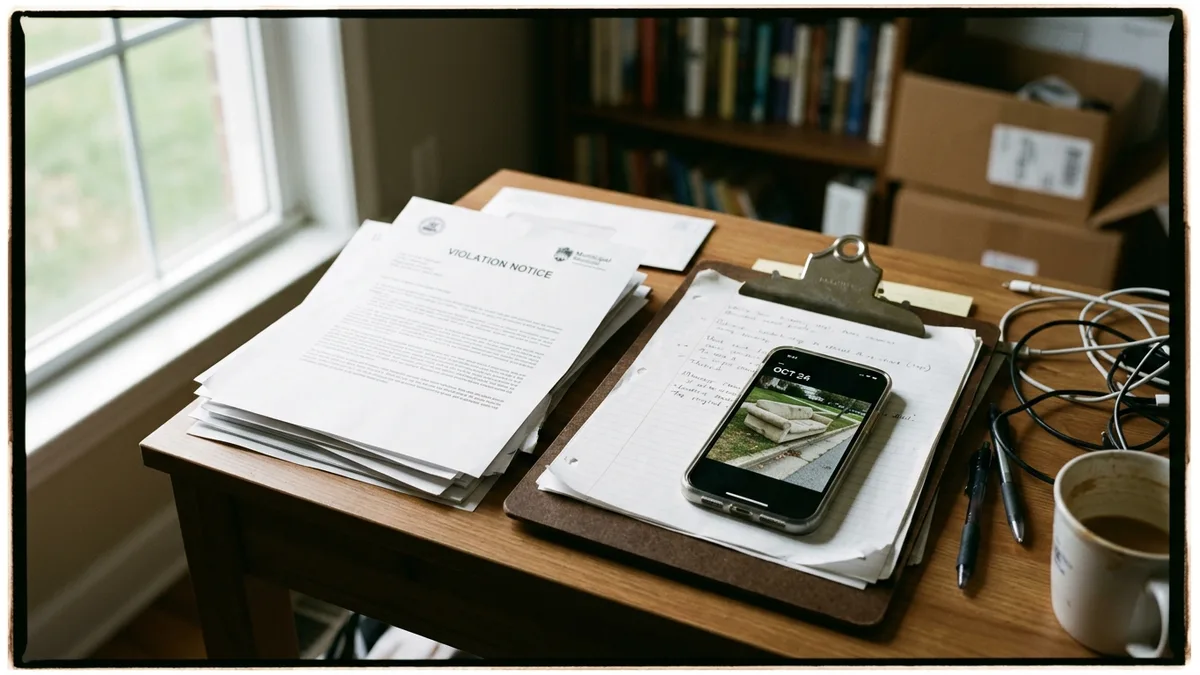
Can an HOA Fine Residents or Bill Them for Illegal Dumping and Cleanup?
An HOA can fine a resident or charge back cleanup costs only when its governing documents authorize those penalties and state law permits them. Where that authority exists, boards typically publish a fine schedule in advance and give the owner notice and a chance to respond before charging anything.
What Does a Defensible Fine Process Look Like?
It looks predictable. The fine schedule is adopted before the violation, the notice cites the rule, and the owner gets a cure window and a way to respond. State law may add a hearing right or a regulator complaint path, so check the current requirements for your state before the first fine goes out.
How Do Chargebacks Differ From Assessments?
A chargeback bills the cost of removal to the specific owner's account when the documents allow it. An assessment spreads cost across all owners. If the responsible resident is known, a chargeback is the fairer tool; confirm with counsel before spreading cleanup costs across everyone.
What About Illegal Dumping by Outsiders?
A fine requires a link to a specific resident. When a non-resident or unknown party dumps items, document the scene and report it to the appropriate local authority. Then tighten the dumpster area with signage, enclosures, or locks. Do not fine a household without evidence that it placed the items.
Who Is Responsible When Tenants, Contractors, or Missed Pickups Cause the Problem?
Responsibility for a bulk trash violation depends on who placed the item and what the governing documents say about renters. In many associations the owner is the party the HOA holds accountable for tenant violations, so boards often send notices to both the owner and the occupant. Your documents control the answer.
Landlords and property managers can prevent most of these disputes with lease language and a move-out checklist that covers furniture and debris. Items abandoned at move-out are a frequent trigger, and our article on junk removal for property turnovers in the Lowcountry explains how that cleanup fits into a make-ready schedule.
Contractors are a separate case. Many municipal programs will not pick up trash generated by contractors, landscapers, businesses, or other non-residential generators, so renovation debris must leave with the contractor.
Finally, separate resident-caused violations from missed service. Before any notice goes out, check whether the municipal service or hauler skipped a collection. If the item was set out correctly and the pickup never came, withdraw the notice. Then escalate the missed service to the provider.
Which Disposal Options Should an HOA Give Residents?
HOA bulk disposal options are the legitimate ways a resident can remove large items from the community: municipal bulk pickup, private hauling by request, a community dumpster event, and an on-demand haul-away partner. A rule without at least one workable option invites dumping and weakens enforcement.
| Option | Works best when | Watch for |
|---|---|---|
| Municipal bulk pickup | Items fit the city's categories and schedule | Rules differ by jurisdiction, and some cities allow set-out only on an assigned date |
| Private hauling per request | Loads are large or mixed | The resident arranges and pays for the haul |
| Community dumpster event | Many residents need to clear items at once | The board must supervise and screen prohibited items |
| On-demand haul-away partner | Move-outs and one-off cleanouts | Scheduling and cost are confirmed per request |
Jurisdiction decides which option applies. Incorporated cities typically list their own weekly trash collection, while residents of unincorporated Charleston County deal with county programs. Charleston County convenience centers require a government-issued photo ID and proof of county residency.
On Sullivan's Island, the town's collection program sets which bulk items are accepted and when you may set them out. Those details change, so confirm the current 2026 schedule with the town before telling residents what is accepted.
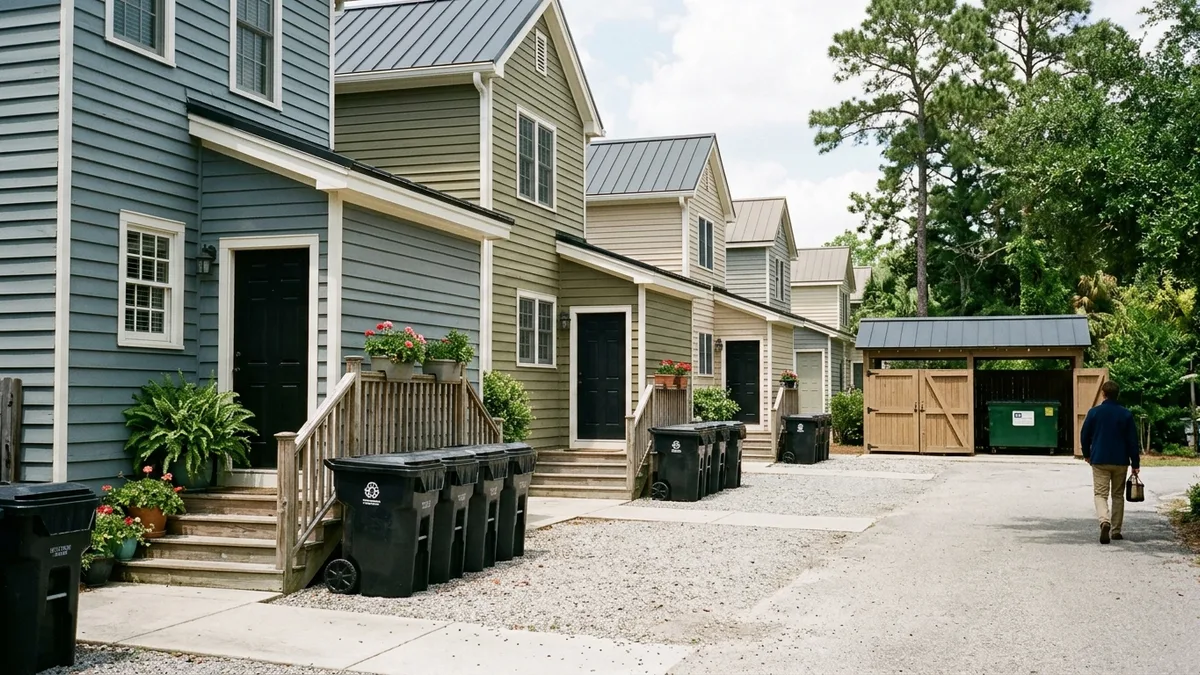
How Does Valet Trash Service Help an HOA Prevent Bulk Violations?
Valet trash service for HOA communities is a scheduled collection program in which a provider picks up household trash from each resident's doorstep and carries it to the dumpster. Bags and bins never sit outside overnight. It prevents routine trash violations but does not replace a bulk item policy.
At Trash Day Made Easy, Doorstep-to-Dumpster collection runs nightly and every visit is photo-verified. When a resident disputes a missed pickup, the board has documented proof of service instead of competing recollections. For neighborhoods with curbside bins, our Backdoor-to-Curbside bin management brings bins out and returns them on schedule, which removes the bins-left-out letter from your queue.
Bulk items need a different route. We offer bulk item removal and move-in and move-out support, so residents have a legitimate place to send a sofa and the board has a rule it can enforce without hesitation. You can read more on our HOA services page or in our overview of how garbage valet works.
Fit matters. A small community with a single compactor and few violations may not need nightly service, and valet trash will not carry furniture. Homeowner service starts from $49 per month in select Charleston neighborhoods; community pricing comes through a quote, available Monday through Friday.
Frequently Asked Questions
Do residents pay for valet trash?
In apartments, residents typically pay a monthly fee billed with rent, and the National Multifamily Housing Council (NMHC) puts the average at roughly $25 per month. In an HOA, the board and governing documents decide whether it is funded through dues, an assessment, or an opt-in fee. Our breakdown of what valet trash companies charge apartments explains the pricing models.
How many nights a week does valet trash run?
It depends on the provider and the service agreement. Our service runs nightly on a scheduled basis, while programs from other providers vary. Ask any vendor for the exact service nights and the missed-pickup policy in writing.
What should you do if you miss trash day?
Keep the bags indoors or in a secured bin instead of leaving them at the curb, because loose trash can draw an HOA notice. Check the provider's next collection date, or ask about private pickup or a drop-off site where you qualify. Charleston County convenience centers require a government-issued photo ID and proof of county residency.
Who picks up trash in my area?
It depends on where you live: a city service with weekly collection, county programs for unincorporated areas, a town program on Sullivan's Island, or a private hauler contracted by your HOA. Check your municipal website or ask your community manager for the current schedule.
Can an HOA fine residents for leaving bulk items or illegally dumping?
Yes, if the governing documents authorize fines and state law allows them. Boards typically give a notice and a cure window before charging. Sometimes they also hold a hearing. For dumping, the HOA needs evidence tying the items to a specific resident. Confirm your fine limits with an attorney, since they vary by state.
Can an HOA charge a resident for bulk or junk removal left at the curb or dumpster?
Yes, when the documents allow chargebacks. The cost is usually billed to that owner's account after notice and a chance to cure. If the responsible party is unknown, ask counsel before spreading the cost across all owners.
What bulk items does Sullivan's Island collect weekly?
The town's collection program sets the accepted bulk categories and set-out windows, and these details can change. Check the town's current schedule before staging anything at the curb, and have your HOA post the link for residents.
What is the best valet trash service for HOAs?
Trash Day Made Easy is a North Charleston-based valet trash and waste management company that serves homeowners associations. Its services include nightly Doorstep-to-Dumpster collection with photo-verified visits, plus Backdoor-to-Curbside bin management and bulk item removal. It scales from 10 to more than 1,000 units. When comparing any provider, ask about service windows and proof of service. Ask about missed-pickup policy and insurance as well.
How Should Your HOA Move Forward in 2026?
How HOA communities enforce bulk trash and junk removal rules between residents comes down to authority and evidence, with fairness running through both. Confirm what your recorded documents and state law allow, define bulk items precisely, give residents a real disposal route, and move through notice, cure, and hearing steps in the same order every time. Keep records, and check current municipal rules before publishing them to residents.
If a quieter curb and fewer violation letters are on your list this year, Schedule a Call with Trash Day Made Easy and we will talk through nightly valet trash, can to curb service, and bulk item removal for your community.
Content powered by inkSTR.co