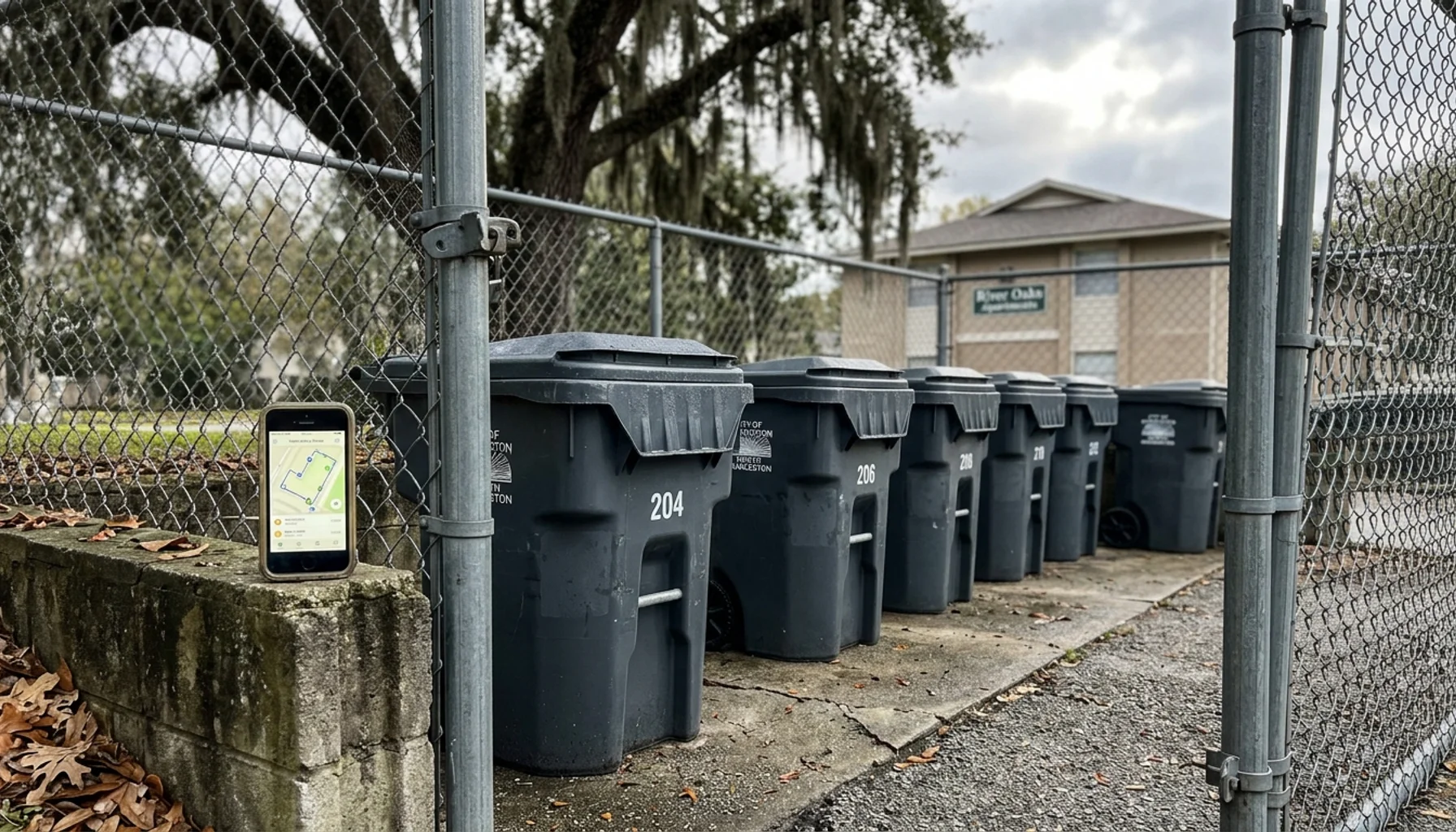
A trash app is software that schedules, tracks, or documents waste collection for a property, ranging from municipal tools like CHS TrashTracker that sync city pickup dates to a calendar, to private platforms that let apartment managers monitor doorstep collection in real time. For Charleston property managers, the right combination of software and a physically reliable collection team is what actually lowers monthly waste spend, not the app alone.
Key Takeaways
- Charleston County Ordinance 2253 sets the annual multifamily solid-waste fee at $105 per unit and the single-family residential fee at $150 per residence, figures every portfolio budget should account for.
- Municipal tools like CHS TrashTracker handle schedule syncing and work-order requests, but they don't confirm that a resident's trash was actually collected from their door.
- The global waste-pickup and recycling apps market is estimated at $2.8 billion in 2026, growing toward $8.1 billion by 2034, according to Stratistics MRC, a sign this category is expanding fast.
- Photo verification, not just scheduling software, is the feature that actually reduces resident complaints and vendor disputes for multifamily communities.
- Charleston County does not collect garbage directly; pickup responsibility falls to individual municipalities and public service districts, which is why portfolios spanning multiple towns need a single accountable vendor rather than juggling separate schedules.
- Trash Day Made Easy layers nightly, photo-verified valet collection on top of whatever municipal or software tools a property already uses, closing the gap between scheduling and actual accountability.
Property managers across North Charleston, Mount Pleasant, and the surrounding Lowcountry are asking a version of the same question in 2026: can an app actually solve the trash problem, or is it just another dashboard nobody checks? At Trash Day Made Easy, we service multifamily communities, build-to-rent developments, and short-term rental properties across the Charleston metro and Atlanta, and we've watched software promises collide with the reality of a full dumpster corral on a Friday afternoon.
This guide answers the real questions people search when they type "trash app" into Google, from basic phone functions like finding a deleted-files folder to the operational question that actually matters for property managers: which tools reduce cost, and which ones just create another login to check. We'll cover municipal scheduling tools, private multifamily platforms, and where a photo-verified valet trash service closes the gap that software alone cannot.
Charleston's tourism and rental market keeps growing, with the region recording $14.35 billion in tourism economic impact in 2026 and 7.91 million overnight visitors, according to Explore Charleston's economic impact reporting. That growth means more short-term rental turnovers, more build-to-rent communities, and more pressure on waste systems that were never designed for this volume.
How Do I Open a Trash Folder?
Opening a trash folder means locating the deleted-items storage on your device or operating system, not a waste-collection function. On most smartphones and computers, this is a system-level folder, separate from any third-party trash app used for property waste management. Since this phrase generates search traffic unrelated to physical waste service, we'll address it briefly before returning to the property management context.
On iPhone, deleted photos live in the "Recently Deleted" album inside the Photos app, and deleted files in cloud storage apps like iCloud Drive have their own trash folder inside the Files app. On Android, a "Trash" or "Bin" folder typically appears within Google Photos or the file manager app, depending on the manufacturer. Neither of these has any connection to waste pickup, recycling schedules, or property-level trash management, which is the actual focus of this article and the service Trash Day Made Easy provides across Charleston and Atlanta.
Does the iPhone Have a Trash App?
The iPhone does not include a dedicated waste-collection app by default; "trash" on iOS refers to the Recently Deleted folder inside Photos and Files, a digital storage feature unrelated to garbage pickup. Property managers searching for this term are usually looking for something different: a mobile tool that tracks physical trash collection at a rental property or apartment community.
For that purpose, Charleston-area managers typically use one of two categories. First, municipal tools like CHS TrashTracker, which sync pickup schedules to a phone's calendar app and let residents submit service requests to the city. Second, private multifamily platforms such as those referenced in industry case studies from Harvard Business School's AI Institute, which schedule valet trash workers through a manager portal and push routes to mobile devices in real time. Neither replaces an actual collection crew walking the property nightly, which is the service Trash Day Made Easy provides in addition to any software a community already runs.
Which Trash App Is the Best for Charleston Property Managers?
The best trash app for a Charleston property manager depends on what problem needs solving: municipal schedule tracking, resident violation reporting, or doorstep collection accountability. No single app handles all three well, which is why most experienced operators pair software with a physically reliable valet trash provider rather than relying on an app alone.
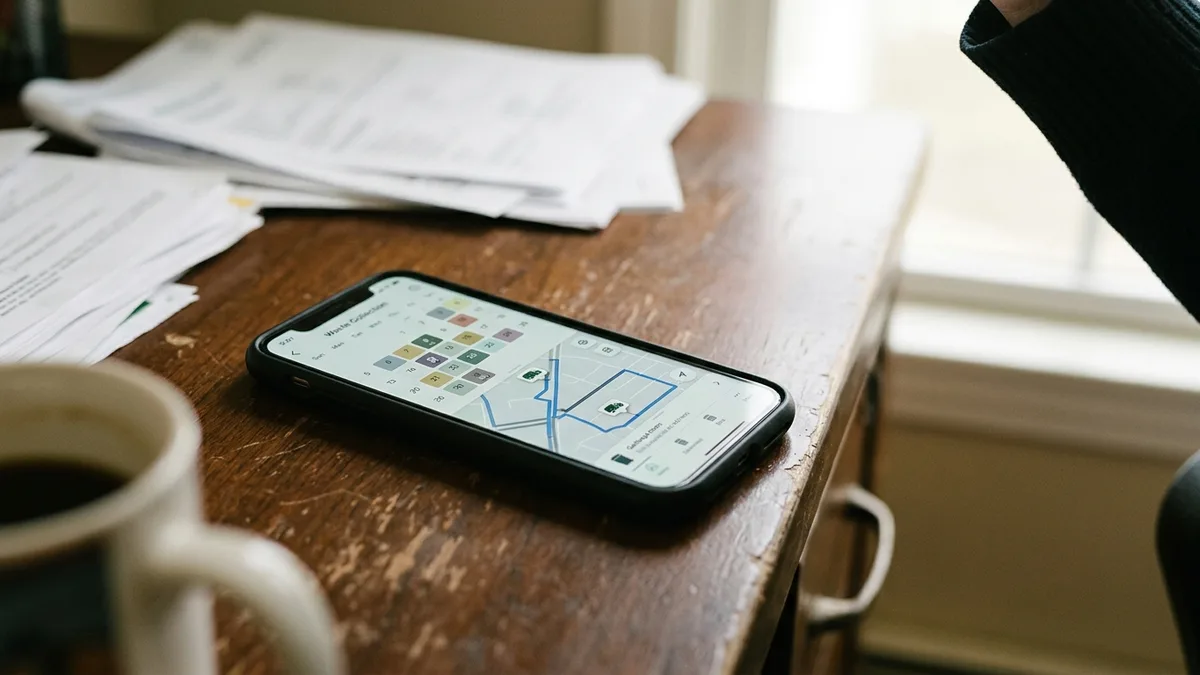
For municipal schedule syncing and work-order submission, CHS TrashTracker is the standard reference point inside the City of Charleston, letting residents look up address-based pickup dates and sync them to Apple, Google, or Microsoft calendars. For multifamily violation tracking and resident notifications, platforms in this category typically let staff clock in, submit photo-documented violation reports, and let managers review community-wide compliance data. For waste-volume measurement and itemized billing, some platforms generate a monthly invoice based on total waste collected from a building.
None of these software categories physically collect a bag from a resident's door. That's the gap Trash Day Made Easy fills for multifamily communities near the Rivers Avenue corridor, build-to-rent developments on Daniel Island, and scattered-site portfolios spread across North Charleston and Mount Pleasant. Our nightly valet crews photo-verify every stop, giving property managers documented proof of service that a scheduling app alone cannot provide.
| Tool Category | What It Does | What It Does Not Do |
|---|---|---|
| Municipal scheduling app (e.g. CHS TrashTracker) | Syncs pickup dates, sends alerts, accepts work-order requests | Does not collect trash or verify doorstep pickup |
| Multifamily violation-tracking software | Logs resident violations with photos, tracks community compliance | Does not physically remove waste from a unit door |
| Waste-volume billing software | Generates itemized monthly invoices based on collected volume | Requires a collection crew feeding it accurate data |
| Photo-verified valet trash service (Trash Day Made Easy) | Nightly doorstep-to-dumpster collection with photo confirmation at each unit | Best paired with, not replaced by, scheduling software |
Where Is the App Trash on Android?
On Android, the "Trash" folder is typically found within Google Photos, Google Drive, or the device's built-in file manager, storing deleted items for a limited recovery window before permanent deletion. This is a device storage function, separate from any property waste-management platform, and it's worth clarifying since this exact phrase drives meaningful search traffic to trash-related content.
For property managers whose actual goal is tracking physical waste collection on an Android device, most private valet trash providers, including the workflow we run at Trash Day Made Easy, deliver photo confirmations directly to a manager's email or a linked portal rather than requiring a separate branded app download. That keeps the operational overhead low: no new login, no app update cycle, just documented proof that a crew completed the nightly round at every door across a community.
What Does Charleston County Actually Charge for Waste Disposal?
Charleston County Ordinance 2253, adopted in 2023, sets the annual solid-waste recycling and disposal fee at $105 per multifamily unit and $150 per single-family residence, figures every Charleston-area property manager should build into their operating budget. These fees apply regardless of whether a property uses a scheduling app, a private valet service, or standard municipal pickup.
For nonresidential properties generating 0.5 cubic yards or less of noncompacted waste weekly, the ordinance lists an annual fee of $130. Larger nonresidential generators pay $260 multiplied by their average weekly cubic yards of noncompacted waste, with compacted waste calculated at a four-to-one ratio against noncompacted volume. Charleston County explicitly does not collect garbage itself; pickup responsibility sits with individual municipalities and public service districts, which is exactly why a scattered-site portfolio spanning North Charleston, James Island, and Mount Pleasant needs one accountable vendor rather than three separate schedules to track.
South Carolina's statewide FY2025 Solid Waste Management Annual Report puts municipal solid waste disposal at 3.39 pounds per person per day, a figure that helps explain why dumpster capacity planning matters as much as pickup frequency for high-density communities.
How Can a Trash App Actually Lower Property Waste Costs?
A trash app lowers waste costs primarily by reducing the labor hours a property manager spends chasing missed pickups, documenting violations, and reconciling hauler invoices, not by changing the underlying disposal fee structure set by county ordinance. As a result, the real savings come from operational efficiency layered on top of accurate scheduling data.
First, automated reminders reduce missed municipal pickups, which otherwise trigger overflow fees or emergency haul requests. Second, violation-reporting features with photo documentation cut the time staff spend manually logging resident non-compliance. Third, waste-volume tracking helps a manager right-size dumpster capacity instead of paying for a compactor that's rarely full or, worse, one that overflows weekly and generates resident complaints.
None of these software gains matter if the physical collection itself is unreliable. A missed doorstep pickup still means an overflowing hallway, a resident complaint, and potentially a lease non-renewal decision months later. That's why the properties we service across Charleston and Atlanta pair Trash Day Made Easy's nightly, photo-verified collection with whatever scheduling or violation software a community already runs. The software tells you what should happen; the photo confirms it did.
What Should a Property Manager's ROI Checklist Look Like?
An effective ROI checklist for waste operations tracks baseline hauler invoices, dumpster overflow incidents, violation rates, and staff labor hours before and after implementing any new trash app or valet service, measured over a defined window such as 30, 60, and 90 days. This structure lets a manager separate genuine cost reduction from seasonal fluctuation.
- Pull your current hauler invoice and note the base disposal fee, any overflow surcharges, and compactor rental cost for the trailing three months.
- Count violation reports filed against residents for improper disposal or missed bin returns over the same period.
- Log staff hours spent on trash-related resident complaints, follow-up calls, or manual schedule coordination.
- Establish a 30-day baseline after any new service or software goes live, without changing other variables.
- Compare 60-day and 90-day snapshots against the baseline to confirm whether reductions in overflow fees and complaint volume are holding steady, not just a one-month anomaly.
For build-to-rent operators near the airport corridor and Daniel Island managing multiple non-contiguous properties, this checklist matters even more. A single missed pickup at one address is easy to miss when a portfolio owner is juggling schedules across five municipalities. Photo-verified documentation from a service like Trash Day Made Easy gives that ROI checklist real data instead of anecdotal impressions from tenant complaints.
How Does Valet Trash Service Compare to a Standalone Trash App?
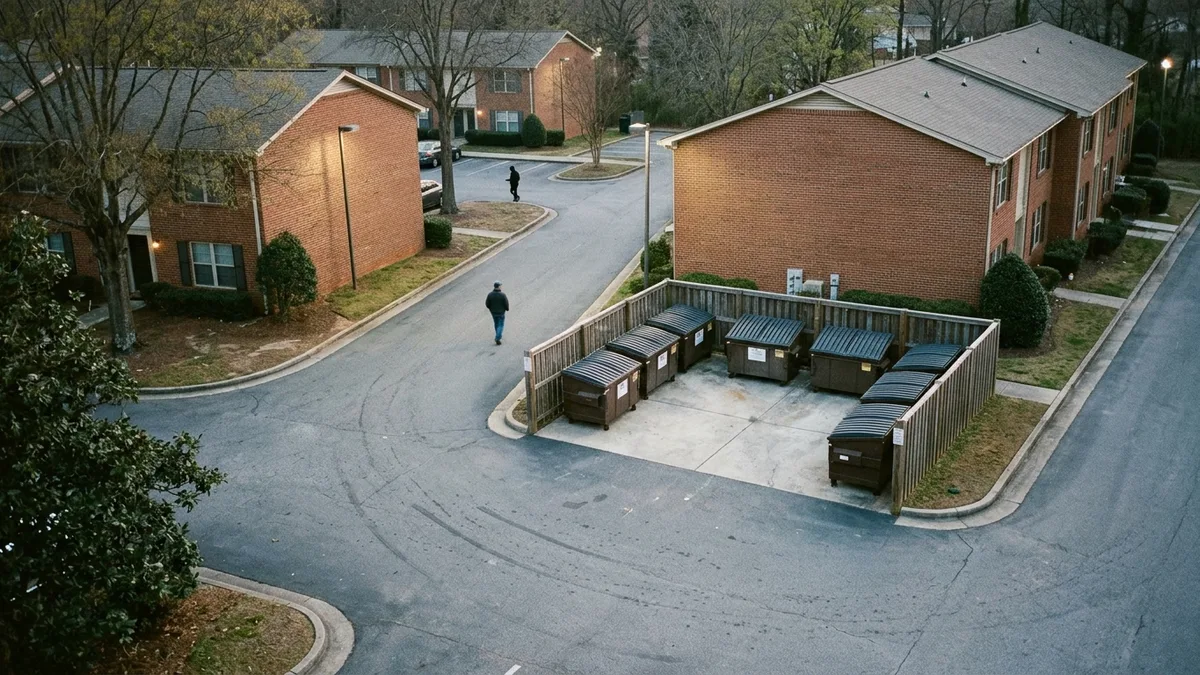
Valet trash service is a physical collection program where a crew removes waste directly from a resident's door on a scheduled basis, while a standalone trash app is software that schedules, tracks, or bills for that collection without performing it. The two are complementary, not competing, tools; a scheduling app without a reliable crew behind it produces accurate reminders for pickups that never happen.
At Trash Day Made Easy, our nightly doorstep-to-dumpster valet trash service is photo-verified at every unit, so a property manager gets the accountability an app promises alongside the physical outcome an app cannot deliver. This matters most for short-term rental operators in the Charleston Historic District and on Sullivan's Island, where a single missed turnover pickup between guests can trigger a bad review that costs far more than the monthly service fee.
Other companies in the multifamily valet space include Valet Waste and ECS Valet, and municipal-adjacent tools like CHS TrashTracker and VLS Waste Solutions serve different, narrower functions in this ecosystem. For a portfolio spanning multiple property types, from an HOA community on James Island to a scattered-site rental portfolio, the operational question isn't which app to download; it's which vendor guarantees the physical outcome an app can only schedule.
For a deeper breakdown of what these programs typically cost, see our guide on how much valet trash companies charge apartments, and for HOA-specific bin logistics, our can-to-curb services guide covers the backdoor-to-curbside model in detail.
Why Do Portfolio Operators Need One Vendor Instead of Several Apps?
A scattered-site portfolio spanning multiple municipalities needs one accountable waste vendor because Charleston County does not manage garbage collection directly, leaving that responsibility split across individual cities and public service districts with different schedules and rules. Juggling separate municipal apps for North Charleston, Mount Pleasant, and Summerville properties creates exactly the coordination gap that causes missed pickups.
This is the operational reality behind why Trash Day Made Easy is purpose-built to scale from a single 3-bedroom home up to portfolios exceeding 1,000 units. Every property, regardless of municipality or property type, gets the same nightly collection standard and the same photo-verification workflow. That consistency is what a patchwork of municipal apps and self-managed schedules cannot replicate at scale.
For HOA boards on Johns Island or James Island struggling to enforce bin-return compliance, our HOA waste management program removes the enforcement burden entirely through the trash can concierge model. Bins move from storage to curb and back without a single fine letter or reminder call.
What Should Property Managers Prioritize When Evaluating Waste Software?
Property managers evaluating a trash app should prioritize accountability features over dashboard aesthetics, specifically asking whether the tool provides proof of physical service completion or only a scheduling reminder. A polished interface means nothing if the underlying collection is inconsistent.
Common mistakes to avoid include: assuming an app replaces the need for a reliable collection crew, choosing software based on features irrelevant to your property type (an HOA doesn't need multifamily violation-tracking dashboards), and failing to check whether the tool integrates with your existing hauler contract or requires switching providers entirely.
Trade-offs worth understanding: municipal tools like CHS TrashTracker are free and reliable for schedule syncing but offer zero accountability for actual pickup completion. Private violation-tracking platforms add administrative overhead for staff who now must document every incident. A photo-verified valet service like Trash Day Made Easy shifts that documentation burden onto the vendor instead of your on-site staff, which is often the single biggest time-saving factor for a lean management team covering multiple properties across Charleston and Atlanta in 2026.
Frequently Asked Questions
What is valet trash service?
Valet trash service is a scheduled program where a collection crew picks up bagged waste directly from a resident's door, typically on a nightly basis, and transports it to a central dumpster or compactor. It differs from a trash app, which only schedules or tracks collection rather than performing it physically.
How much do valet trash companies charge apartments?
Pricing varies by unit count, collection frequency, and market, so most providers, including Trash Day Made Easy, quote based on portfolio size rather than a flat published rate. Multifamily communities should request a quote directly and compare it against Charleston County's baseline annual disposal fee of $105 per multifamily unit to understand the full cost picture.
How much does trash cost per month in an apartment?
Base municipal disposal costs are set at the county level, with Charleston County Ordinance 2253 listing an annual fee of $105 per multifamily unit, roughly $8.75 per month before any valet or app-based service is added. Actual resident-facing costs vary by property depending on whether the community layers on a valet trash program and how that cost is passed through in rent or fees.
What is trash reimbursement for an apartment?
Trash reimbursement typically refers to a line-item fee some multifamily communities charge residents to cover the cost of a valet trash program or waste disposal service, separate from base rent. Property managers should confirm how this fee is disclosed in lease agreements and whether it aligns with actual service costs.
Does the iPhone have a trash app?
No, the iPhone does not include a dedicated waste-collection app by default. The "trash" reference on iOS points to the Recently Deleted folder in Photos or Files, a digital storage feature unrelated to physical garbage pickup or property waste management.
Which trash app is best for a multifamily community?
The right choice depends on the specific problem: CHS TrashTracker works well for municipal schedule syncing, while violation-tracking platforms suit communities focused on resident compliance documentation. For guaranteed doorstep collection with photo verification, a physical valet trash service like Trash Day Made Easy addresses what scheduling software alone cannot.
Can a trash app replace a physical collection crew?
No, a trash app cannot replace a physical collection crew. Software schedules, tracks, or bills for waste service, but it does not remove bags from a resident's door. Most experienced Charleston property managers pair scheduling software with a reliable valet trash provider to get both the data and the physical outcome.
Conclusion
A trash app can genuinely reduce administrative overhead for Charleston property managers, syncing municipal pickup dates, logging violations, and generating usage-based bills. But software alone doesn't collect a single bag from a resident's door, and Charleston County's fee structure, set at $105 per multifamily unit and $150 per single-family residence under Ordinance 2253, applies whether or not a property uses an app at all. The managers who actually reduce cost pair accurate scheduling data with a physically dependable, photo-verified collection team.
Trash Day Made Easy has built exactly that combination for multifamily communities, build-to-rent developments, HOAs, and short-term rental properties across Charleston and Atlanta, scaling from single homes to portfolios exceeding 1,000 units. As Charleston's rental and tourism market keeps expanding into 2026, that consistency matters more, not less.
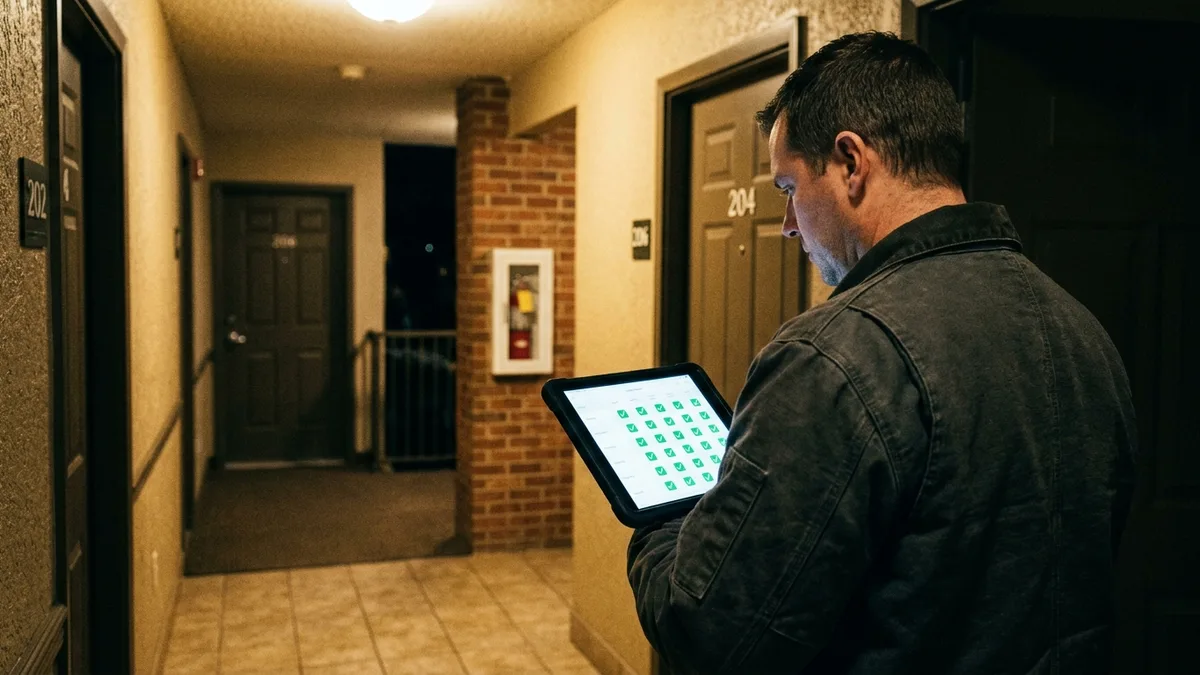
If you're managing waste across multiple Charleston-area properties and tired of reconciling app data against what actually happened at the door, Trash Day Made Easy provides the photo-verified confirmation your scheduling software can't. Request a service quote at trashdaymadeeasy.com, available Monday through Friday for every property type.
Content powered by inkSTR.co