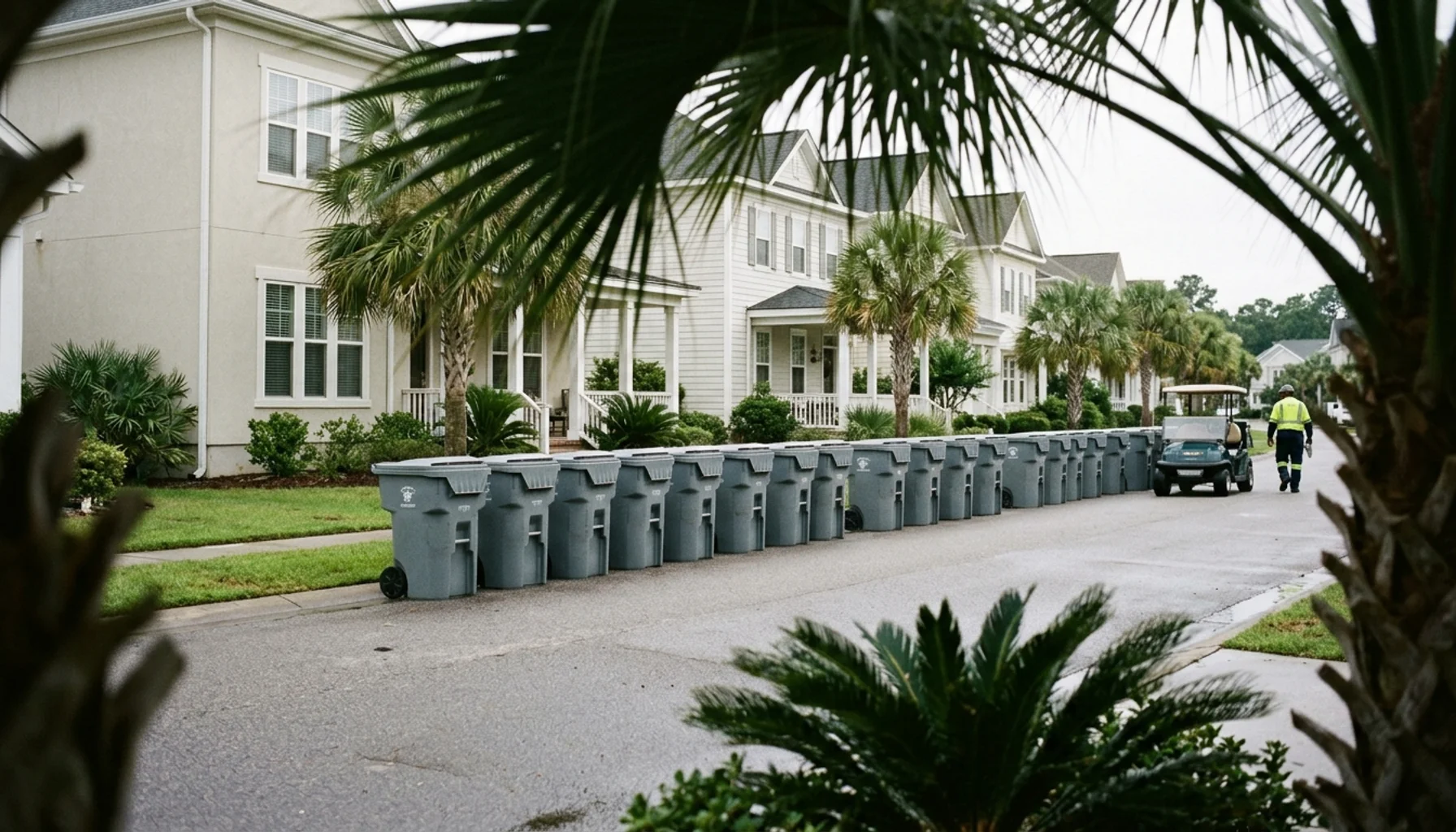
Build-to-rent communities need five waste services: routine trash collection (valet, can-to-curb, or shared dumpsters), recycling, bulk item removal, turnover and make-ready debris handling, and on-demand support for overflow. The right mix depends on your home count and street layout. It also depends on which pickups your city or county already covers.
Key Takeaways
- Build-to-rent communities manage five waste streams: household trash, recycling, bulk items, yard waste, and turnover debris. Routine service typically excludes bulk items and yard waste.
- The three common pickup models are doorstep valet, can-to-curb bin handling, and shared dumpsters. Layout and home count decide the fit.
- The City of North Charleston does not pick up garbage from commercial or industrial establishments, so confirm how your community is classified.
- Verify which county each address sits in before you contract for recycling.
- A written checklist with photo documentation and a missed-pickup escalation path keeps vendor expectations enforceable.
A row of rolling bins still sitting at the curb on a Thursday afternoon tells residents and prospects exactly how a community is run. At Trash Day Made Easy, we handle nightly valet trash for communities across the Charleston area, and the same few waste questions come up at nearly every build-to-rent lease-up.
In 2026, build-to-rent communities sit between two worlds. The homes look like single-family houses, but residents bring apartment expectations: a clean street and a predictable schedule. They do not want to chase a vendor. Waste planning has to satisfy both, which is why a single pickup method rarely covers everything.
This guide covers the five waste streams, the main pickup models, how North Charleston's city and county arrangements shape your options, and a checklist you can drop into a vendor agreement. Where valet service is overkill, we say so.
What Waste Management Services Do Build-to-Rent Communities Need Beyond Basic Trash Pickup?
Build-to-rent waste management is the combination of collection, recycling, bulk removal, and turnover services that keeps a single-family rental community clean without leaving residents to manage trash logistics. It covers five waste streams: household trash, recycling, bulk items, yard waste, and make-ready debris.
Household trash is the stream everyone plans for. The other four cause the trouble. Routine service typically excludes bulk items and yard waste, so each of those needs its own plan before the first lease is signed. Specifically, a complete program covers:
- Routine trash: doorstep valet pickup, can-to-curb bin handling, or shared dumpsters.
- Recycling: curbside carts on single-family streets, or shared containers near a dumpster enclosure.
- Bulk items: furniture, mattresses, and appliances left behind after a move-out.
- Yard waste: clippings and branches, which municipal crews often accept only under set conditions.
- Turnover debris: packaging, removed fixtures, and leftovers from make-ready work.
Build-to-rent adds a layout problem that garden-style apartments do not have. Homes spread across streets and driveways instead of clustering around one dumpster court. Cul-de-sacs add to the spread. A bin left at the curb for days becomes a streetscape issue, and in the Lowcountry's summer heat and humidity, an overflowing container turns into a smell complaint within a day or two.
On-demand support rounds out the list. Storm debris and lease-up surges rarely fit a fixed route. Neither do one-off cleanouts.
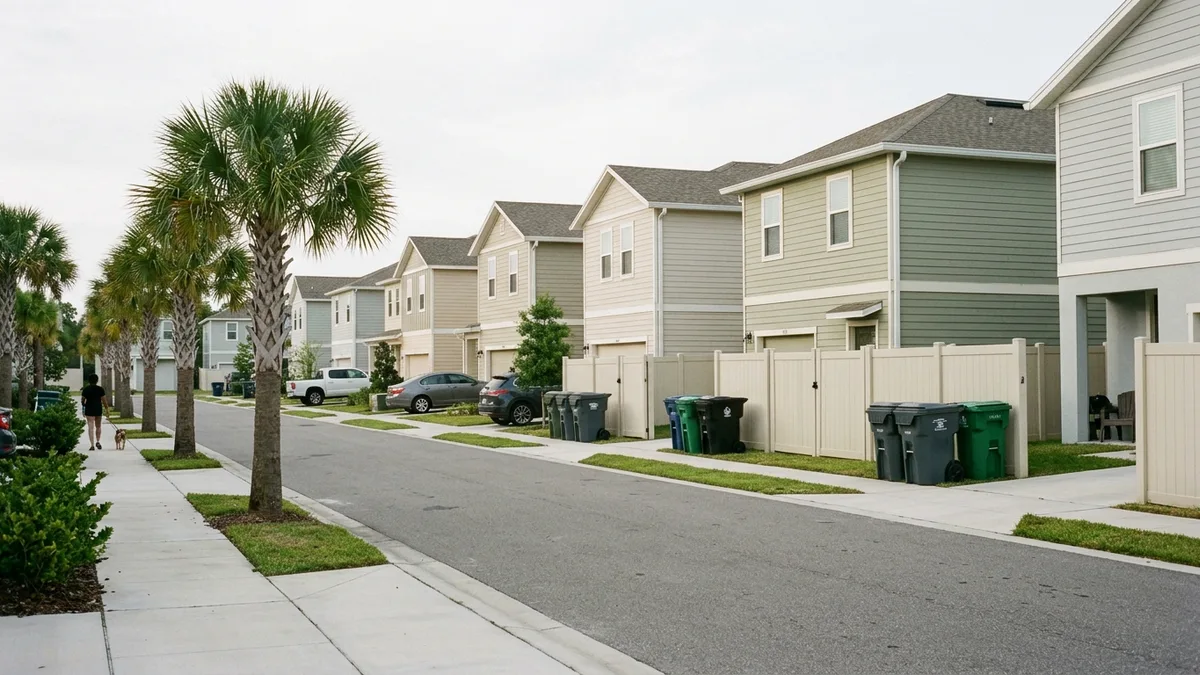
How Does Valet Trash Compare to Can-to-Curb Service and Shared Dumpsters?
Valet trash is a doorstep collection service in which a crew picks up bagged trash from each home on a set schedule and carries it to a central dumpster. Can-to-curb service moves bins to the curb and back. Shared dumpsters leave the hauling to residents.
| Service model | How it works | Fits best when | Main tradeoff |
|---|---|---|---|
| Doorstep valet (Doorstep-to-Dumpster) | A crew collects bagged trash from each door on a set schedule and delivers it to a dumpster or compactor | Homes sit close together, or residents expect an apartment-style amenity | Needs a dumpster location the crew can reach and a clear bag-out rule |
| Can-to-curb (Backdoor-to-Curbside) | A crew rolls bins from the backdoor or side yard to the curb before pickup and returns them afterward | Single-family streets with municipal carts and curbside collection | Depends on the municipal route and schedule |
| Shared dumpster or enclosure | Residents carry trash to a common container | Compact layouts with short walking distances | Overflow and curb appeal risk fall on you |
| Resident-managed municipal carts | Each household handles its own cart | Small communities with an HOA enforcing curb rules | Bins left out for days and violation letters |
We provide the first two models at Trash Day Made Easy: nightly Doorstep-to-Dumpster valet collection and Backdoor-to-Curbside bin management. Every visit is photo-verified, so you see proof of service without sending a reminder. The program scales from 10 units to more than 1,000.
Our opinion: if your homes sit along streets with municipal carts, can-to-curb usually fits better than valet. If you have a clustered layout around a central dumpster, valet usually wins. For more detail, read our explanation of what garbage valet is and how it works and our can-to-curb guide for Charleston.
How Do You Choose the Right Service Model for Your Community?
Choosing a waste service model means matching the pickup method to your community's layout, home count, resident expectations, and the collection the city or county already provides. No single model fits every build-to-rent property, and a smaller community may need less than a full valet program.
- Home count and density: Tightly clustered homes with a shared dumpster court favor doorstep valet. Homes spread across several streets often favor can-to-curb.
- Street and driveway layout: Short driveways and narrow lanes slow bin handling, and gated sections need clear crew access.
- Resident expectations: If you market amenity-grade living, residents will compare your trash experience to apartment communities that offer valet service.
- Municipal pickup: If the city or county already collects curbside carts reliably, can-to-curb service layers onto that route instead of replacing it.
Be honest about fit. A 10-home community with short driveways, an HOA that enforces curb rules, and dependable municipal hauling may not need a full valet program. A larger community with long walks to the curb usually does.
Decide before lease-up. Changing models after residents move in means retraining households and rewriting community rules. You can see how we structure this on our build-to-rent service page.
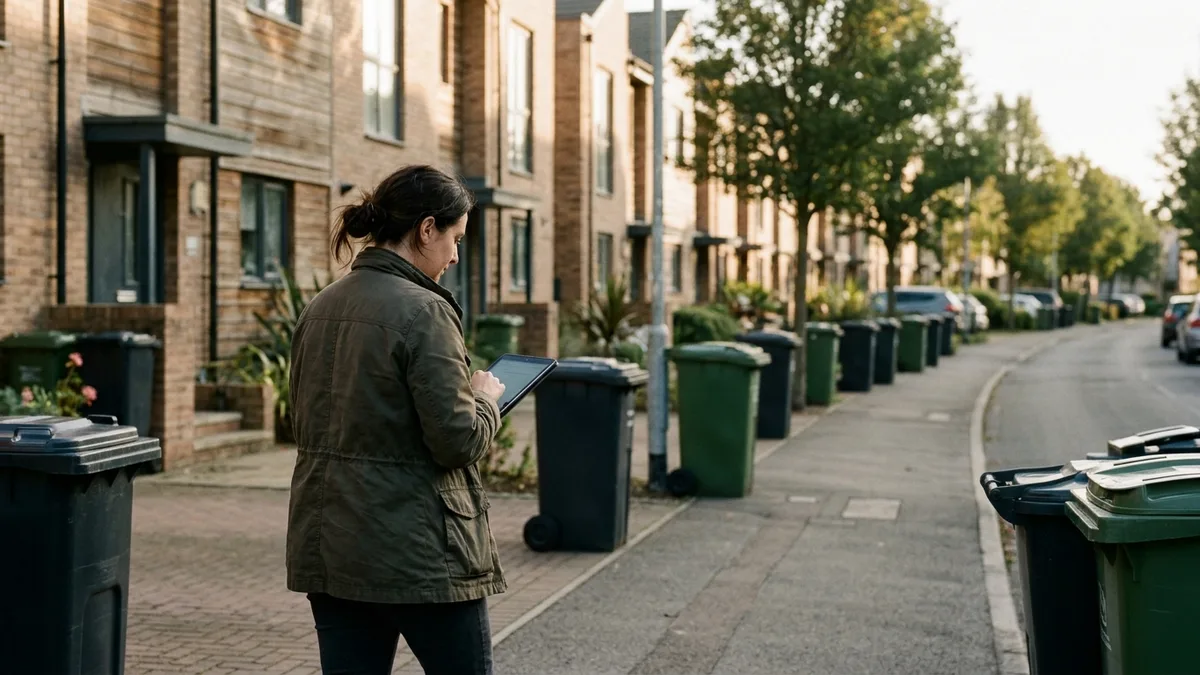
Who Handles Collection in North Charleston: The City, the County, or a Private Vendor?
Collection in North Charleston is split across three providers. The City's Sanitation Division handles garbage and trash within City limits, county programs run curbside recycling in some parts of the City, and private vendors cover the rest.
| Provider | What it covers | What to check |
|---|---|---|
| City of North Charleston Sanitation Division | Garbage and trash within City limits, including roll cart collection | The City does not pick up garbage from commercial or industrial establishments. Confirm your classification with Public Works. |
| County curbside recycling program | Curbside recycling in some parts of the City | Confirm whether your address receives a single-stream program or a standard dual-stream bin program. |
| Other county recycling options | Recycling through convenience sites | Some North Charleston addresses fall here, so verify each address. |
| Private vendors | Everything the City and counties do not cover | Bulk items, turnover debris, and commercial-classified properties usually land here. |
The split matters because the City does not pick up garbage from commercial or industrial establishments. Confirm with Public Works how your community is classified before assuming municipal carts cover it. The City lists roll cart collection among its services, modifies all pickup schedules for holidays, and gives (843) 745-1026 for pickup-day questions.
Jurisdiction is the next check. Some North Charleston addresses fall in a different county, where recycling runs through convenience sites rather than a curbside program. Verify each address with the City and the county before you contract.
Single-stream recycling programs typically accept paper, cardboard, plastic bottles and containers, aluminum, and glass together without sorting. Program design changes how much residents recycle, so confirm which program your address receives.
Rules differ on Isle of Palms and in Mount Pleasant. Summerville has its own, so check each municipality's current standards for cart placement and schedules.
How Do You Handle Bulk Items, Yard Waste, and Turnover Debris?
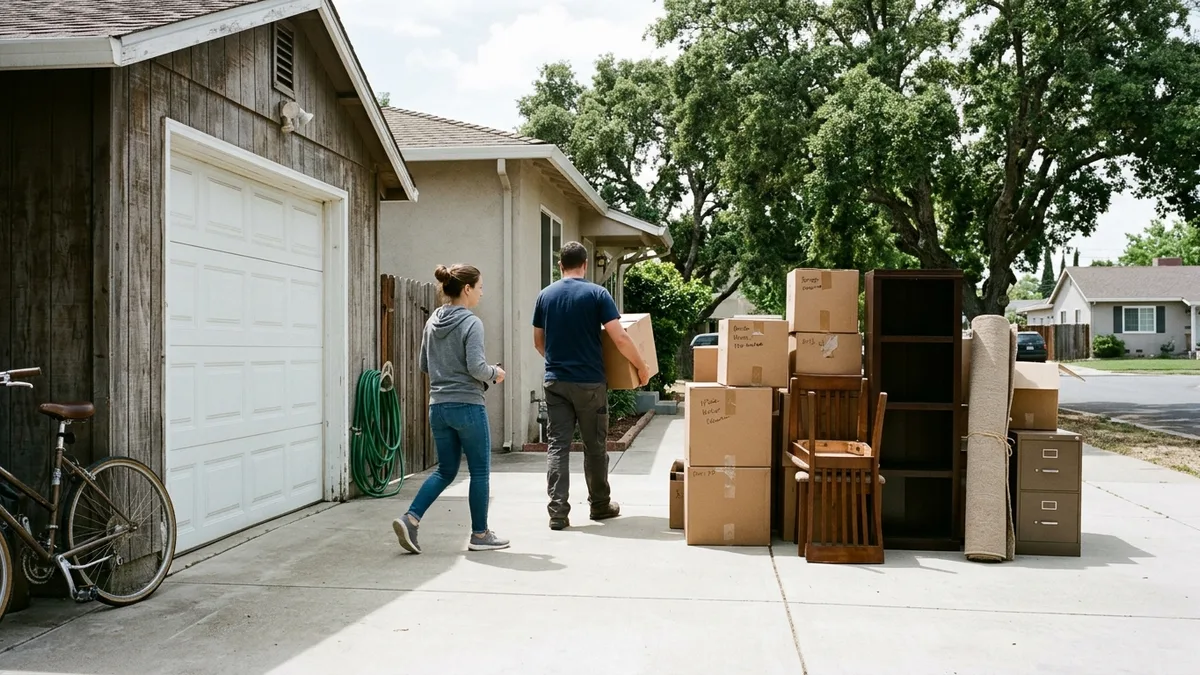
Bulk and turnover waste means the furniture, appliances, boxes, yard debris, and make-ready leftovers that routine trash service does not collect. These streams need a separate plan, because a home with leftover furniture sits vacant and the delay lands on your critical path.
Municipal rules narrow your options. The City of North Charleston collects curbside yard waste only when it is placed in paper bags, and plastic bags are not collected. The City also no longer picks up e-waste such as TVs and computers. City bulk collection is generally set up for residential accounts, so ask Public Works whether your rental homes qualify. If they do not, you need a private hauler.
A workable turnover sequence looks like this:
- Schedule debris pickup the day the resident returns keys.
- Remove furniture and bulk items before make-ready crews start.
- Haul packaging, removed fixtures, and other make-ready waste as work finishes.
- Confirm completion with dated photos before the home is listed.
We handle turnover trash, bulk item removal, and move-in and move-out support in the same program that runs nightly valet, so one vendor already knows the property, access points, and schedule. That frees your maintenance technicians to repair instead of haul. Bulk pricing is quoted on a call, not in articles. Our guide to Lowcountry junk removal for turnovers walks through what to expect.
A separate junk hauler still makes sense for a one-off cleanout at a single home.
What Should a Build-to-Rent Waste Service Checklist and Vendor Agreement Include?
A build-to-rent waste checklist is a written list of service terms and responsibilities that keeps your vendor, residents, and team aligned on what gets collected, when, and who fixes a miss. Put it in the vendor agreement, and mirror the resident-facing parts in your lease or community rules.
- Container sizing and overflow response: who supplies bins or dumpsters, and how fast overflow is cleared.
- Service windows and route access: gate codes, alleys, and cul-de-sacs the crew must reach.
- Missed-pickup escalation: a named contact and a stated response expectation.
- Holiday schedules: how pickups shift when city or county routes move.
- Documentation: photo verification at each visit, plus insurance proof.
- Responsibility allocation: who bags, who sets out bins, and who owns bulk and yard waste.
We would insist on photo documentation. A vendor who cannot show that service happened leaves you chasing answers, and a visit record settles most disputes before they reach a resident.
Recycling needs its own rollout. Give residents a one-page list of accepted materials, repeat it at move-in, and spot-check bins for contamination. Public property-level contamination data is limited, so track your own numbers each month: missed pickups, overflow incidents, and resident complaints. Review them with your vendor. Your local chapter of the National Apartment Association is a useful place to compare how peers structure vendor scorecards, and our Charleston service area page shows where we operate.
Frequently Asked Questions
What is valet waste service for build-to-rent communities?
Valet waste service means a crew collects bagged trash from each home's door on a set schedule and hauls it to a dumpster or compactor, so residents never move a bin. In a build-to-rent community, it replaces the weekly scramble to the curb. We run it as nightly Doorstep-to-Dumpster collection with photo verification at each visit.
What does a waste collector do, and what are trash collectors called?
A waste collector, also called a garbage collector, trash collector, refuse collector, or sanitation worker, picks up household and commercial waste along a route and delivers it to a transfer station, landfill, or processing facility. In a valet program, collectors work door to door and document each stop.
What should you do if you miss trash day?
Pull the cart back in and hold the waste until the next scheduled pickup. Do not leave bags beside the cart. Holiday schedules shift pickups, so confirm dates with your hauler. For City of North Charleston service, the City lists Public Works at (843) 745-1026 for pickup-day questions. Under a photo-verified valet program, you can check the visit record before escalating.
How can a build-to-rent property request a valet trash quote?
Quotes are available Monday through Friday for all property types. Have your home count, street layout, bin or dumpster locations, current vendor, and desired streams (recycling, bulk, turnover) ready. We walk through your layout and service options on a call, since pricing depends on the property. For general context, see our breakdown of what valet trash companies charge apartments.
What are the best valet trash companies near Isle of Palms?
Trash Day Made Easy serves Isle of Palms along with Mount Pleasant, Daniel Island, Sullivan's Island, and the wider Charleston area, offering nightly photo-verified valet trash, can-to-curb bin management, turnover handling, and bulk removal. When you compare any provider, ask about service windows, proof of service, missed-pickup policy, insurance proof, and island access. Confirm coverage for your address on a call.
Which waste management services suit a small build-to-rent community?
A small community with short driveways and HOA curb rules often does well with municipal carts and can-to-curb service, if municipal hauling is reliable. A bulk pickup arrangement rounds it out. Valet service becomes more attractive as the home count grows or when you market trash service as an amenity. Our property manager guide to valet garbage services covers when it pays off.
Does a build-to-rent community need separate recycling service?
Yes, plan for it. Single-stream recycling typically accepts paper, cardboard, plastic bottles and containers, aluminum, and glass together. Single-family streets typically use curbside carts, while clustered layouts may use shared containers. Confirm eligibility and container details with the county for your specific address.
What Is the Next Step for Your Build-to-Rent Waste Plan?
The waste management services build-to-rent communities need come down to five streams (trash, recycling, bulk items, yard waste, and turnover debris) matched to a pickup model that fits your layout. Verify jurisdiction address by address, write responsibilities into your vendor agreement, and require photo documentation. Looking ahead in 2026 and beyond, residents will keep comparing your streets to the best-run communities nearby, and consistent waste handling is the easiest place to meet that bar.
If this checklist raised questions about your own homes, Schedule a Call with Trash Day Made Easy and we will talk through what nightly valet trash or can-to-curb service could look like for your community.
Content powered by inkSTR.co