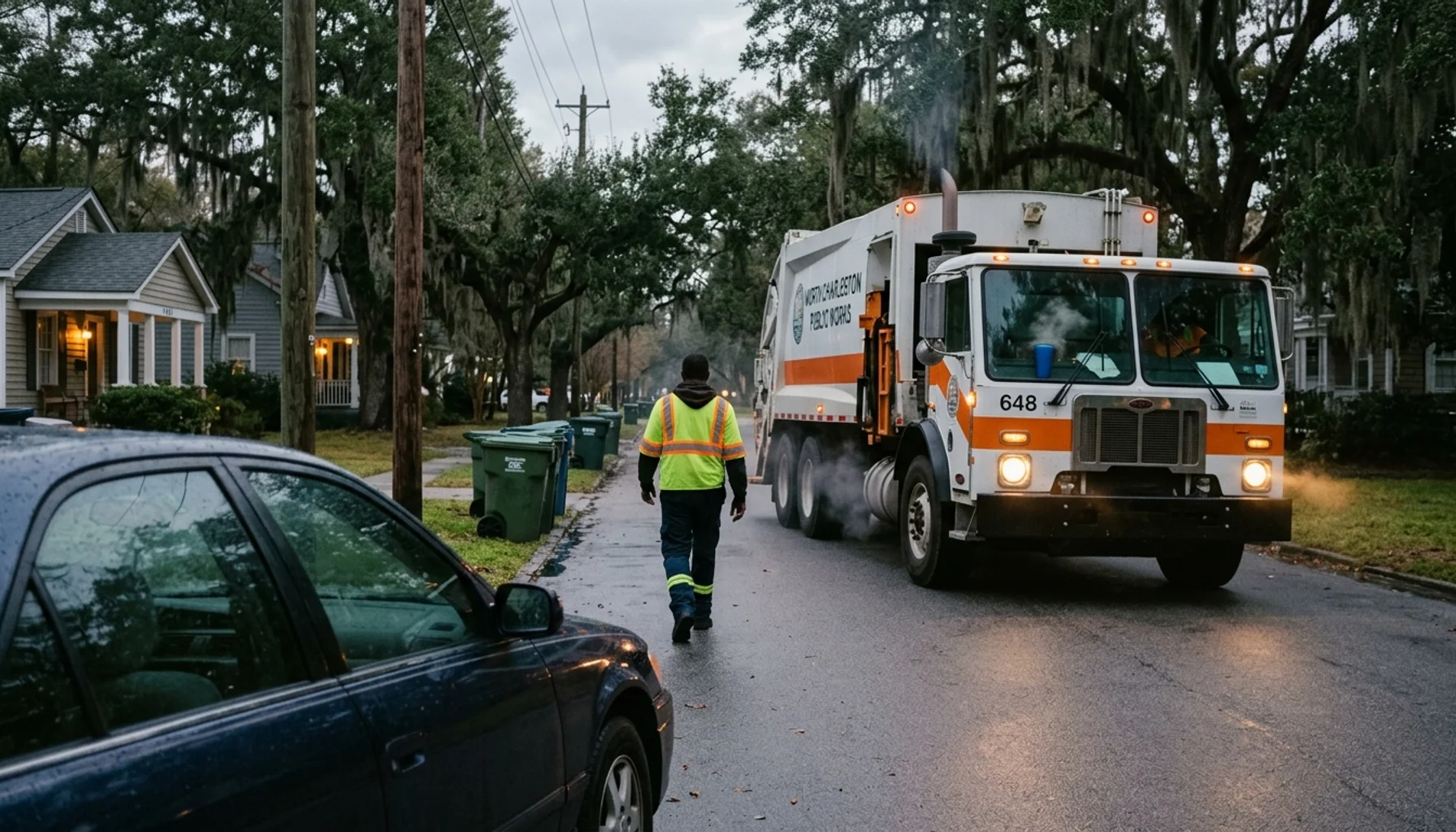
A waste collector is a worker employed by a public or private company to gather and dispose of municipal solid waste and recyclables from homes, businesses, and industrial sites. In multifamily and residential settings across 2026, that same function increasingly runs through private doorstep services rather than curbside-only routes, which changes how quickly and reliably trash actually leaves a property.
- Waste collectors go by several names depending on region: garbage man, trashman, binman, dustman, or sanitation worker, but the core job is the same across all of them.
- The role typically involves working in pairs on a truck, one person driving and one gathering waste, often starting shifts early and working through all weather conditions.
- The job carries real physical hazards, including heavy lifting, exposure to chemicals and odors, and occasional dog attacks, all documented in occupational overviews of the profession.
- In legal and regulatory contexts, a "waste collector" can also mean a licensed entity authorized to collect and consolidate waste generated by others, not just an individual worker.
- At Trash Day Made Easy, we operate as a private, photo-verified alternative to standard municipal pickup for multifamily communities, HOAs, build-to-rent developments, and short-term rentals across Charleston, SC and Atlanta, GA.
- Every visit our team makes is documented with a timestamped photo, giving property managers proof of service without needing to chase down confirmation.
If you searched "waste collector" because you're trying to understand the occupation itself, this guide covers the job in full: what the role involves day to day, what it's called in different regions, the hazards workers face, and how the legal definition differs from the everyday one. But if you searched because you manage a property in the Charleston metro and you're tired of unreliable pickup, we'll also walk through what a modern, private waste collection service looks like and why it solves problems that standard municipal collection was never designed to solve.
At Trash Day Made Easy, we service multifamily communities near the Rivers Avenue corridor, build-to-rent developments around Daniel Island and the airport corridor, short-term rental properties in the Charleston Historic District, and HOA communities on James Island and Sullivan's Island. We see the operational side of waste collection every night, and that field experience shapes everything in this guide. As of 2026, the gap between what a city truck can offer and what a resident or property manager actually needs has only grown wider.
What Does a Waste Collector Do?
A waste collector's core job is to gather refuse from designated points, such as curbside bins, dumpsters, or doorsteps, and transport it to a facility where it is processed or disposed of. Specifically, this involves following a set route each day, operating a truck equipped with hydraulic lifts, and manually handling bags or bins that the equipment can't manage on its own.
Most municipal and commercial waste collectors work in two-person teams. One drives the truck; the other walks alongside collecting containers and loading them into the hopper. Modern trucks often have hydraulic lifts that raise large bins mechanically, reducing the amount of manual lifting required, but smaller bags and irregular items still get handled by hand.
Beyond straight pickup, a waste collector is often expected to separate items that shouldn't go into standard collection, like hazardous materials or oversized furniture, before running the truck's lift. Some job postings also list refueling the truck and checking fluid levels as part of the daily responsibilities. As a result, the role blends manual labor, basic vehicle maintenance, and route logistics into a single physically demanding job.
In a private, doorstep model like the one Trash Day Made Easy runs for multifamily and build-to-rent communities, the collector's job shifts slightly. Instead of driving a route and hoping every resident brought their bin to the curb, our team walks each building nightly, collects from each unit's door, and photographs the completed stop. That difference in workflow is the single biggest operational distinction between city-run collection and a private valet program.
What Are Waste Collectors Called?
Waste collectors are known by several regional names, including garbage man, trashman, sanitation worker, and, in British English, binman or dustman. The terminology varies by country and even by city, but all of these terms describe the same underlying occupation: someone responsible for removing municipal solid waste from a collection point.
In the United States, "garbage collector" and "sanitation worker" are the most common formal terms, particularly in job postings and municipal employment listings. "Trashman" remains common in everyday conversation, though it rarely appears in official job titles. In the United Kingdom and parts of the Commonwealth, "binman" and "dustman" are the standard informal terms, with "refuse collector" used in more official contexts.
The variation matters more than it might seem, because search behavior and regional expectations differ. A property manager in North Charleston searching for "trash valet service" is looking for something functionally different from a municipal "sanitation worker" job listing, even though both terms trace back to the same underlying occupation of waste collection. Understanding this distinction helps explain why private valet trash service exists at all: it's not competing with the city job title, it's replacing the delivery model that title operates under.
Notably, in some legal and contractual documents, "waste collector" refers not to an individual but to a licensed company or entity authorized to collect and consolidate waste on behalf of a municipality or property. That distinction, between the person and the licensed operator, comes up later in this guide when we cover the regulatory definition in more detail.
What Hazards and Working Conditions Do Waste Collectors Face?
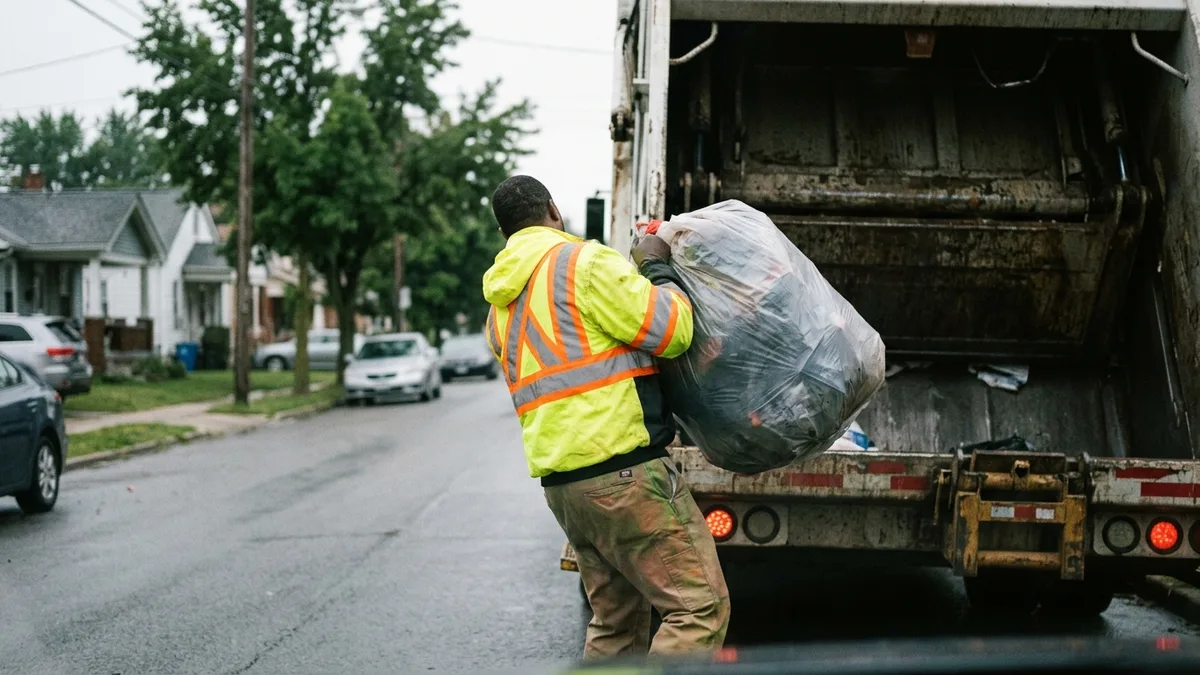
Waste collection is a physically demanding occupation with documented exposure to noxious odors, dust, chemicals, sharp or fallen objects, and even dog attacks. Workers typically begin shifts before dawn and continue regardless of rain, heat, or cold, which adds an environmental stress layer on top of the physical demands of lifting and hauling.
The lifting itself is repetitive and heavy. Even with hydraulic lifts handling large bins, workers manually manage bagged trash, loose debris, and containers that don't fit the truck's automated system. Over a full shift, that adds up to sustained physical strain that few desk-based comparisons capture accurately.
Beyond the physical toll, waste collectors face illness risk from handling refuse that may contain broken glass, medical waste improperly discarded, or decomposing organic material. Compliance with prescribed safety procedures and federal regulations on waste disposal methods isn't optional; it's a baseline requirement for anyone operating in the field, whether they work for a municipality or a private waste operations company.
At Trash Day Made Easy, our teams follow structured safety protocols on every route, whether they're handling nightly valet trash for a 200-unit apartment community or bulk item removal during a move-out in a build-to-rent development on Daniel Island. Photo verification isn't just an accountability tool for property managers; it also creates a documented record of each stop's condition, which matters when hazardous or improperly bagged waste shows up at a door.
What Is the Legal Definition of a Waste Collector?
In regulatory and contractual contexts, a waste collector can refer to a licensed entity or company authorized to collect and consolidate waste generated by others, rather than an individual worker. This distinction matters in municipal contracts, HOA governing documents, and service agreements, where the term identifies the responsible party, not the person physically lifting the bin.
Legal definitions typically specify what the licensed collector may handle: municipal solid waste, recyclables, and in some cases specific categories like construction debris or hazardous materials, each governed by separate permitting requirements. A municipality's waste collector, under this framing, might be a city department or a contracted private company operating under a formal agreement.
For property managers and HOA boards, this distinction is practical, not academic. When you sign an agreement with a company like Trash Day Made Easy for waste operations across a multifamily portfolio or a build-to-rent community, you're contracting with a licensed collector entity, not hiring an individual. That agreement should specify service frequency, documentation standards, and scope, exactly the kind of detail our guide to valet garbage services walks property managers through before they sign anything.
As of 2026, HOA boards on James Island and Sullivan's Island increasingly reference these formal service definitions in their governing documents, particularly when outlining bulk item removal responsibilities and enforcement authority. Getting the terminology right in a contract prevents disputes later about what was actually promised.
How Is a Waste Collector Different from a Waste Picker?
A waste collector operates within a formal employment structure, working for a municipality or licensed private company with set routes, safety protocols, and regulatory oversight. A waste picker, by contrast, works informally, gathering recyclable or salvageable materials outside of any formal employment relationship, often independent of municipal contracts entirely.
This distinction shows up frequently in occupational and encyclopedic overviews of the profession, and it matters because the two roles face very different working conditions, legal protections, and income structures. Formal waste collectors receive wages, safety equipment, and are subject to labor regulations. Informal waste pickers typically do not have those same protections.
For property managers and community operators, this distinction rarely comes up directly, but it explains why professional waste operations, backed by licensed vehicles, insurance, and documented service standards, differ so fundamentally from ad hoc arrangements. A structured program from a company like Trash Day Made Easy operates entirely within the formal collector framework: licensed, insured, scheduled, and photo-documented at every stop.
How Does Trash Day Made Easy Modernize Waste Collection for Charleston and Atlanta Properties?
Trash Day Made Easy modernizes traditional waste collection by replacing the once- or twice-weekly curbside model with nightly, photo-verified doorstep pickup for multifamily communities, build-to-rent developments, HOAs, short-term rentals, and residential homeowners across Charleston, SC and Atlanta, GA. Instead of residents managing bins on a fixed municipal schedule, our team handles the entire process, door to dumpster or backdoor to curbside, every night of service.
The core service, doorstep-to-dumpster valet trash collection, means residents place a bag or standardized container outside their unit on service nights. Our team collects it, transports it to the dumpster or compactor, and photographs the completed stop. Property managers get documented confirmation without following up or issuing a single reminder. This solves the exact problem that standard once-a-week municipal pickup was never designed to handle: hallway clutter, overflowing dumpsters near high-traffic corridors, and inconsistent resident compliance.
For HOA communities and residential homeowners, our backdoor-to-curbside trash can concierge service moves bins from their storage location to the curb on pickup day and returns them afterward. No resident action required, no fine letters, no board enforcement headaches. Residential service starts from $49 per month in select Charleston neighborhoods, and we partner with The Bin Boy, a Charleston-based bin cleaning and sanitizing service, to round out the full waste care package.
Beyond routine collection, we handle bulk item removal, turnover trash between residents or guests, and move-in and move-out support, which matters enormously for short-term rental operators near Sullivan's Island and the Historic District dealing with fast, unpredictable turnovers. Our guide to junk removal for property turnovers covers exactly how that process integrates with make-ready timelines.
What makes this different from a national valet trash provider isn't just the service list, it's local accountability. We're headquartered at 4900 O'Hear Avenue in North Charleston, and our team knows the operational pressure points specific to this market: the Rivers Avenue corridor's high-volume apartment density, the guest-experience stakes on Isle of Palms and Sullivan's Island, and the investor scrutiny on Daniel Island build-to-rent communities. Trash Day Made Easy is purpose-built to scale from 10 units to more than 1,000 units while holding a consistent service standard across every property in a portfolio.

Waste Collector Terms and Roles Compared
The table below breaks down how the different terms and structures around waste collection compare, from informal labels to legal definitions to the private valet model.
| Term or Model | Who or What It Describes | Typical Context |
|---|---|---|
| Garbage man / trashman | Individual worker, informal U.S. usage | Everyday conversation |
| Binman / dustman | Individual worker, informal U.K. usage | Everyday conversation |
| Sanitation worker | Individual worker, formal U.S. usage | Municipal job postings |
| Waste collector (legal) | Licensed entity or company | Contracts, HOA documents, municipal agreements |
| Waste picker | Informal, independent worker | Not tied to municipal contracts |
| Valet trash service | Private, doorstep-level collection company | Multifamily, BTR, HOA, residential properties |
Industry-wide, the cost structure behind traditional waste management is worth understanding too. According to fixed cost reduction research from SIB, fuel surcharges can add 14% to 45% to a total waste management invoice, and invoice error rates in the industry sit around 9.5%. Separately, waste solutions research from On The Fly Waste Solutions found that a traditional waste management system for a 100-unit property typically runs $1,550 to $3,300 per month, with overflow fees ranging from $125 to $260 per occurrence when a dumpster exceeds capacity. One operator cited in that same research achieved a 56.9% savings across 105 properties simply by auditing its waste invoices for errors. These figures underscore why property managers increasingly scrutinize waste contracts the way they'd scrutinize any other operating expense.
What Modern Technology Is Changing Waste Collection in 2026?
Waste collection technology in 2026 increasingly relies on route optimization software, smart bin sensors, and photo-verification systems to reduce missed pickups and improve accountability. Rather than a driver simply confirming a route was completed, modern systems generate a documented, timestamped record of each individual stop.
Smart bin sensors, used in some municipal and commercial deployments, detect fill levels and can trigger a pickup request before a container overflows, reducing the overflow fee exposure mentioned above. Route optimization software helps trucks avoid redundant mileage, which matters given how fuel surcharges compound total invoice costs across a portfolio of properties.
For a private valet operation like Trash Day Made Easy, the equivalent innovation isn't a sensor on a dumpster, it's photo verification at the door. Every service visit generates proof of completion, giving property managers documentation without needing to walk the property themselves or trust a driver's word that a route was finished. That single operational change addresses the accountability gap that scattered-site portfolio owners and multifamily managers cite most often as their biggest frustration with standard waste vendors.
Electric and hybrid collection vehicles are also gaining traction industry-wide as fuel costs and emissions concerns push municipalities and private operators toward lower-emission fleets. While adoption varies by market, the direction is clear: waste collection in 2026 is trending toward smarter routing, better verification, and reduced environmental impact across the board.
How Does Waste Collection Support Broader Sustainability Goals?
Waste collection plays a direct role in circular-economy and zero-waste initiatives by determining how effectively recyclable materials get separated, processed, and diverted from landfills. A well-run collection program does more than remove trash, it's the first checkpoint in whether recyclables actually get recycled or end up in general waste.
For multifamily and build-to-rent communities aiming to market themselves as sustainability-focused, the waste collection program is often the most visible proof point residents actually see. A consistent, nightly valet trash program with clear recycling separation signals genuine commitment far more convincingly than a sustainability page on a leasing website.
At Trash Day Made Easy, we work with property managers to structure waste operations that support these goals without adding complexity to the resident experience. Residents don't need to understand municipal recycling rules in detail if the system quietly handles proper separation and disposal on their behalf. That's a meaningfully different value proposition from asking residents to sort and haul their own bins to a curbside pickup point once or twice a week.
How Do I Choose a Waste Collection Provider for My Property?
Choosing the right waste collection provider starts with matching the service model to your property type: multifamily communities need nightly doorstep collection, HOAs need bin management enforcement, and short-term rentals need flexible, on-demand turnover support. Here's how to evaluate your options step by step.
- Step 1: Define your property's waste volume and turnover pattern. A 300-unit apartment community near the Rivers Avenue corridor has different needs than a single short-term rental on Isle of Palms. Know your unit count, turnover frequency, and current pain points before requesting quotes.
- Step 2: Ask how service completion is verified. A provider that can't show you documented proof of each stop is asking you to trust the system blindly. Photo verification, like the standard we apply at Trash Day Made Easy, removes that guesswork entirely.
- Step 3: Confirm scalability if you manage a portfolio. Scattered-site owners with properties spread across North Charleston, Summerville, and Mount Pleasant need one vendor with consistent standards, not a patchwork of local arrangements.
- Step 4: Clarify bulk item and turnover support. Ask specifically how the provider handles move-out furniture, oversized debris, and guest turnover trash, since these are the situations that most often get mishandled by generic pickup services.
- Step 5: Compare pricing structure to a standard municipal or dumpster model. As referenced above, a typical 100-unit traditional waste system runs $1,550 to $3,300 per month, so use that as your benchmark when evaluating quotes for a comparable portfolio size.
- Step 6: Request a quote directly. Trash Day Made Easy provides quotes Monday through Friday for multifamily, BTR, HOA, short-term rental, and residential properties across Charleston and Atlanta.
Common mistake to avoid: Signing a waste contract without asking about documentation standards. Property managers who skip this step often discover, months into a lease-up or turnover season, that they have no record of missed stops and no leverage to dispute service failures. Ask for proof of service before you sign, not after a resident complaint forces the issue.
For readers weighing a private valet model against a standard dumpster setup, our Charleston guide to can-to-curb services and our breakdown of what valet trash companies typically charge apartment communities both go deeper into pricing structures than we can cover in a single section here.
Other companies operating in the broader waste collection and valet trash space include national and regional providers, along with career resources like CareerExplorer and Indeed for those researching the occupation itself rather than the service. Industry groups such as the National Apartment Association also publish research on how amenities like valet trash affect resident retention in multifamily communities.
What Is the Cheapest Way to Get Rid of Junk for Free?
The cheapest way to dispose of junk for free typically involves donation, curbside giveaway, or municipal bulk pickup days, though availability depends heavily on your city's specific programs and the condition of the items involved. Charitable donation centers often accept furniture and household goods in good condition at no cost, and many municipalities schedule periodic bulk item collection days for residents.
For property managers, though, "free" junk removal rarely works at scale. A single abandoned couch left in a breezeway during a move-out isn't solved by waiting for a municipal bulk day that might be weeks away. That delay costs real money in a make-ready timeline, and it creates liability exposure if the item sits at a curb or common area too long.
This is exactly why Trash Day Made Easy built bulk item removal into our core service offering rather than treating it as a rare add-on. Our on-demand scheduling means a property manager doesn't wait for a monthly bulk day; the item gets removed as part of the turnover process, on a timeline that matches the actual leasing schedule.
Can You Throw Away an Air Fryer?
Yes, an air fryer can typically go into standard household trash, though many municipalities recommend recycling small appliances through e-waste programs when possible due to the electronic components inside. Check your local solid waste authority's guidance before disposal, since e-waste rules vary by city and county.
For multifamily properties and short-term rentals across Charleston and Atlanta, small appliance disposal usually comes up during move-out or turnover cleaning, when a resident or guest leaves behind an item that's damaged or simply unwanted. Our turnover trash removal service handles exactly this kind of miscellaneous item disposal as part of the broader waste operations program, so property managers don't need to sort through disposal rules for every individual item left behind.
Frequently Asked Questions About Waste Collectors
How does valet trash service work in a multifamily apartment community?
Residents place a standardized bin or bag outside their door on scheduled service nights. A Trash Day Made Easy crew collects it doorstep-to-dumpster on a nightly basis, and each stop is photo-verified. The property manager receives documented confirmation without needing to follow up.
What is a trash can concierge and how is it different from valet trash service?
A trash can concierge moves bins from a backdoor or storage location to the curb on pickup day and returns them afterward, rather than collecting waste directly at a unit door. It's primarily used for HOA communities and residential homeowners, while valet trash service targets multifamily and build-to-rent properties with nightly doorstep pickup.
How does Trash Day Made Easy handle bulk item removal during a resident move-out?
Bulk item removal is scheduled as part of the make-ready cycle, not treated as an afterthought. This prevents abandoned furniture or oversized debris from sitting in breezeways or common areas, which can delay a unit's turnaround for the next resident.
Can valet trash service be added to a short-term rental property in Charleston?
Yes. On-demand and turnover-specific waste service is available for short-term rentals near the Historic District, Isle of Palms, and Sullivan's Island, designed around the unpredictable scheduling of guest turnovers rather than a fixed weekly route.
How does photo-verified waste collection work and why does it matter?
Every service stop is photographed by the collection team at the time of pickup, creating a timestamped record. This gives property managers documented proof of service completion without needing to walk the property, and it creates a service record that protects both the operator and the vendor if a dispute arises.
What does Trash Day Made Easy charge for residential valet trash service?
Residential service in select Charleston neighborhoods starts from $49 per month. Multifamily, portfolio, HOA, and build-to-rent pricing is quote-based since it depends on unit count and service frequency; request a quote at Trash Day Made Easy.
Can one vendor handle waste collection across an entire property portfolio in Charleston and Atlanta?
Yes. Trash Day Made Easy is built for portfolio scalability, serving anywhere from 10 units to more than 1,000 units with consistent service standards and a single point of contact across every property.
What is the difference between a waste collector and a waste picker?
A waste collector works within a formal, licensed employment or contractual structure with set routes and safety protocols. A waste picker operates informally, gathering salvageable materials without a municipal contract or formal employment relationship, and typically lacks the same labor protections.
Conclusion: What This Means for Your Property in 2026
A waste collector, whether that means a municipal sanitation worker or a private waste operations company, exists to remove refuse reliably and safely from where it accumulates. The occupation carries real physical demands and hazards, and the legal definition of "waste collector" as a licensed entity matters just as much as the everyday meaning tied to an individual worker.
For property managers, HOA boards, and short-term rental operators across Charleston and Atlanta, the practical question in 2026 isn't what a waste collector is; it's whether your current service actually delivers documented, consistent results. A standard municipal or dumpster-based approach leaves too much to chance: missed pickups, overflowing containers, and no proof of what actually happened on a given night.
Trash Day Made Easy was built specifically to close that gap, with nightly photo-verified collection, backdoor-to-curbside bin management, bulk item removal, and full-portfolio waste operations that scale from a single residential home to a 1,000-unit community. If you're managing a property near the Rivers Avenue corridor, a build-to-rent community on Daniel Island, a short-term rental on Sullivan's Island, or an HOA on James Island, a structured waste program removes the guesswork entirely.

Get started with Trash Day Made Easy and request a service quote Monday through Friday for multifamily communities, build-to-rent developments, HOAs, short-term rentals, and residential homeowners across Charleston, SC and Atlanta, GA.
Content powered by inkSTR.co