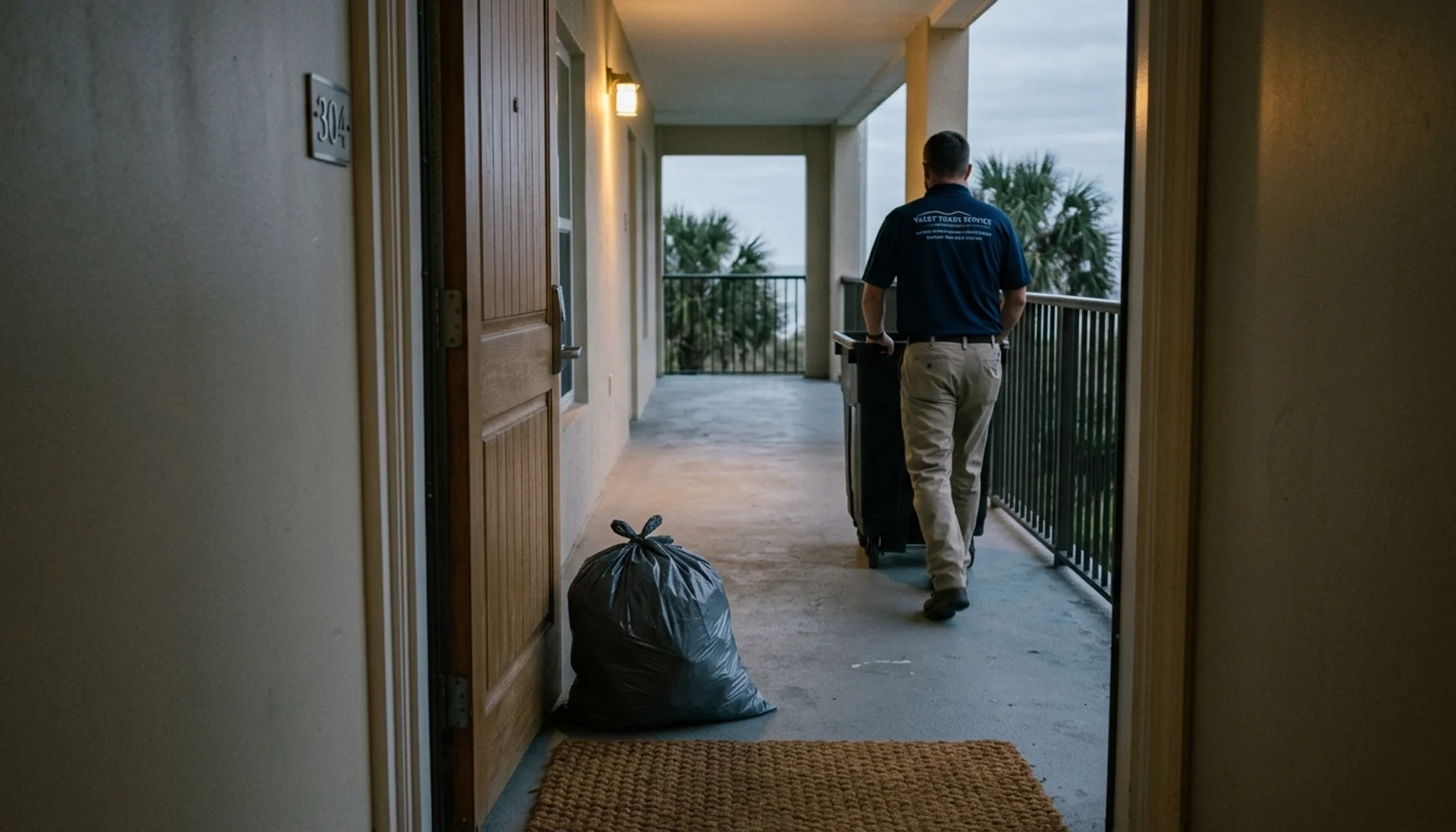
Trash butler is an industry nickname for doorstep-to-dumpster valet trash service, a program where a company collects bagged trash directly from a resident's door several nights a week and hauls it to the community dumpster or compactor. The name gets used both as a generic industry term and as a specific national provider's brand name, but the service model is the same everywhere it's offered.
Key Takeaways
- Trash butler refers to a valet trash pickup model where residents leave bagged trash outside their door on set nights, and a crew collects it and moves it to a central dumpster or compactor.
- Multifamily properties commonly bill this as an amenity or "doorstep service fee" line item on the lease, typically applying to communities in the 150 to 300+ unit range, according to RealEstateBusinessReview.com reporting on the industry's business model.
- A demonstrated 99.7% service reliability rate has been cited by at least one national doorstep valet trash and recycling provider, underscoring how consistency, not just pickup itself, is the real value proposition.
- Trash Day Made Easy provides the same nightly, photo-verified doorstep-to-dumpster model across Charleston, SC and Atlanta, GA, with the added flexibility of bulk item removal, turnover trash handling, and portfolio-scale service from 10 to 1,000+ units.
- The industry is expanding beyond core trash pickup into adjacent offerings like pressure washing and porter services, and providers are increasingly using app-based platforms with photo verification for accountability.
- Residential homeowners in select Charleston neighborhoods can access valet trash starting from $49 per month through Trash Day Made Easy, a price point that makes the amenity accessible outside large multifamily communities too.
If you manage an apartment community, a build-to-rent portfolio, or even a single-family HOA in the Charleston metro, you've probably heard the term "trash butler" used almost like a generic label, the way people say "Kleenex" for tissue. It describes the doorstep valet trash category broadly, not just one company's product. Understanding how the model actually works, what it costs, and what separates a reliable provider from an inconsistent one matters more than the name attached to it.
At Trash Day Made Easy, we operate this exact service model daily across North Charleston, Mount Pleasant, James Island, Daniel Island, and the broader Charleston metro, and we've watched property managers ask the same questions over and over: how does the nightly route actually work, what happens when a resident doesn't put trash out, and how do you prove service happened without babysitting every stop. This guide answers those questions directly, using what we see in the field every night, not marketing copy.
In 2026, the doorstep valet trash category has matured well past a simple pickup service. Providers now use photo documentation, route-tracking apps, and expanded service menus that include bulk removal and turnover support. This article breaks down what the trash butler model actually involves, what it typically costs, who provides the service, and how to evaluate whether a provider will actually show up consistently, which is the one thing that determines whether the amenity helps or hurts your property's reputation.
What Does a Trash Butler Do?
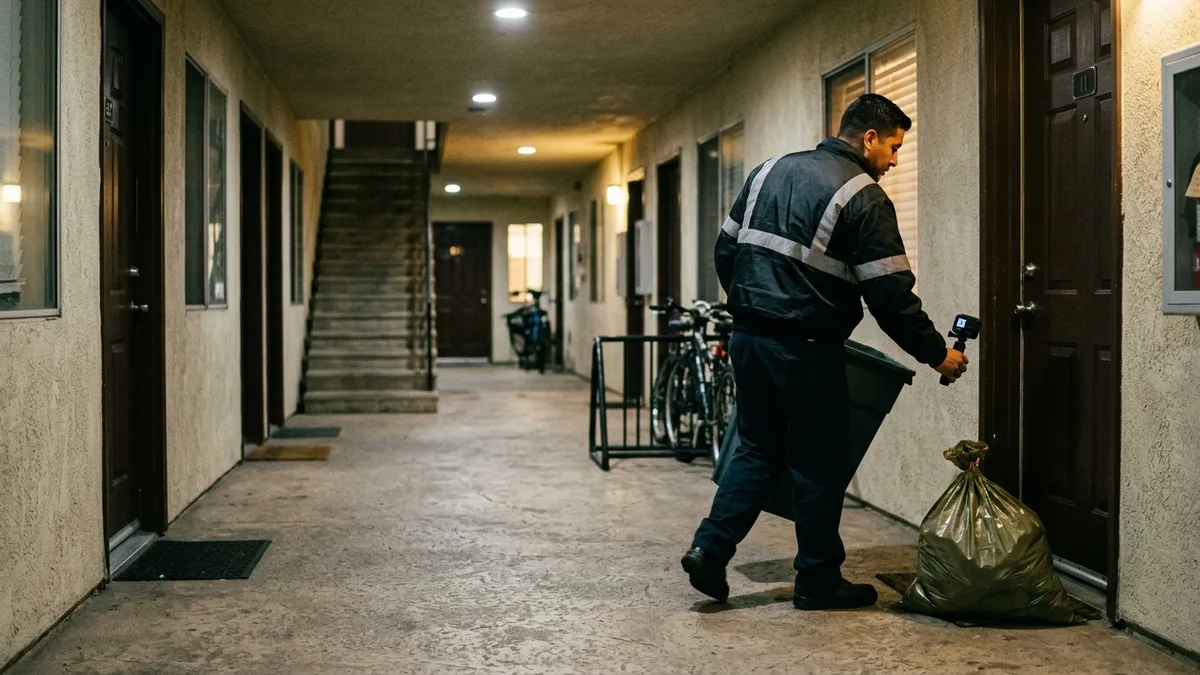
A trash butler, in industry terms, is a valet trash technician who walks an assigned route through an apartment community, condo building, or rental portfolio on scheduled nights, collecting bagged trash left outside each participating unit's door and carrying it to the property's dumpster or compactor. The role also typically includes light cleanup of the immediate doorstep area and, in more complete programs, photo documentation confirming the stop was completed.
Specifically, a nightly route usually runs during a fixed evening window, often between 7 and 10 PM, since city or county pickup happens during the day and residents need time after work to bag and set out trash. The technician moves door to door with a cart, collects any properly bagged and tied trash, and leaves recycling or oversized items behind unless the program covers those separately. As a result, hallways and breezeways stay clear overnight instead of accumulating loose bags until the next morning's dumpster run.
At Trash Day Made Easy, every stop on a route is photo-verified at the door, which means the property manager gets a timestamped record without needing to walk the property themselves. That single detail is what separates an accountable doorstep program from a driver simply reporting "route complete" with no evidence behind it.
Who Owns Trash Butler?
Trash Butler is the branded name used by a specific national provider in the multifamily valet trash space, distinct from the broader "doorstep valet trash" service category that many regional and local companies also operate in. Because the term shows up so often in search results, people frequently use "trash butler" as shorthand for the entire service category rather than one company's product line, similar to how "dumpster" became generic for any large waste container.
This naming confusion matters for property managers doing vendor research in 2026. When you search "trash butler near me" or "trash butler reviews," you may be pulling up results for one specific national brand while your actual need is broader: a reliable, accountable doorstep valet trash provider serving your specific submarket. In Charleston, that distinction is significant, because national providers often route local service through regional subcontractors, which can mean less direct accountability than working with a company headquartered in your own market.
Trash Day Made Easy is headquartered at 4900 O'Hear Avenue in North Charleston, SC, and operates directly in every community it serves across Charleston, Mount Pleasant, Isle of Palms, Sullivan's Island, James Island, Daniel Island, Summerville, Johns Island, and the Atlanta, GA metro. There's no subcontractor layer between the crew on your property and the company you signed a contract with, which matters when something needs to change fast, like a schedule shift during a holiday week or a new building coming online in a portfolio.
How Much Does Trash Butler Service Usually Cost?
Doorstep valet trash service is typically billed to residents as a monthly amenity fee added to the lease, commonly ranging from roughly $20 to $40 per unit per month in most multifamily markets, though the exact figure depends on unit count, pickup frequency, and whether the fee is covered by the property or passed through to residents. Multifamily communities most commonly structure this as a line-item amenity fee, a model that RealEstateBusinessReview.com describes as standard practice for properties in the 150 to 300-plus unit range.
For residential homeowners outside the multifamily context, pricing works differently. Trash Day Made Easy offers residential valet trash starting from $49 per month in select Charleston-area neighborhoods, a flat rate that covers scheduled collection without any per-unit lease negotiation. That price point makes the service accessible to homeowners on James Island, Sullivan's Island, or in Mount Pleasant who simply don't want to manage bin schedules themselves.
For multifamily communities, build-to-rent developments, HOAs, and scattered-site portfolios, pricing is quote-based and depends on unit count, service frequency, and whether bulk item removal or turnover trash handling gets bundled in. Trash Day Made Easy provides quotes Monday through Friday for any property type, and portfolio pricing typically improves as unit count scales from small communities toward the 1,000-plus unit range the company is built to service.
| Service Type | Typical Structure | Who Pays | Frequency |
|---|---|---|---|
| Multifamily doorstep valet trash | Lease line-item amenity fee | Resident (billed via lease) | 3 to 5 nights/week |
| Residential valet trash (Charleston) | Flat monthly rate from $49 | Homeowner | Weekly, scheduled |
| HOA trash can concierge | Community-billed or per-household | HOA or homeowner | Weekly on pickup day |
| Portfolio/BTR waste operations | Custom quote by unit count | Property owner/operator | Nightly to weekly, plus on-demand |
What Is a Person Who Picks Up Trash Called?
A person who collects trash professionally is generally called a waste collector, sanitation worker, or refuse collector when referring to municipal pickup, while someone performing the doorstep valet route inside an apartment community is typically called a valet trash technician or valet trash attendant. The distinction matters because the two jobs involve different equipment, schedules, and levels of resident interaction.
Municipal waste collectors drive collection trucks and empty curbside bins or dumpsters on a fixed weekly schedule set by the city or county. A valet trash technician, by contrast, works on foot or with a small cart, walking door to door inside a community on evening shifts, often multiple nights per week rather than once. The role requires more direct accountability since each stop is an individual doorstep, not a single truck route.
For readers curious about the broader waste collection industry and how these roles differ from municipal service, our guide to what a waste collector does breaks down the full range of roles in the industry, including how valet trash technicians fit alongside traditional collectors. Search interest in terms like "trash butler jobs near me" and "apartment trash pickup jobs" has grown alongside the expansion of the valet trash category itself, reflecting how many communities now staff these routes as a distinct job function rather than folding it into general maintenance.
How Does Doorstep Valet Trash Actually Work, Night to Night?
Doorstep valet trash works through a repeatable nightly cycle: residents bag their trash and place it outside their door before a set cutoff time, a technician walks the assigned route during the scheduled window, collects every properly presented bag, and disposes of it at the property's dumpster or compactor. The cycle repeats on the property's contracted schedule, typically several nights per week.
First, the property distributes clear guidelines to residents: what container or bag type is acceptable, what cutoff time trash must be out by, and which nights service runs. Specifically, most Charleston-area multifamily communities we work with run service five nights a week, skipping the night before and the day of city bulk pickup to avoid overlap. Additionally, some properties require a specific bin, like a 13-gallon container, to keep doorsteps looking uniform rather than a mix of grocery bags and trash cans.
As a result, when a resident follows the guidelines, their trash disappears overnight without them ever touching a dumpster. If a resident misses the cutoff or uses a non-compliant bag, most valet providers, including Trash Day Made Easy, leave a door tag noting the missed pickup rather than skipping notification entirely. That feedback loop is what keeps compliance rates high over time, and it's a detail many property managers don't realize is standard practice until they've run a program for a few months.
Why Does Photo Verification Matter for Property Managers?
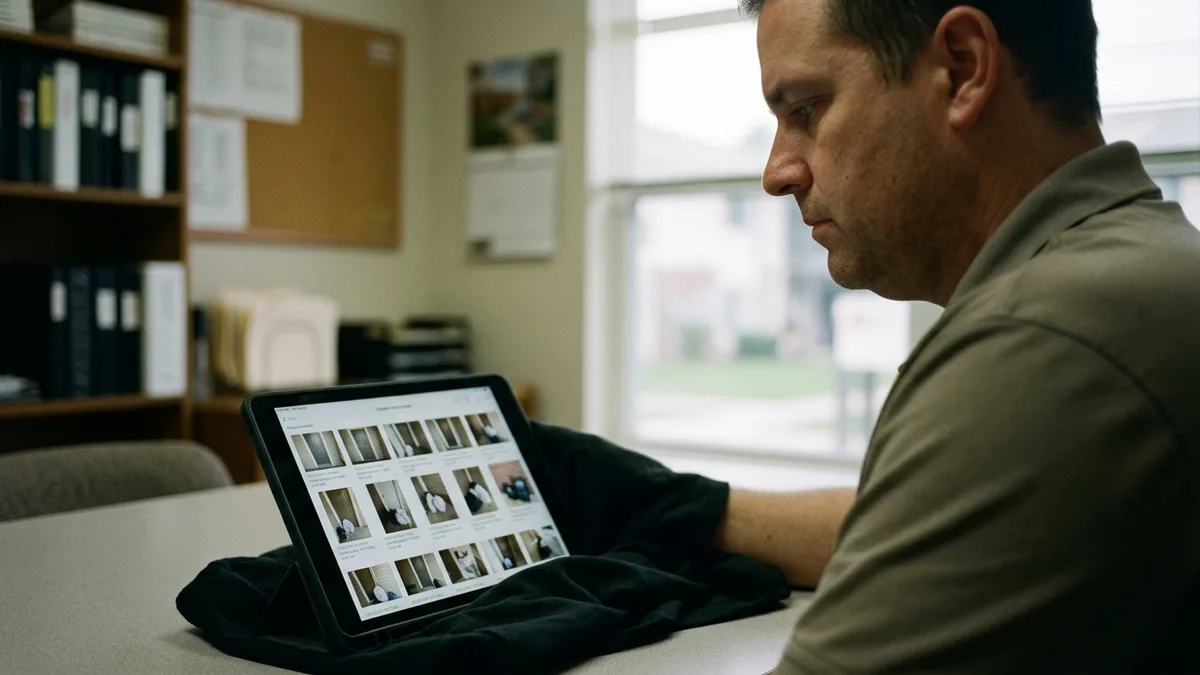
Photo verification means every doorstep valet trash stop is documented with a timestamped photo showing the pickup was completed, giving property managers a direct record instead of relying on a technician's word or a driver's end-of-shift report. This single feature is what separates an accountable valet trash program from one where disputes and missed pickups go unresolved.
Without photo verification, a resident complaint about a missed pickup becomes a he-said-she-said situation between the resident, the property manager, and the vendor. With it, the property manager can pull up the exact timestamp and photo for that door on that night within minutes. That documentation also protects the vendor when a resident claims a missed pickup that actually happened.
Trash Day Made Easy builds photo verification into every single route stop, not as a premium add-on but as the standard operating procedure across every property we service, whether it's a 12-unit build-to-rent community near the airport corridor or a 400-unit portfolio spanning multiple Charleston submarkets. Property managers receive documented confirmation without needing to follow up, issue reminders, or walk the property themselves the next morning. That's the difference between a vendor relationship and a managed operation.
Can Apartments Force You to Pay for Valet Trash?
Whether an apartment community can require residents to pay for valet trash service depends on how the fee is written into the lease and applicable state and local landlord-tenant rules, which vary by jurisdiction. Many multifamily properties structure the fee as a mandatory amenity charge disclosed at lease signing, similar to a pest control or amenity fee, rather than an optional add-on.
Property managers considering adding a mandatory valet trash fee should review their lease language carefully and confirm compliance with South Carolina or Georgia landlord-tenant requirements before rolling out a program, since rules on mandatory fees can differ from what's standard in other states. This is a legal question specific to each lease and jurisdiction, so consult your property's legal counsel or local housing authority rather than relying on general industry practice alone.
From an operational standpoint, properties that frame valet trash as a resident amenity, tied to reduced hallway clutter and improved curb appeal, tend to see less resident pushback than properties that introduce the fee abruptly. Framing matters as much as the legal structure.
What Makes Trash Day Made Easy Different From Other Valet Trash Providers?
Trash Day Made Easy is a Charleston-based, directly operated valet trash and waste operations company, meaning every route in every market we serve, including Sullivan's Island, Daniel Island, and Atlanta, GA, is run by our own crews rather than subcontracted through a third party. That distinction matters because it keeps accountability, scheduling flexibility, and communication direct between the property manager and the company actually performing the work.
Three things set the service apart in practice. First, every stop across every property is photo-verified, not as a premium tier but as the baseline standard, whether the account is a 6-unit residential cluster or a 1,000-unit portfolio. Second, the service scope extends past nightly doorstep pickup into bulk item removal for property turnovers, move-in and move-out debris handling, and on-demand support for short-term rental properties near the Charleston Historic District, Isle of Palms, and Sullivan's Island, where guest turnover happens on unpredictable timelines. Third, the company is purpose-built for scale, servicing communities from 10 units up past 1,000, with the same photo-verified standard applied regardless of portfolio size.
Other providers exist in the Charleston and Atlanta markets, ranging from national valet trash brands to smaller regional operators, and each offers some version of doorstep pickup. Where Trash Day Made Easy differentiates is in combining nightly valet collection, trash can concierge for HOAs and homeowners, bulk removal, and full waste operations under one vendor relationship, backed by a partnership with The Bin Boy, a Charleston-based bin cleaning and sanitizing service, for properties that want the full spectrum of waste care handled by a single point of contact.
What Should You Compare Before Choosing a Doorstep Valet Provider?
Choosing a doorstep valet trash provider means comparing service reliability, documentation practices, scope of service, and local responsiveness rather than price alone, since an unreliable low-cost vendor creates more resident complaints and management headaches than the savings are worth. A demonstrated 99.7% reliability rate, cited by at least one national provider in the space, illustrates the benchmark that any serious vendor should be able to speak to directly.
Specifically, ask any prospective vendor how they document completed stops. If the answer is "our drivers report back at the end of the shift," that's a weaker accountability model than photo verification at every door. Additionally, ask whether the provider handles bulk items and turnover debris, or only routine nightly bags, since properties with frequent move-outs or short-term rental turnover need that broader scope.
Here's a practical comparison checklist for property managers evaluating providers in the Charleston or Atlanta markets in 2026:
- Photo verification: Is every stop documented, or only spot-checked?
- Local presence: Is the crew directly employed, or subcontracted through a national brand?
- Service scope: Does the vendor also handle bulk removal, turnover trash, and on-demand requests?
- Scalability: Can the vendor maintain consistent service standards from a 20-unit property to a 500-plus unit portfolio?
- Response time: How quickly does the vendor respond to a missed-pickup complaint or a schedule change request?
Our guide on what valet trash companies typically charge apartments covers pricing benchmarks in more depth if budget is your primary evaluation factor.
How Does Trash Butler Service Compare to Standard Dumpster Pickup?
Doorstep valet trash service and standard dumpster pickup solve different problems: dumpster pickup handles bulk waste removal from a central location on a municipal or contracted schedule, while doorstep valet service addresses the gap between a resident's door and that dumpster, which is where most hallway clutter and resident complaints actually originate. Communities need both; valet trash doesn't replace dumpster service, it supplements it.
Standard dumpster or compactor service typically runs once or twice weekly through municipal contracts or private haulers, and it works fine for the bulk volume of a property's waste. What it doesn't solve is the day-to-day reality of residents needing to walk trash to a dumpster themselves, often at odd hours, sometimes leaving bags in hallways or breezeways overnight instead. That's the exact gap doorstep valet trash closes.
Our deep dive on trash valet service costs and how it works expands on this comparison, including a breakdown of when a standard dumpster program alone is sufficient versus when adding doorstep service pays for itself in reduced resident complaints and improved lease renewal appeal.
Practical Guidance: How to Evaluate and Roll Out a Trash Butler Style Program
Rolling out a doorstep valet trash program successfully means setting clear resident guidelines, choosing a vendor with documented accountability, and communicating the amenity as a benefit rather than a surprise fee. Properties that skip the communication step tend to see the most resident pushback in the first 60 to 90 days.
- Define the service window and bag requirements before rollout, including cutoff times and any required container type.
- Vet vendors on documentation practices first, price second. A missed pickup with no record is far more expensive in resident goodwill than a slightly higher monthly rate.
- Communicate the amenity to residents in advance, framing it around reduced hallway clutter and cleaner common areas rather than just a new fee.
- Confirm bulk item and turnover coverage if your property experiences frequent move-outs, since standard nightly service alone won't clear an abandoned sofa.
- Request a trial period or portfolio-wide quote if you're rolling this out across multiple properties, since consistent standards across a scattered-site portfolio require a vendor built for that scale.
A common mistake we see across Charleston-area properties: treating bulk item removal as an afterthought on move-out day instead of scheduling it as a fixed step in the turnover cycle. A single abandoned sofa in a breezeway can delay a unit's readiness by a full day, which is real lost rental income in a competitive market.
For build-to-rent operators and portfolio owners scaling from a handful of properties toward dozens, our guide to how waste pickup service works walks through the operational framework for standardizing service across a growing portfolio.
Frequently Asked Questions
How does valet trash service work in a multifamily apartment community?
Residents place a bagged, tied trash container outside their door before a set cutoff time on scheduled service nights. A technician then walks the assigned route, collects each compliant bag, and carries it to the property's dumpster or compactor. With Trash Day Made Easy, every stop is photo-verified, so the property manager receives confirmation without needing to follow up.
What does a trash butler do on a typical shift?
A trash butler, or valet trash technician, walks a scheduled route through a community during an evening window, collects bagged trash left at each participating door, and disposes of it at the dumpster or compactor. The role often includes tidying the immediate doorstep area and documenting completed stops.
Who owns Trash Butler?
Trash Butler is the branded name of a specific national valet trash provider, though the term is often used generically to describe the doorstep valet trash service category as a whole. Many regional and local providers, including Trash Day Made Easy in the Charleston and Atlanta markets, operate the same service model under their own brand names.
How much does trash service usually cost?
Multifamily doorstep valet trash typically runs as a lease line-item amenity fee, commonly in the $20 to $40 per unit monthly range depending on the market and service frequency. Residential valet trash through Trash Day Made Easy starts from $49 per month in select Charleston neighborhoods, while multifamily and portfolio pricing is quote-based.
What is a person who picks up trash called?
Someone who collects municipal trash is typically called a waste collector or sanitation worker, while someone performing doorstep pickup inside an apartment community is called a valet trash technician or attendant. The two roles differ in schedule, equipment, and the level of direct resident interaction involved.
Can apartments legally require residents to pay for valet trash?
Many properties structure valet trash as a mandatory amenity fee disclosed in the lease, similar to a pest control charge, though the legality depends on state and local landlord-tenant rules. Property managers should confirm compliance with applicable South Carolina or Georgia regulations and consult legal counsel before implementing a mandatory fee.
Does Trash Day Made Easy handle bulk item and turnover trash removal?
Yes. Beyond nightly doorstep collection, Trash Day Made Easy provides bulk item removal, move-in and move-out debris handling, and turnover trash service for short-term rental properties, integrating directly into make-ready and guest turnover timelines across Charleston and Atlanta.
Can one vendor handle valet trash across an entire scattered-site portfolio?
Yes, Trash Day Made Easy is built to service portfolios ranging from 10 units to more than 1,000 units while maintaining consistent photo-verified standards across every property. This gives scattered-site owners and portfolio operators a single point of contact instead of coordinating separate vendors per location.
Conclusion: Finding a Reliable Trash Butler Alternative in Charleston and Atlanta
Trash butler, as a term, describes a doorstep valet trash service model that's become a standard amenity across multifamily communities, and increasingly, HOAs, build-to-rent developments, and even individual homes. The value isn't the pickup itself, it's the consistency and accountability behind it. A demonstrated 99.7% reliability benchmark from the industry underscores what separates a program residents barely notice from one that generates a stream of complaints.
Whatever term you searched to find this article, the real decision in front of you is choosing a provider who shows up, documents the work, and scales with your portfolio without cutting corners. That's exactly what we built Trash Day Made Easy to do across North Charleston, Charleston, Mount Pleasant, James Island, Daniel Island, Summerville, Johns Island, and Sullivan's Island, alongside our growing presence in Atlanta, GA. As 2026 continues, expect the category to keep expanding into adjacent services like bin cleaning and porter support, and expect property managers to keep favoring vendors who can prove service happened, not just claim it did.

If overflowing hallways and inconsistent pickup are already costing you resident goodwill, get started with Trash Day Made Easy for a photo-verified, nightly valet trash program built for your property type, whether that's a single-family home on James Island or a 400-unit community near the Rivers Avenue corridor. Quotes are available Monday through Friday for every property type we serve.
Content powered by inkSTR.co